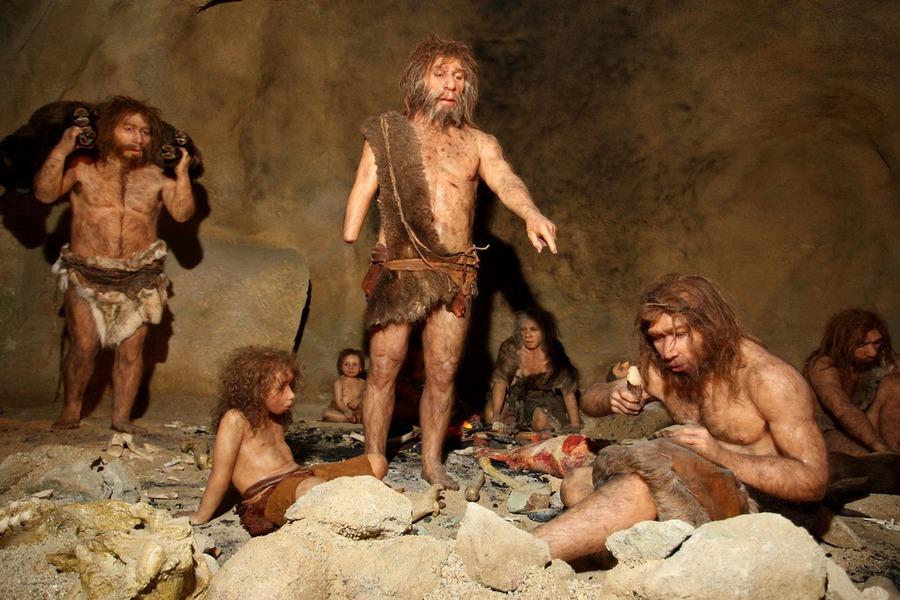
Scientists suggest that early humans may have hibernated by slowing down their metabolism to survive the harsh winter conditions. Analysis of approximately 400 thousand-year-old human remains found in the archaeological site of Sima de los Huesos in Northern Spain revealed findings that support this claim.
Traces of seasonal damage were detected in fossilized bones unearthed from a mass grave in the Atapuerca region. Experts say these traces hibernationHe stated that it was similar to the lesions seen in the bones of animals lying in bed.

Hibernation: A Survival Strategy for Early Humans?
Researchers say that early humans were just like like bears and bats He thinks they may have struggled with the extreme cold by hibernating. It is stated that damage to bones may be a result of long-term inactivity in which metabolism slows down.
This archaeological site near Burgos, northern Spain, sheds light not only on the life of prehistoric people, but also on their survival strategies. Scientists state that the damage to the bones is seasonal and that this provides strong evidence that people may have hibernated.

400 Thousand Years Mystery: Ancient Ruins of Atapuerca
Over the last 30 years, several dozen fossilized remains of prehistoric humans have been unearthed deep in a pit in Atapuerca in northern Spain. These bone and tooth remains, unearthed from the bottom of the 50-meter well that forms the middle part of the pit, date back to approximately 400 thousand years ago. neanderthals or is thought to belong to their ancestors.
While examining the fossils, researchers identified remarkable interruptions in bone development. The authors of this study published in the journal L’Anthropologie, Juan-Luis Arsuaga and Antonis Bartsiokas from the Democritus University of Thrace, state that these seasonal traces on the fossils are the effect of the harsh conditions in which ancient people lived.

Famine and Freezing Colds: Did People Go to Sleep?
Scientists believe that these early humans slowed down their metabolism to survive freezing winter conditions due to limited food sources and insufficient body fat. bird’s sleep suggests that they have entered a similar situation. The interruptions in bone development seen in fossils are thought to be clear evidence of this situation.
While scientists acknowledge that the idea of humans hibernating may seem like science fiction at first, they point to biological underpinnings for this possibility. The fact that some primate species, such as galagos and lemurs, hibernate suggests that this behavior may be genetically present in many mammals.
Arsuaga and Bartsiokas, who conducted the research, use the following statement:
“This suggests that the genetic basis of hypometabolism may be conserved across many mammalian species, including humans. Hibernation may be the only way for humans to survive months in a cave in icy conditions.”

A Hypothesis at the Focus of Scientific Debates
Forensic anthropologist Patrick Randolph-Quinney from Northumbria University states that this study may create important discussions in the scientific world. Randolph-Quinney, “This is a very interesting argument and will certainly stimulate debate. However, there are different explanations for the damage to the legs in the Sima cave. “These alternatives need to be considered comprehensively before reaching more realistic conclusions.” he said.
Responding to Randolph-Quinney’s criticisms, Arsuaga and Bartsiokas point to historical circumstances as to why humans do or do not need to hibernate:
“Inuit and Sami people were able to survive with access to food sources such as oily fish and reindeer fat. However, 500 thousand years ago, there were no such food sources around the Sima site.”
This response further highlights that ancient humans may have adopted hibernation as a survival strategy to combat environmental challenges.
on topic ” Who is a Neanderthal? Information About Neanderthals ” For the article named CLICK!
To join our WhatsApp group CLICK!