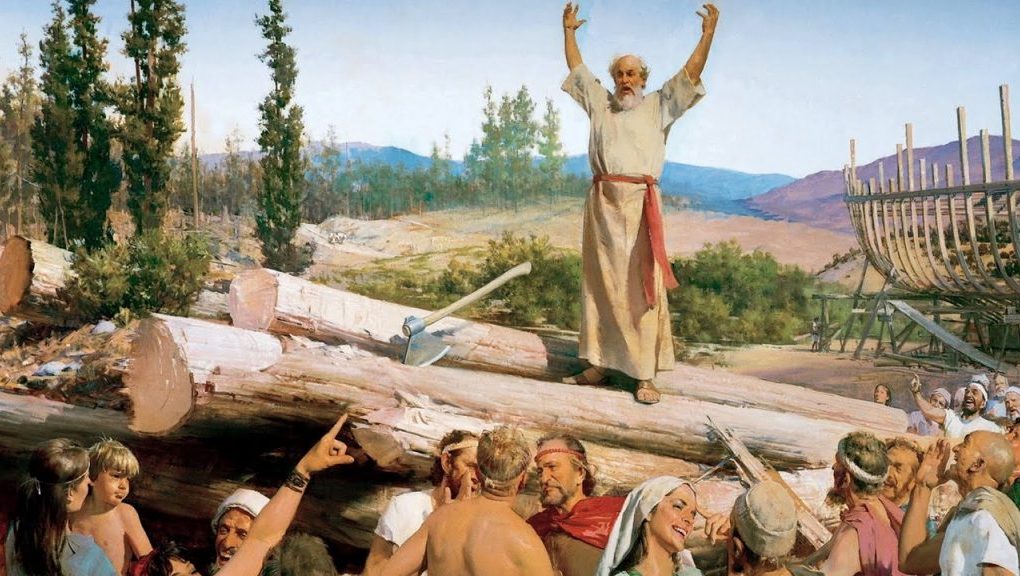
Jafes or Jafet, Hz. He is a person mentioned in the Book of Genesis as one of Noah’s three sons. He is the ancestor of the people who lived in the Aegean Sea, Anatolia and various other regions after Noah’s Flood. One of the sons of Jafes, known as Turk, Turok or et-Turk, is considered the first ancestor of all Turkish peoples who lived historically and continue their lineage today, according to Turkish and Arab mythologies. According to legend, the Turk is the son of Jafes, and Jafes is the son of the Prophet mentioned in both the Bible and the Quran. He is the son of Noah.
Written Sources That Japhesus Is The Ancestor Of The Turks
According to the book “Şecere-i Türkî” (“Generation genealogy of the Turks”) by Ebu’l Gazi Bahadır Khan, Turk is one of the 8 sons of Yafes and Japheth chose the Turk as his heir.. After appointing the Turk as crown prince, Jafes asked his other sons to accept him as the ruler after him and to swear allegiance to him. According to what is said, Oghuz Khan, the ancestor of the Oghuz Turks, is a descendant of the Turk.
Medieval Arab writers and historians stated that Turks were among the descendants of Jafes. Et-Teberi’s “History of Prophets and Kings” is one of the early sources on this subject and counts the Turks as the descendants of Japheth. Similarly, other works such as Ibn Ishaq and “Muhtasar al-ecaib” list the Turks among the descendants of Japheth.
Also, the Alexandrian monk II. who wrote works in Arabic. Eutychius or Said ibn-i Batrik also accepts the Turks among the descendants of Japheth. These works reflect the perspective of the period about the genealogical origin and history of the Turks and have led to different opinions among historical sources.
Yasef; Hz. Noah’s storyAlthough it is not mentioned by name in the Quran, it is indirectly referred to. In Arabic works, his name is Yafes bin Noah (Noah’s son Japheth) is mentioned.

Hz. Sons of Noah
According to Genesis; Hz. Noah’s three sons ( Shem, Ham, JaphethThere are various legends and narratives about the three basic races from which ) were derived:
Descendants of Japheth Among them are sons such as Türk, Gomer, Magog, Madai, Tiras, Yavan, Tubal (Tuval), and Meşeç. This lineage, identified with names such as Gomar (Sumerians), Magog (Mongols), and Madai (Meds), was called “Yaphetic” because they came from Noah’s son, Japheth. There are many different lineages and tribes within this lineage, such as the Sumerian, Gog, Magog, Gur, Guz, Oghuz and Hungarian races. This lineage, derived from Togarma’s ten sons, has spread throughout the world, splitting into hundreds of different tribes and tribes.
Prophet of Yafes. There are different opinions and translations about the age order among Noah’s sons. There are ambiguities and different interpretations on this subject in different versions and translations of the Bible. Some traditions consider Japheth the youngest son, while others consider him the oldest son. Therefore, it is difficult to provide precise information about the age order of Japheth with Shem and Ham.
According to what is said, the sons of Japheth became the ancestors of the following races and civilizations.
Turk, Turok or et-Turk: Turks
Gomar: Cimmerians
Magog: Hungarian Finnish Estonian Mongolian
Maday: Medes
Javan/Yuvan: Greek (Ionian)
Tubal: Italian, Spanish, Catalan, Cilician
Tras: Thracians
Meshek: Khazars
Hz. Descendants of Noah’s other son, Ham It made Africa its home, and settled especially in regions beyond the Sahara. Descendants of Ham include Berbers, Tuaregs, and Egyptian people (Arabized Haggers and Copts). Although the Ham lineage is related to the Semites, it does not have the same origin as the Arabs. Although the Egyptian people are quite close to the Arabs, they are not actually Arabs, but an Arabized community. This lineage extends from Sudan to Zambia along the Nile River and includes populations as diverse as Ethiopians, Djiboutians, Somalis, and Eritreans.
Hz. Noah’s son Shem He is considered the ancestor of the Sami race.

Ancestor of the Turks in the Modern Age
XIX. 19th century Azerbaijani historian Abbaskulu Agha Bakıhanov explains the Turk in his book “Gülistan-i İrem” as follows:
“He was the eldest son and heir of Yafes and was a just and obedient ruler. The entire Japheth family is called “Turk” after him. After his father’s death, he chose many pastures originating from Turkestan for himself. First, he made a headquarters for himself from trees, reeds and grass, and then he made tents and tents from animal skins. This place bears the name “Suluk”, and in “Zafername” it is named like “Sulukay”.
According to Ebulgazi Khan, there is an interesting story in the history of the Turkish nation. According to him, the twins were born in the seventh generation of Turks. Tatar and Mongol‘Stop. The father of these twins, Ilihan, TurkestanIt divides into two regions. The east of Turkestan belongs to the Tatars, and the west belongs to the Mongols.
This information is used by some scientists to argue that the word Mongol is actually the word Turk and that the Mongols were first a Turkish tribe and later became an independent nation. According to this theory, Mongolian peoples (e.g., Khalkhas, Buryats, Kalmyks, Oirats, and others) were originally of Turkic origin and later formed a separate nation.
This view offers an interesting perspective on the complex issues of ethnicity and history. However, it does not provide definitive scientific evidence or consensus. The origins of ethnic groups require much more complex and comprehensive research on language evolution and history.