While astronomers’ meticulous research continues in the infinity of space, the formations discovered in distant celestial bodies are considered not only from the world’s perspective, but also as a part of Turkish culture. In addition to the names given from Earth to the formations discovered on the Moon, Mars and Venus, there are also 21 Turkish names.
Humanity has been trying to solve this universal mystery for years, with its curiosity about the limitlessness of space and its passion for research. Thanks to giant telescopes, neighboring planets and satellites as well as stars billions of light years away can be examined.
As research progresses, many discoveries have been made, from the Moon to Mars and even Venus, where life is thought to be difficult. Among these discoveries, one of Turkey’s important historical figures Ataturk And Fatih Sultan Mehmetas well as Ankara, Sinop, Tarsus, Mut And Harran There are also the names of important settlements such as. These designations reflect the contribution of Turkish culture to space and its interaction with the global scientific community.
Mustafa Kemal Atatürk
One of the largest craters on the Moon was labeled A, B and C, with craters around a main crater named after Danish astronomer Ole Rømer. However, with an agreement accepted in 1956, Dr. Largest crater after Rømer, on maps by Hugh Percy Wilkins ”Ataturk” It was called.
Ataturk craterIt has a structure with a diameter of 28,962 kilometers, expanding into a deep ring around it. The peak in the center of the crater is approximately 30 meters high. Although many sources still refer to this crater as “A”, due to the rule that political names should not be given to craters, this large crater is referred to as Ataturk, with the decision spearheaded by Wilkins.
Taurus Mountains, Moon in the northern hemisphere Taurus Mountains It is known as. The highest points of this mountain range are approximately 3 thousand meters high in the east and approximately 900 meters in the west. Atatürk Crater, with a diameter of 28 thousand 962 kilometers, discovered on the Moon in 1956, is regionally located above the Taurus Mountains. This is an interesting example of geographical similarity and exploration of different regions on the Moon’s surface.

Fatih Sultan Mehmet, Halide Edip Adıvar, Ali Kuşçu, Ulugh Bey…
in the Taurus region on the surface of the Moon in 1958. Fatih Sultan Mehmet Khannamed after Fatih Crater There are. This crater has a diameter of approximately 60 kilometers and has an open circular structure. Its neighbor is also a Turkish name. Ali Kuşçu Crateris. Fatih Crater contains many craters of various sizes around it and Ataturk CraterIt is located very close to i.
On the northwestern edge of the Moon Ulugh Beg group is located. This group consists of 5 craters in total, one of which is a mountain range. This crater group, named after Ulugh Beg, who made important contributions to the history of Turkish science, is one of the remarkable elements on the surface of the Moon.

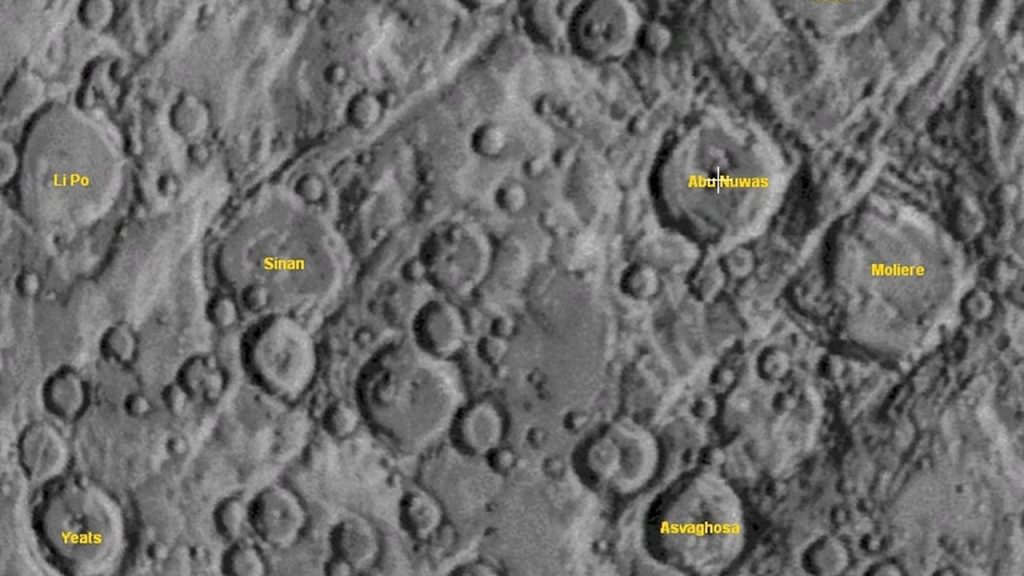
In addition, among other craters and formations on the Moon, there are also the names of leading figures of the Turkish world of thought and science. For example, Biruni, Ibn Sina And Nasreddin Tusi The names of important figures such as are kept alive in craters on the Moon. Similarly, on Venus Halide Edip Adıvar And Mihri Hatunon Mercury Mimar Sinan And Sabri Berkel There are also Turkish names such as.
Craters on Mercury have the names of artists, painters, musicians and writers who have left historical traces from world cultures and have been known for at least 50 years. Among these names is the famous Ottoman architect Mimar Sinan. Mimar Sinan’s name lives on in a crater with a diameter of 147 kilometers on the surface of Mercury. This crater is located between longitudes 15.5 degrees north and 29.8 degrees west.
Turkish painter born in Skopje Sabri Berkel He is also one of the artists living on Mercury. Berkel’s name is located in the center of a crater with a diameter of 21 kilometers and contains dark material. While other craters around Berkel crater generally have a bright appearance, only Berkel craterThe middle of the stencil is dark colored. The reason for this darkness is still being investigated.

There are also city names: Ankara, Sinop, Harran, Mut…
While celestial objects discovered in the depths of space are given names inspired by Turkish culture, these names include historical events and geographical regions as well as cities. For example, Ankara While its name was given to a celestial body, another asteroid sank in the Dardanelles. Dumlupınar It was named in memory of his ship.
Şanlıurfa is located in a valley on Saturn’s moon Enceladus. Harran While the name of the district is given, Mersin’s Tarsus The name of the district was chosen in 1976 for a crater located at certain coordinates on Mars. at the northernmost tip of Turkey Sinop‘s name was used for another crater located in a specific location on Mars in 1991. Besides these, Zir, Steppe, Mut And Life Other Turkish names such as are also among the craters in space.
Craters on Mars named after Turkey:
•Çan Crater / Çanakkale – Çan
•Tarsus Crater / Mersin – Tarsus
•Mut Crater / Mersin – Mut
•Sinop Crater / Sinop
•Bozkır Crater / Konya- Bozkır
•Zir Crater/ Osmaniye- Zir
•Hashir Crater / Siirt, the old name of Pervari