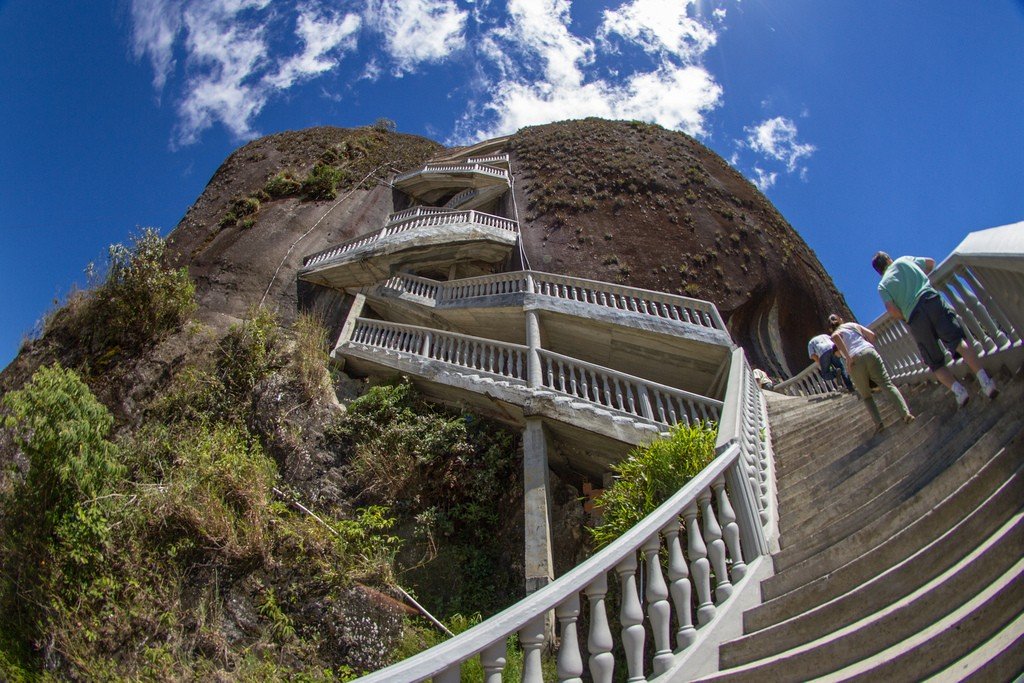
Located in Colombia, El Penion de Guatape fascinates those who see it with its legendary scenery. It is climbed up 650 steps carved into the body of a huge rock. The view after a difficult climb is quite effective.
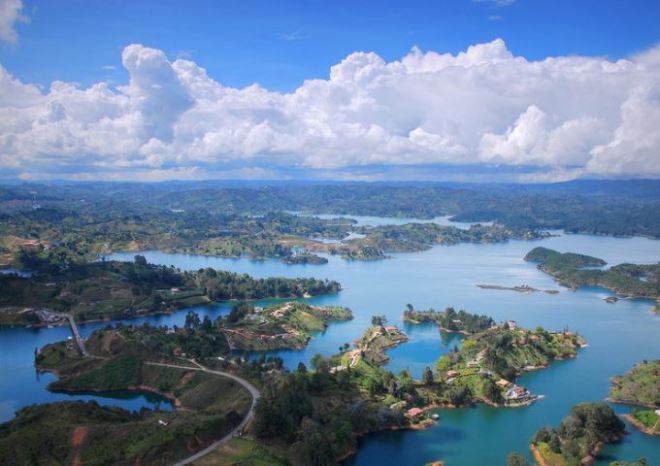
Located away from the main tourist attractions in Colombia, the area enjoys extraordinary popularity. After climbing the very tiring and steep stairs, there is a restaurant as well as a magnificent view on the rock.

Existing for 70 million years, El Penion de Guatape was used as a place of worship by Tahamis and Indians. The rock is protected as Colombia’s national monument. It was first discovered in 1951. In 1954, the summit was reached for the first time as a result of a climbing that lasted for 5 days.
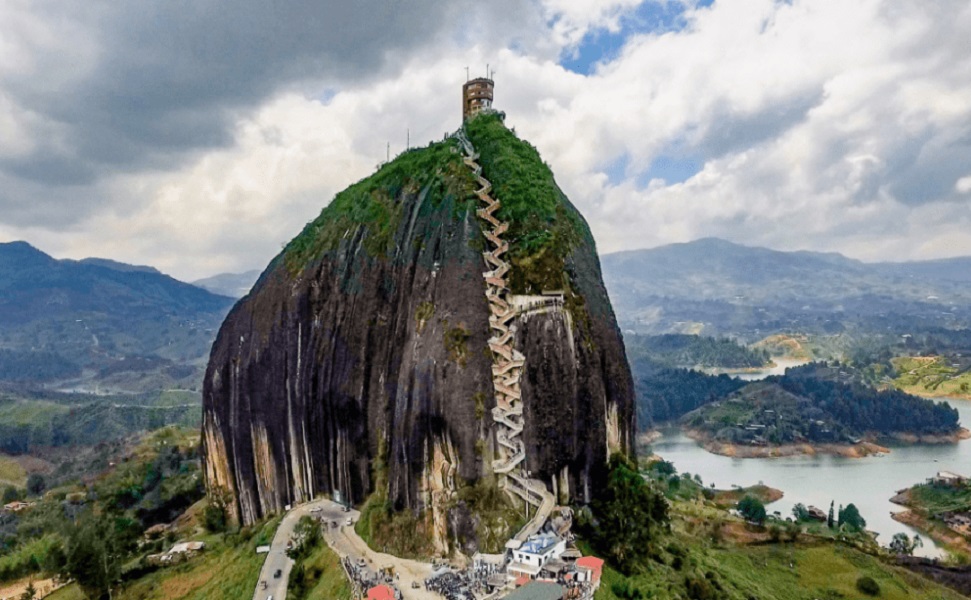
Located on the plains of the Colombian city of Guatepe, the rock has a length of 380 meters and a width of 100 meters. The weight of the rock is 10 million tons according to approximate estimates. The view on the rock gives the feeling of stretching to infinity.
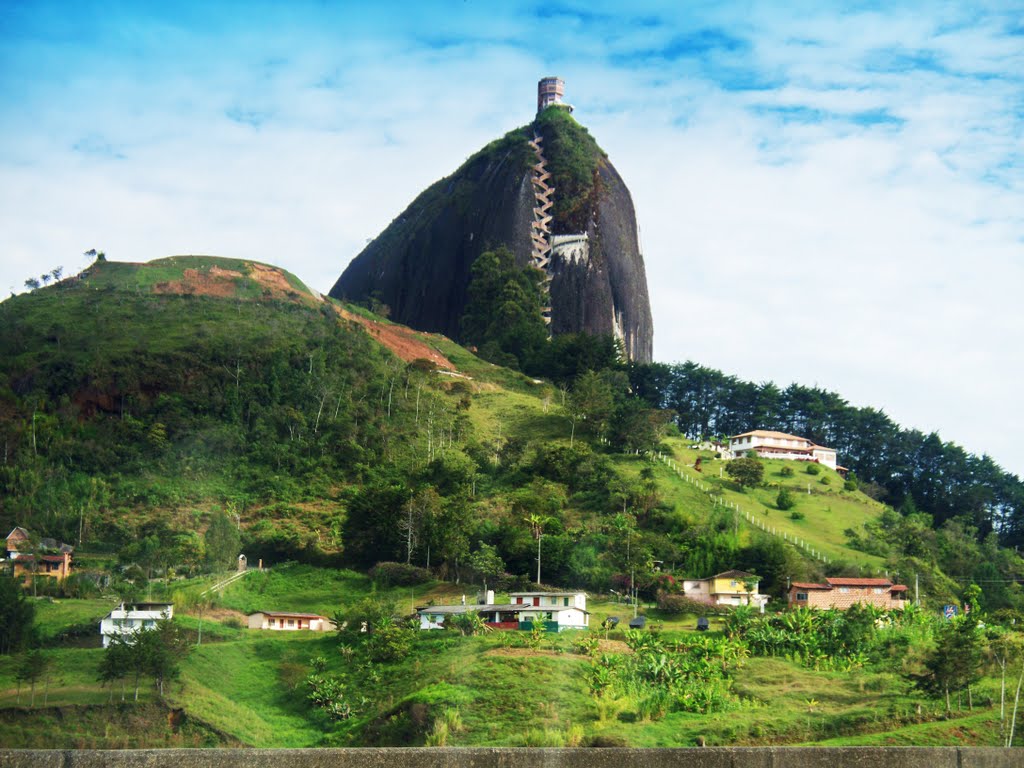
There is a single crack in the massive rock, which is almost completely smooth. Stairs to this crack in the rock were built on the side of the city of Guatape.
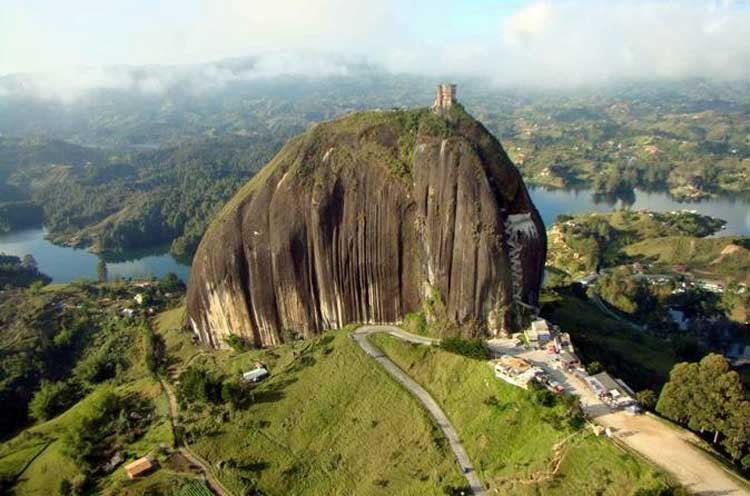
El Penion de Guatape is located between the Colombian Cities of Guatape and El Penol. Since both towns consider this rock as their own, it is a subject of constant debate. For this reason, the names of the two cities are mentioned together. The debate about who the Kaya belongs to has been going on for about 400 years.
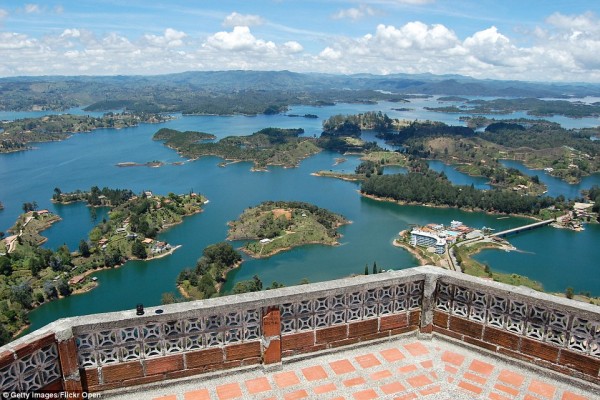
The rock is located at an altitude of 2134 meters above sea level. The letters G and U are carved on the rock, which is one of the most interesting landforms in South America. While trying to write these letters, it was interrupted by a group from El Penol and was left unfinished.
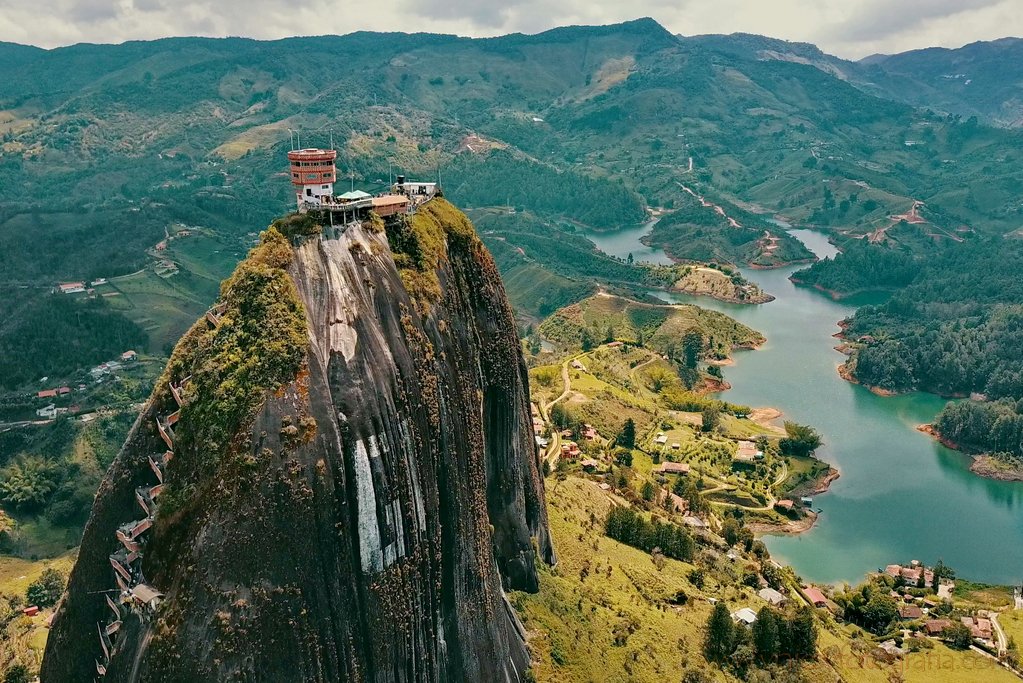
The rock is referred to as a monolith formation. A monolith is a mountain-like geological formation consisting of a single piece of stone or rock. These structures, which are generally a very hard and solid metamorphic rock, emerge as a result of erosion.