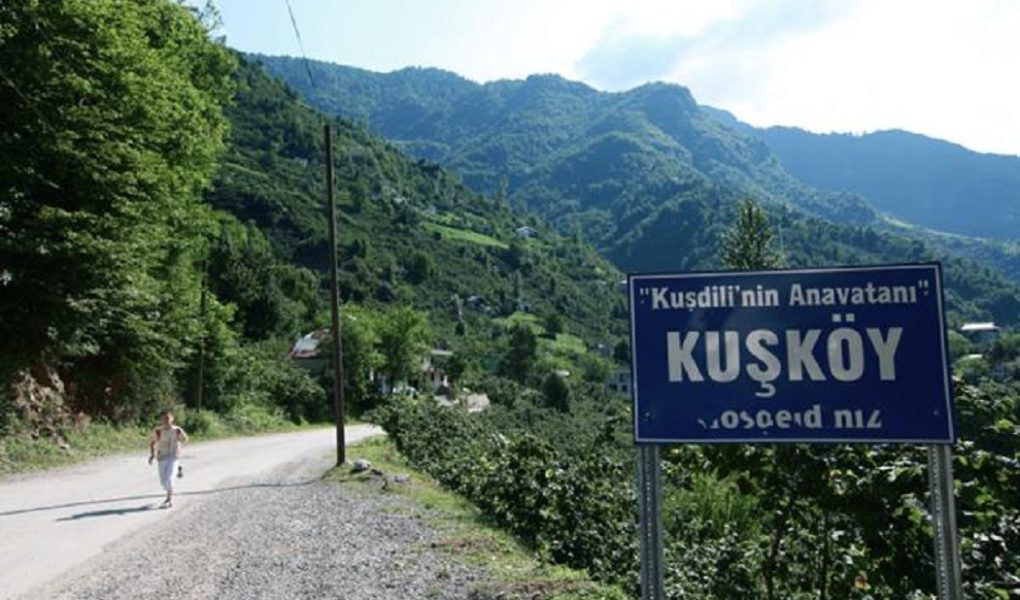
Kuşköy, in Giresun’s Çanakçı district, has become one of the dazzling villages with its diversity. A language called Kuşdili, which is essentially communicated through whistling, brings the residents of this village together and attracts great attention around the world. This special language involves the art of communicating by imitating bird sounds and represents an important part of the village’s cultural heritage. Bird language, the unique communication method of the village people, was included in the UNESCO Intangible Cultural Heritage List in 2017.
The historical name of the village is stated as “Kuşçulu” according to the records of 1916. In this village, bird language, an interesting communication method that has been maintained for almost three centuries, is used by approximately half of the people. The village was previously considered a neighborhood of Karabörk village, but gained its own village status on 6 June 1956. The village was affiliated with Giresun province Görele district, but in 1990 it was included in the newly created Çanakçı district of Giresun province.
Kuşköy came under Ottoman rule in 1431. However, it was subjected to Russian occupation in 1916 and remained under occupation for about two years. It was liberated from the occupation on February 13, 1918.

The Reason for Using Bird Language
In the Black Sea Region, telephone lines frequently fail due to the rugged and scattered terrain. For this reason, communication problems occur and whistling sounds are used to overcome these problems. In Kuşköy, whistling is used to meet simple communication needs, and this is in a much more advanced form than ordinary whistling communication.
People in Kuşköy whistle to communicate. This whistle is called “Bird Tongue” by the local people because it resembles the sound of a bird. From the times when telephones did not exist or were limited to today, Kuşdili has been saying to the person in front of them, “Come to us this evening.”, “Let’s go to collect tea tomorrow.”, “Bring half a kilo of flour.”, “Is there fresh bread?”, “I will buy two kilos of tomatoes.” ” It allows them to easily convey daily expressions such as.
Additionally, those living in Kuşköy said, “Our ancestors used this language even during the enemy occupation; They say, “Kushdila was always used in the fields, vineyards and gardens.” In other words, the Bird language is a means of communication that can be used both to facilitate daily life and as camouflage in dangerous situations.

Whistling Communication is Based on an Old Tradition
Communicating with whistling is not a new concept. Whistle-based languages have been used in different cultures around the world for centuries. The famous historian Herodotus wrote that a society living in Ethiopia communicated with whistles resembling the sound of a “bat”. Today, a similar bird tongue has been used in the Canary Islands for 600 years.
Turkish-German biopsychologist Onur Güntürkün, a researcher of this phenomenon in Kuşköy, states that bird tongue is both a wonderful cultural element and an exciting nature experiment.

Kuşdili Culture and Art Festival
Kuşdili Culture and Art Festival is held in Kuşköy every year in mid-July to promote this tradition and pass it on to future generations. Çanak Mayor states that the festival is very important for this tradition:
“The festival is the festive atmosphere of the tradition that has existed in these lands since the day the local people lived. It was a reflection of the lifestyle before. Now it is used only for demonstration purposes with mobile phones. Bird language is one of the most extraordinary assets of this world in terms of cultural heritage, which has some difficulties in transferring it to future generations. I hope this tradition continues forever in this geography. Our whistles always echo in the sky and are passed on to future generations.”
This cultural heritage in Kuşköy attracts the attention of various media organizations around the world. Journalists and documentary filmmakers from countries such as Japan, Germany and the USA make news about this heritage in the village.