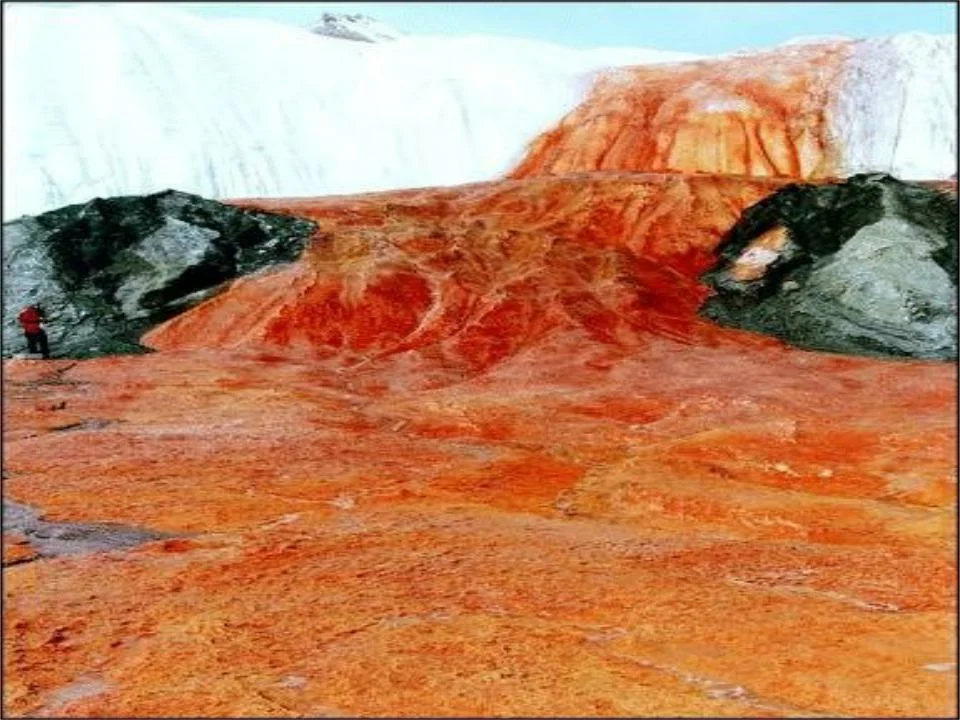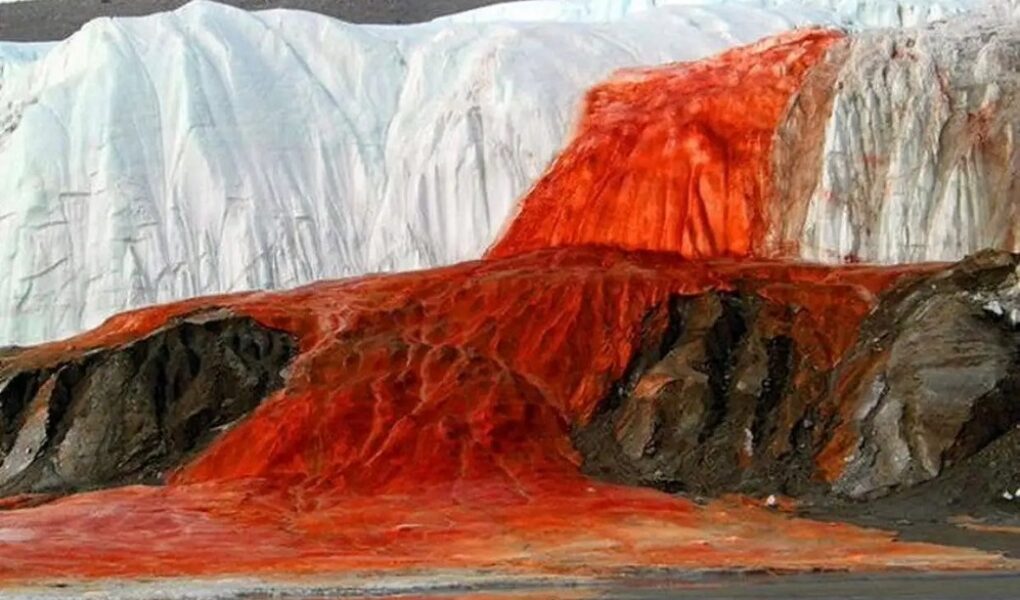
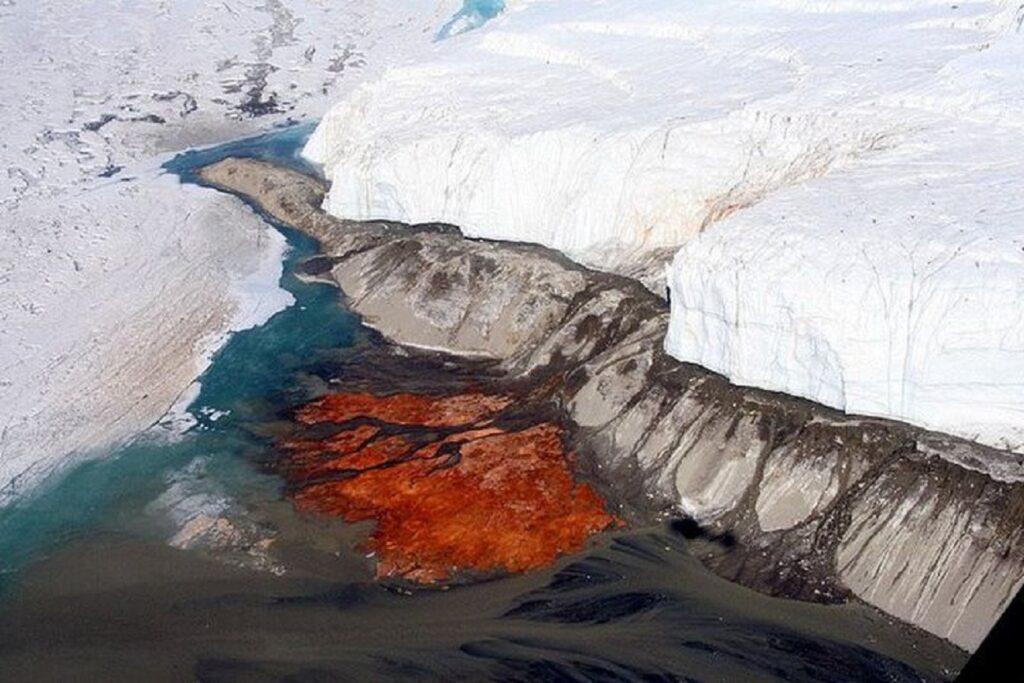
Flowing through the glaciers at the south pole of the world, the Blood Waterfall is astonishing to those who see it. It was named “Blood Waterfall” with its appearance resembling a bleeding wound among the white glaciers. The only place where water rises to the surface in liquid form, Blood Falls is located in Antarctica’s Taylor glaciers. This red water, which can flow between glaciers without freezing, has been the subject of research by scientists for years. The results revealed that a magnificent natural event took place.
The waterfall, which spills into Lake Bonney, was first discovered in 1911. Scientists have done research for many years in order to explain how the current in the waterfall is formed and how it constantly flows. Electromagnetic sensors used to scan Kan Falls revealed that there is a much stronger underground water source under the stream than previously thought.
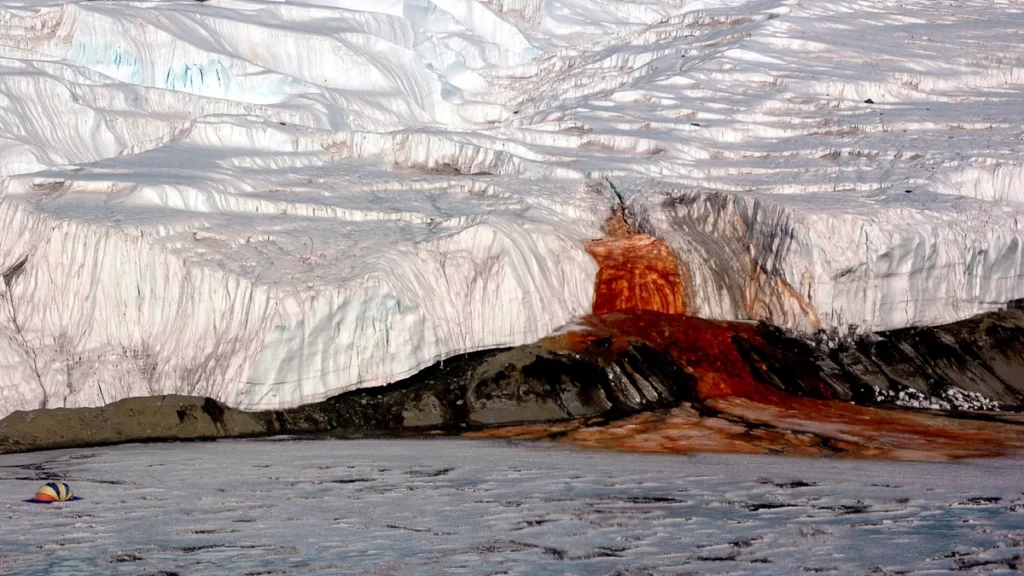
The Color of the Water of the Waterfall and the Reason for Not Freezing
Research on the waterfall shows that Antarctica was submerged when sea levels rose an estimated 5 million years ago. Over the intervening millions of years, glaciers have formed on the lake and the lake has been completely cut off from the mainland. However, despite its rupture, it was able to preserve its microbiological life. The lake, which was deprived of oxygen 400 meters below the glaciers, became saltier over time. Since this lake, which is the source of the waterfall, is 3 times more salty than normal sea salt, it is not possible to freeze. That’s why it continues to flow.
The water flowing from the blood waterfall takes on this red color as a result of the oxidation of the iron in it. The iron mineral comes out with the erosion of the rock bed under the waterfall. The red color of the water increases with the microbiological activities in the water. The water of the lake, which is full of iron oxide underground, turns red when it comes to the surface and comes into contact with oxygen.
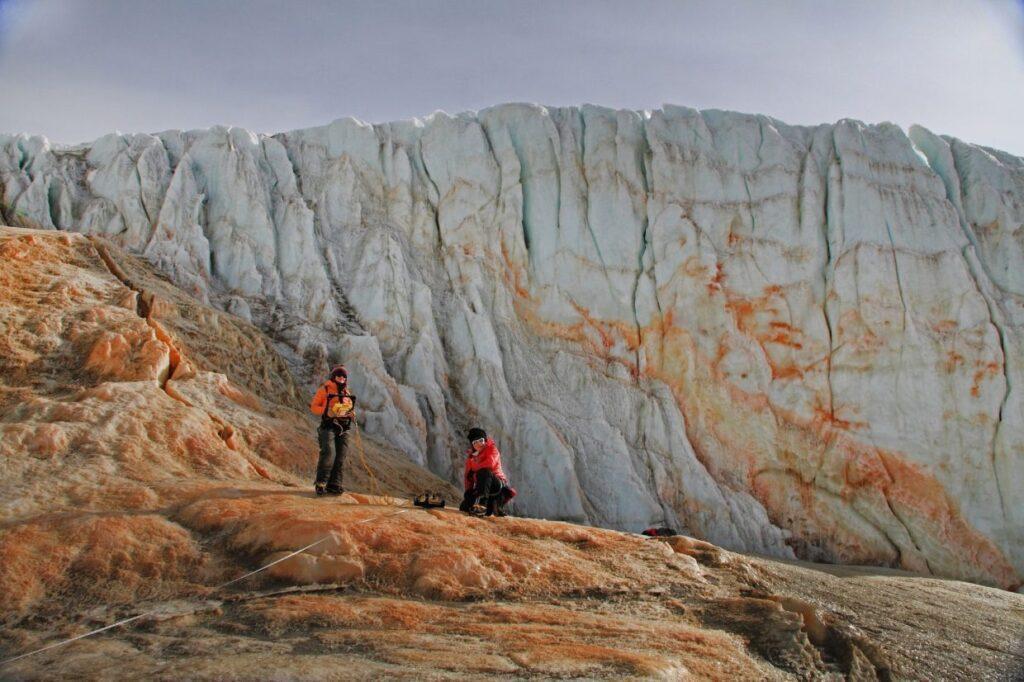
Living Life Found in an Oxygen-Free Lake
In the researches, it has been revealed that living species live in some lakes under the Antarctic glacier. One of the rare spots where water is in liquid form under the ice is the waterfall of blood. For this reason, it is estimated that there are very large microbiological activities in the waterfall. Jill Mikucki of the University of Tennessee has done some research to understand what’s going on deep inside the waterfall. As a result, she stated that there is more groundwater at the bottom than previously thought. The large water reservoirs under the ground go down to a depth of about 400 meters.
The reservoir located under the Kan Falls is said to represent the most diverse liquid water in the world as it is fed by rainwater and snowmelt. The water source under the frozen ice sheet is expressed as the least known hydrological system on the planet. It is thought that there may be other water sources in the depths of Antarctica.
When the water taken from the waterfall was examined, it was seen that the microbe was boiling. They are some bacteria adapted to live in the dark environment of underground water sources. The discovery of bacteria, which can survive in an oxygen-free and dark environment, strengthens the view that life may also exist on Mars and other planets. These microbes are thought to be Iron-dissolving microbes. Iron content in the South Polar Sea was measured as 170 million kilograms. This ratio is thought to be caused by the iron-dissolving microbes in the water. Microbes that break down the iron in the rock increase the iron rate in the water according to the seasons. The effects of the iron ratio in Kan Falls on the continent and what it may lead to in the future are among the topics researched.