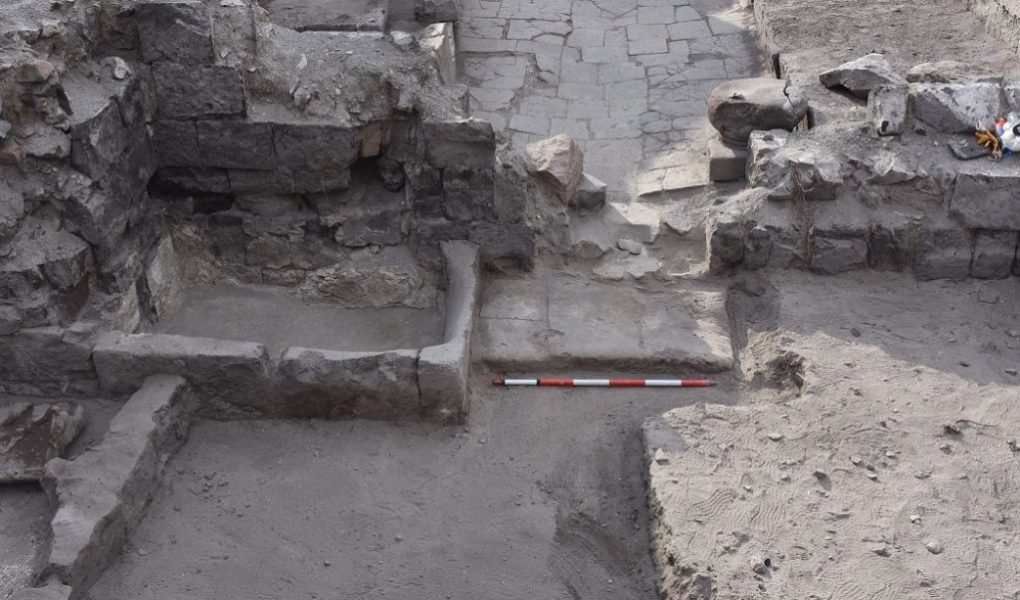
A discovery was made that would change the history of medicine in the world, during the excavations at the Ani Ruins in Kars, Turkey. During the excavations, a stone tub, which is thought to be the first example of water birth, was discovered in the great bath of the Seljuk period. It is known that the first water birth in the world was made in France in 1803. However, the unearthed stone tub reveals that the first example of birth in water was practiced in Anatolia in the 12th century.
Ani Ruins; It is located on the Turkey-Armenia border, 42 kilometers from Kars. The ruins, which have hosted many different cultures and civilizations throughout history, are described as a “world city” or “cradle of civilizations”. Historically, the city of Ani has been one of the important accommodation centers on the silk road and has developed. The settlement BC. Seljuks, Sassanids and Ottomans dominated the city, which is estimated to date back to 5 thousand. Ani Ruins has been declared as an archaeological site together with 21 registered immovables. Considered one of the greatest treasures of history, the ruins were added to the World Heritage List by UNESCO in 2016.

Excavations at Ani Ruins
At Ani Ruins, Kafkas University Faculty Member and Ani Ruins Excavation Head Assoc. Dr. Excavations are carried out under the leadership of Muhammet Arslan. Scientists, art historians and students from 20 universities participated in the excavations, which continued at 5 different points. The historical richness of the Ani Ruins continues to be brought to light with the studies carried out. During the excavations, the Turkish scientist and poet Anili Kadı Burhaneddin-i Anevi, mentioned his own birth, found a bath and a stone tub.
Ani Ruins Excavation Head Assoc. Dr. Muhammet Arslan stated that they were also looking for the existence of such a stone tub in the bathhouse during the excavations carried out since 2019. In the studies carried out in 2022, a stone bathtub was detected.

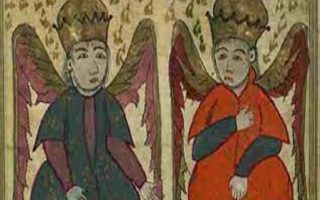
Assoc. Dr. Muhammed Arslan; “The excavations in the bath, which we started to unearth for the first time in the working season of 2020, while it was mostly underground, have continued since this date and are now nearing the completion stage. Kadı Burhaneddin-i Anevi, one of the Turkish scholars and poets from Ani, describes his life in the preface of his work ‘Enisü’l-Kulub’, the only copy of which is in the Süleymaniye Library today, and states that he was born in 1143 in the Great Bath in Ani. In the words of the author, this birth takes place as follows: ‘His father, Mesut, had five daughters, respectively, and then his mother, Kadı Burhaneddin, became pregnant. The birth process of his mother was very painful and he was born in 1143-44 in the great bath in Ani with the advice of a physician.’ Key phrases such as ‘physician advice’ and ‘hammam’ in the birth process of Kadi Burhaneddin show us that water birth was practiced here.”

Assoc. Dr. Muhammed Arslan; “Although it is stated that there are scenes related to water birth in Egyptian hieroglyphs (ancient writing system), the scenes in question include normal birth scenes, not water birth. The claims that Egyptian pharaohs were born by water birth method cannot go beyond legend. It is known in the literature that the first water birth in the world took place in France in 1803. However, both the information about the birth of Kadı Burhaneddin of Anili and the stone bathtub we uncovered during our excavations reveal that one of the first examples of water birth in the world was practiced in Anatolia in the 12th century. At the same time, this practice is very important in terms of showing the level that Turkish culture and civilization and Turkish medicine reached in the 12th century.
Assoc. Dr. Regarding the stone bathtub found by Muhammet Arslan; It has a rectangular plan with a length of 1.93 meters, a width of 1.40 meters and a depth of 50 cm. Water flow is provided to the tub from the coldness area in the west with pipes. The water drain of the tub is in the east and the inside of the tub is completely plastered. The stone tub found is located in the northwest corner of the warm room covered with a dome in the southeast corner of the bath.