
It was discovered that a skeleton found in Belgium, thought to belong to a single person, actually belonged to at least seven different people who lived thousands of years apart. The skull, thought to belong to the Roman period, stands out as one of the keys to this complex puzzle.
Discovery of a Strange Grave in Belgium
in Pommerœul, Belgium, in the 1970s. Gallo-Roman During the excavations carried out in a settlement from the period, 76 cremation burials and an unusual grave were found. Initial findings showed that this tomb belonged to the Roman period, that is, from the 2nd to 3rd centuries AD. However, the grave was quite different from a standard Roman period burial.
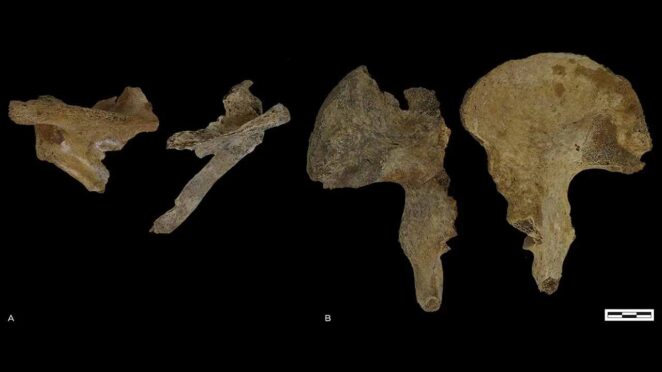
The team explains the unusual aspects of the tomb as follows:
“This unusual grave was located in a deeper layer than the layer containing cremation burials. The placement of the body in a bent position on its right side was unusual for the Roman period. However, the Roman bone needle found near the skull caused this grave to be interpreted as belonging to the Gallo-Roman period.”
Combination of Seven Different People: Surprising Facts via Radiocarbon Analysis
Radiocarbon dating in 2019 showed that the tomb dates back thousands of years, not to the Roman period. to the late Neolithic period He showed that he belonged. The way he was buried in the grave also coincided with this dating. While corpses were buried on their backs in the Roman period, this skeleton was found with its legs bent and lying on its right side, in accordance with the traditions of the Neolithic period. So, what was the bone needle from the Roman period doing in this tomb?
Researchers who re-examined the remains of the tomb encountered a big surprise. It turned out that this skeleton, which at first glance was thought to belong to a single person, actually belonged to at least seven different people. The team said, “The remains are generally dated to the Late Neolithic period, but the age ranges of some bones do not match each other. “This shows that individuals lived in three different time periods,” he explains.
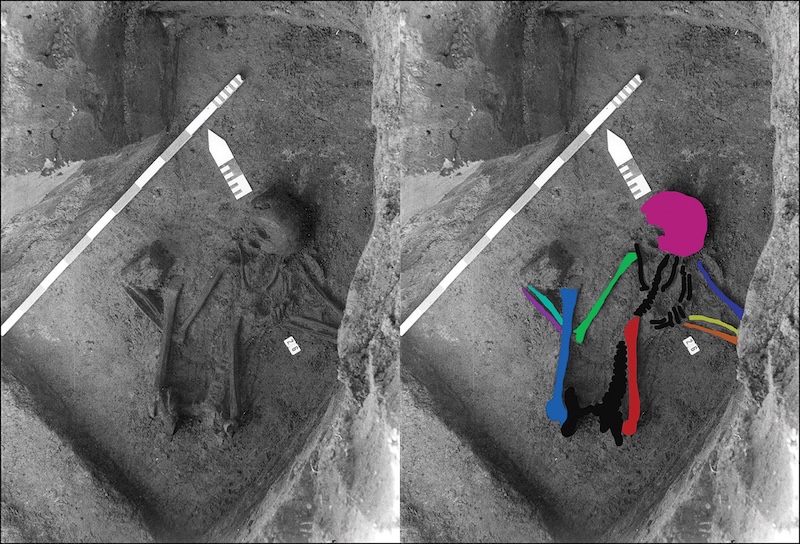
DNA analysis revealed an even more striking fact: The skull was a genetic match to two people buried in a Roman cemetery 150 kilometers away about 1,800 years ago. This clearly showed that the skeleton consisted of people who lived thousands of years apart.
Confusing Combination
The team is considering several possible scenarios regarding this mysterious burial. The first possibility could be a restoration during the Gallo-Roman period. It is possible that during the disruption of the tomb, Roman people saw a missing skull and added a new one to complete it. Another scenario is that the skeleton was created entirely in the Roman period, using local Neolithic bones and a new skull.
However, since the burial arrangement is closer to Neolithic traditions, the team considers the first hypothesis to be more likely.
The researchers conclude:
“The scenario that this composite skeleton was first assembled by a local Neolithic group and was restored by Gallo-Roman inhabitants about 2,500 years later seems more likely.”
This tomb, bearing the traces of thousands of years, continues to present us with the secrets of the past and traces of cultural interactions.
To join our WhatsApp group CLICK!


