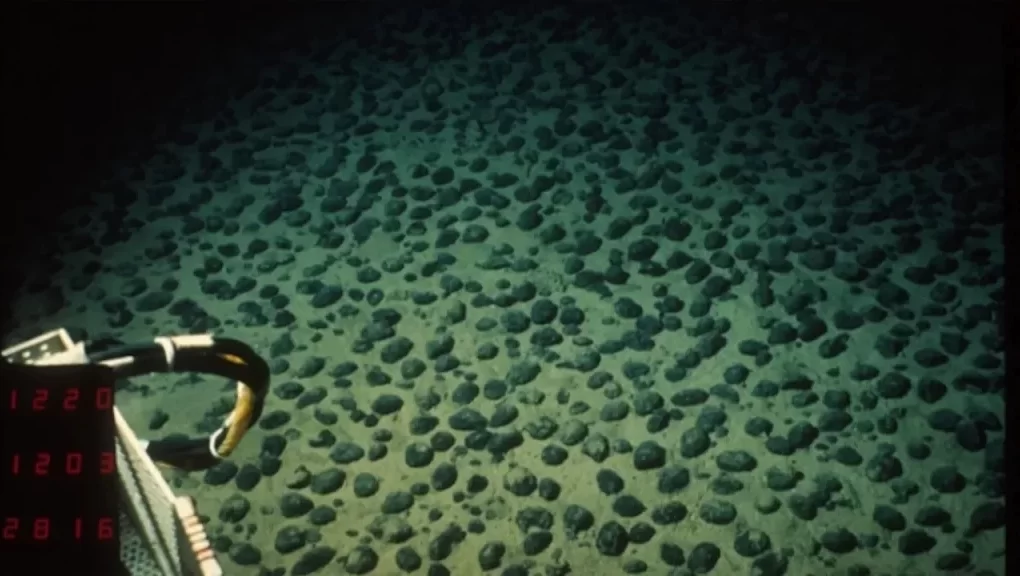
In the middle of the Pacific Ocean, 3000 kilometers off the coast of America, a discovery that astonished scientists was made. This discovery, made 4000 meters deep in the ocean, will once again question the existence of life in the universe and rewrite scientific literature: Dark oxygen.
Oxygenis considered one of the basic building blocks of life, and most of the oxygen on Earth is produced by photosynthetic organisms with the help of sunlight. However, scientists have discovered that deep in the ocean, in areas where sunlight cannot reach, “dark oxygen” They discovered a new phenomenon called.
So how was this discovery possible in such a remote and inaccessible place, at depths where even sunlight cannot reach? What is dark oxygen and why is it so important? This finding has the power to overturn all theories of life as we know it, with oxygen, one of the building blocks of life, being found deep in the ocean. How scientists came to this extraordinary conclusion is a story in itself; a scientific revolution that emerged through a combination of coincidences, doubts and determination.

Discovery of Dark Oxygen: A Scientific Revolution in the Ocean Depths
The discovery was made about eight years ago by Professor Andrew Sweetman and his team in the middle of the Pacific Ocean Clarion – Clipperton began with an expedition to the region. Their goal was to collect samples from the ocean floor to study the ecosystem in this region more closely. However, this ordinary research turned into an unexpected discovery.
While Sweetman and his team were measuring at a depth of 4,000 meters in the ocean, they noticed that their oxygen sensors were showing unusual values. Normally, you would expect oxygen levels to decrease as you go deeper from the sea surface, since oxygen is produced by photosynthetic organisms and light decreases as depth increases. However, the measurements were contrary to this expectation, even higher than the oxygen levels in surface waters values were showing.
At first, these surprising results were attributed to a fault in the oxygen sensors. Sweetman told his students to contact the company that made the sensors, and the devices were sent back for testing. However, the tests revealed that the sensors were working perfectly. This finding was not given much importance at the time, and the results were ignored.

After eight years, Sweetman and his team returned to the same area in 2021 and 2022. This time, the oxygen sensors showed the same strange values, and this time, different methods were applied to eliminate the possibility of incorrect measurements. After all the checks and alternative methods were tried, Sweetman and his team had to accept that this oxygen in the depths of the ocean was real. This oxygen was in complete darkness, in a place where there were no photosynthetic creatures. This extraordinary discovery “dark oxygen” they named it.
Normally, oxygen production does not occur in the depths of the ocean; oxygen produced on the surface or mixed from the atmosphere sinks to the bottom due to the density of cold water and feeds the ocean floor with oxygen through the Thermohaline Cycle. However, this cycle is very slow and can take between 100 and 1,000 years to reach the depths of the ocean. In light of this information, Sweetman and his team realized that the presence of oxygen and biodiversity in the deep sea may be much more complex than previously thought.

Polymetallic Nodules and Electrochemical Processes
Scientists are investigating the source of dark oxygen in ocean floor polymetallic nodules These nodules are metal-rich structures that slowly form over millions of years in the deep ocean. The researchers considered the possibility that these nodules might play a role in oxygen production.
This hypothesis suggests that metal ions dissolved in ocean water interact with metals on the surface of nodules, creating a continuous electron flow The idea was that such a process could release oxygen through the electrolysis of water. However, the exact mechanism by which this electrochemical mechanism works has not yet been clarified.
However, it has been suggested that polymetallic nodules could act like a battery, producing oxygen in ocean water even at low voltage. However, this process may go beyond current chemical theories and requires further research.

Clarion-Clipperton Site Where Dark Oxygen Was Discovered
Discovery of dark oxygenis of great importance for ocean science and its potential impact on ecosystems. This finding may lead us to rethink the dynamics and existence of life in the deep ocean. In particular, concerns are growing about the potential impacts of mining activities in these regions on ecosystems.
Clarion-Clipperton District The (CCZ) is a large area of seabed located in the middle of the Pacific Ocean between Hawaii and Mexico. This region, which is approximately 6 million square kilometers, covers an area larger than India. The region is particularly notable for the polymetallic nodules found on the ocean floor. These nodules have formed slowly over millions of years and contain valuable metals such as manganese, nickel, copper, and cobalt. For this reason, major mining companies have their eyes on this region.
But the presence of dark oxygen suggests that this region is more than just a mineral deposit, it plays a vital role in deep-sea ecosystems. This discovery is creating great excitement in the scientific community, while also making us rethink what we know about what goes on in the deep ocean.
Against mining companies planning to extract metal-rich nodules from the ocean floor, scientists are warning that these ecosystems may be home to biological and chemical processes that are far more complex than previously thought.

The Effects of Dark Oxygen on Life in the Universe
This discovery could provide a new perspective on the search for life in the universe. Until now, oxygen production was thought to be dependent on water and sunlight. However, The existence of dark oxygen means that oxygen can be produced without light. and therefore shows that life can exist in such dark environments. This situation, on other planets, life can exist in depths where light cannot reachstrengthens the possibility of i.
This type of oxygen, which cannot be detected by traditional methods, is being investigated with advanced technology analysis devices and spectroscopic methods. Scientists are trying to prove the existence of this new form of oxygen by analyzing molecules in the atmosphere using light of different wavelengths.
However, the existence of dark oxygen has not yet been fully confirmed. The scientific community points out that more data needs to be collected and more comprehensive research needs to be conducted on this subject.
Scientists are deepening their studies to explore the role and effects of dark oxygen in the atmosphere. If the existence of these molecules is confirmed, it could provide a whole new perspective on efforts to combat climate change and improve air quality. This could play a critical role in the future of climate science and environmental policy. Dark oxygen is not only a natural science field, but also a society climate change It also has the potential to increase awareness on the subject.
To join our WhatsApp group CLICK!


