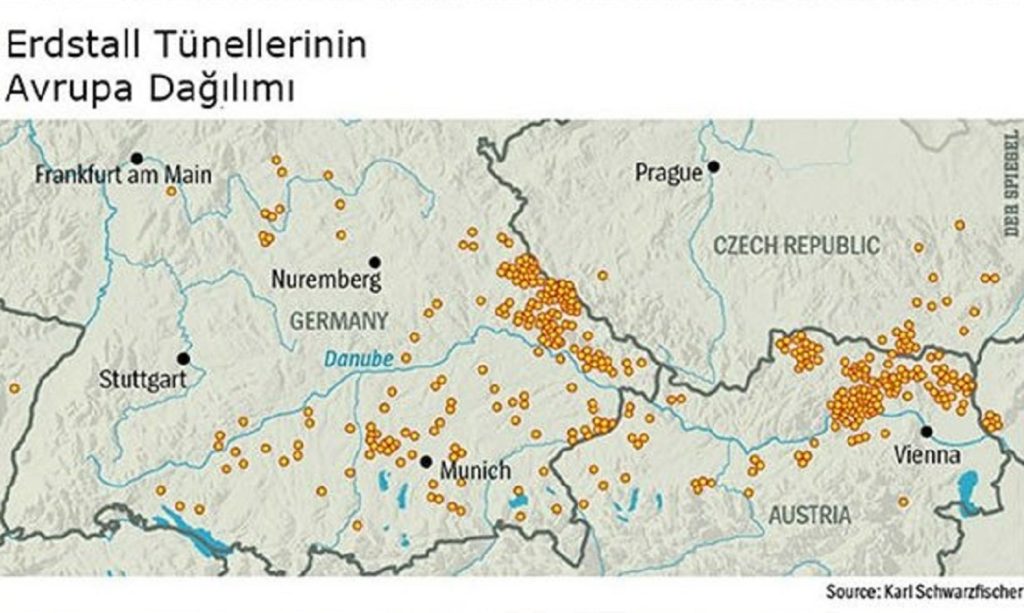
The Erdstall Tunnels have stood out as mysterious and intriguing structures throughout history. These mysterious tunnels, located in various parts of Europe, still bring with them many debates about their purpose. These tunnels, thought to start from Scotland and extend to Turkey, lie deep in Europe and were built in the darkness of the prehistoric period.
This narrow and narrow space challenges the imagination of archaeologists. smooth-walled passages It is still not known exactly who built it and for what purpose. Moreover, the tunnels built at their entrances chapels and churches They stand out as symbols of the effort to preserve these mysterious structures. Erdstall Tunnelsis waiting to be discovered as a riddle extending from the depths of the past to the present.

Erdstall Tunnels Forming an Underground Network
Covering a large area in Europe and “Erdstall tunnels” about the mysterious underground passages known as 12 thousand years ago It is thought that these tunnels were built It extends to TurkeyThere are also some theories about it. German archaeologist Dr. Heinrich Kuschwritten by a cave expert “Secrets of the Underground Gate to the Ancient World” He provides detailed information about these tunnels in his book.
These structures, which are likened to today’s underground highways, are widely believed to have been built to protect against predators, adverse weather conditions, and wars. Although not all of these tunnels are connected, they form a fairly extensive underground network when viewed in general.

Throughout Europe, called “Erdstall” More than 2,000 man-made tunnels Despite the research conducted on these tunnels for many years, it still remains a mystery who built them and for what purpose. The term “Erdstall” is mine tunnel means underground tunnel, but the term is also used for many man-made underground tunnels.
The Erdstall Tunnels are considered by some as concrete evidence that ancient civilizations had much closer relations than expected. It is suggested that these interesting underground passages discovered in various parts of Europe could be an important sign that ancient societies were connected to each other.
Some theories suggest that these tunnels served as hiding places, places for religious rituals, or trade routes. However, the exact purpose of these tunnels is still debatable as there is no definitive evidence.

Distinctive Features of Erdstall Tunnels
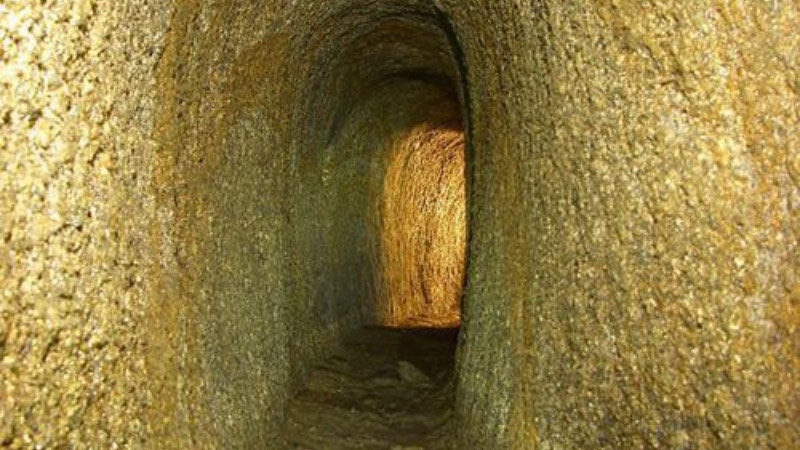
Although there are many tunnel systems around the world, the Erdstall tunnels are notable for their distinctive features. narrow, oval-shaped and with smooth walls It is known that some of the Erdstall tunnels benches at the end but it is still unclear who is sitting in these dark spots and for what purpose.
There are also passage points inside the narrow tunnels, which are thought to provide access to tunnels at different levels. The Erdstall tunnels only have one entrance and one exit, making airflow inside almost impossible.
German archaeologist Dr. Heinrich KuschIn his book, “Secrets of the Underground Gate to the Ancient World,” he states that such tunnels exist beneath Neolithic settlements in many parts of Europe, and that this underground network extends from Scotland to modern-day Turkey. Dr. Kusch also states in his book that the fact that many of these tunnels have survived after a long period of time, such as 12,000 years, is evidence of how large the original tunnel network was.
These tunnels, which start from the north of Scotland and extend to the Mediterranean, number in the thousands.is one of the mysterious heritages of Europe’s underground. German archaeologist Dr. Heinrich Kusch stated that they discovered underground tunnels hundreds of meters long in Germany and hundreds more in Austria, indicating that these giant underground tunnels are spread throughout Europe.

Dr. Kusch emphasizes that some parts of this tunnel network have preserved their original integrity, despite being built approximately 12,000 years ago. He suggests that the 700-meter tunnel in the Bavaria region of Germany and the 350-meter tunnel in the Styria region of Austria are parts of this extensive underground network.
According to Dr. Kusch, some parts of these tunnels, which are 70 centimeters in diameter and resemble wormholes, sitting areas, food depots and shelter rooms Archaeologists have discovered that these tunnels extend to Anatolia. to protect from predators, bad weather or war They think they were built for this purpose. The tunnels in some areas are larger and contain large rooms used for seating, storage and public events.

Dr. Kusch states that the existence of these tunnels has been proven beneath Neolithic settlements in the European continent. He also points out that the skills and tools needed to build such structures tens of thousands of years ago were present, and that Bosnian Pyramids and states that the underground tunnels that continue for kilometers support this view.
According to Dr. Heinrich Kusch, chapels were often built at the entrances to these underground tunnels. The church was concerned that these tunnels might represent a profane heritage and therefore wanted to ensure that their existence remained a secret. This strategy reflects the church’s desire to maintain the mystery of the tunnels, as it does many other things.

To join our WhatsApp group CLICK!
On the subject ”Underground Tunnels and Cities Surrounding Turkey” For the article named CLICK!