
Although Denizli’s Pamukkale is known worldwide, this hidden beauty underground has not yet been discovered by many people. Kaklık Cave, which reveals the miraculous touches of nature, offers a fascinating experience to its visitors with its stalactites, stalagmites and travertine steps resembling Pamukkale.

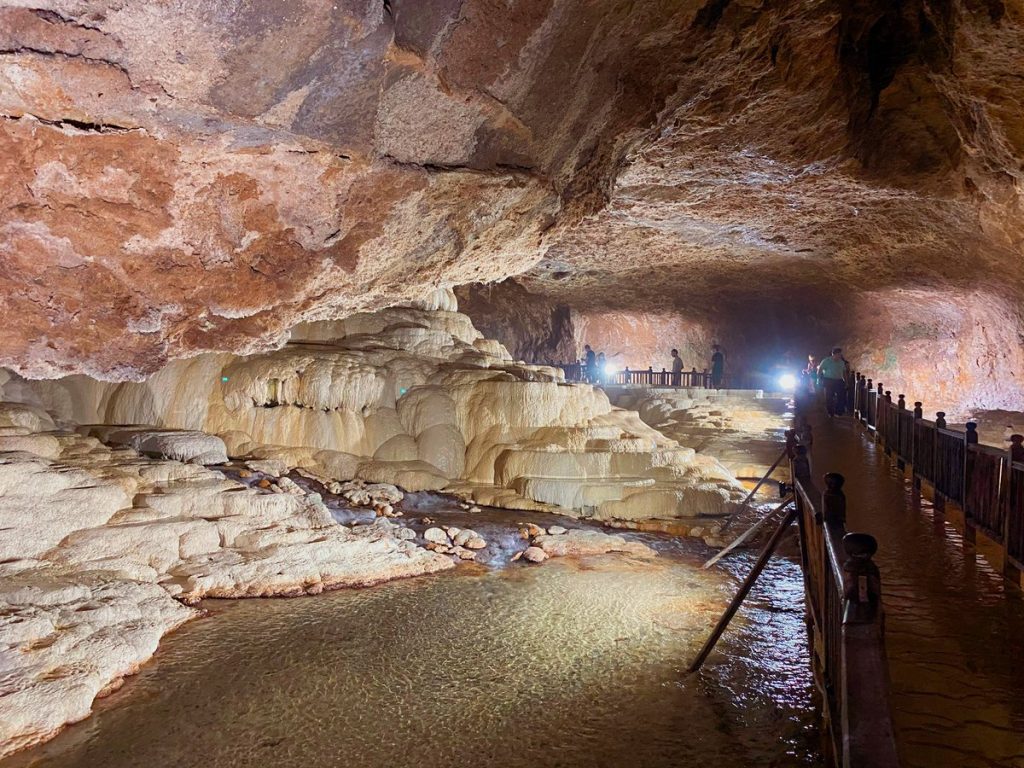
The cave also stands out with its travertine steps, which have similar characteristics to the travertines in Pamukkale. For this reason, “Little Pamukkale” or “Cave Pamukkale” It is also known as. There are thermal water sources inside Kaklık Cave. Kaklık Cave, which is considered the underground equivalent of Pamukkale, which is on the UNESCO World Heritage List, hosts more and more visitors every year.

Kaklik Cave is located in Kaklik town of Honaz district, which is located on Denizli-Ankara highway, approximately 30 km from Denizli city center. This unique cave has travertines, thermal water pools, moss in different shades of green and With a constant temperature of 32 degrees attracts attention. Kaklık Cave, which has been contributing to tourism for 21 years, continues to attract the attention of nature lovers with its fascinating atmosphere.
Geological Structure of Kaklik Cave
An active cave Kaklik CaveI, has the characteristics of a sinkhole-source and collapse sinkhole. The cave is surrounded by limestones from the Mesozoic era, marls, clays, sandstones and conglomerates from the Eocene period, clays, sandstones, marls and limestones from the Miocene-Pliocene age, and travertines and alluviums from the Quaternary period.

Structurally, it is thought to have been shaped by a large underground stream and formed by the collapse of the ceiling. In the cave, which shows the development of a sinkhole, a large travertine mass also draws attention. Discovered by two French explorers in 1839, this cave was formed as a result of a natural collapse. Later, an area used for irrigation was broken and revealed and opened to the public in 2002.

Pamukkale-like Travertines and Water Resources
Travertines similar to Pamukkale travertines were formed as a result of the Kokarhamam Spring (also known as Haydarbaba Spring) right next to the cave, flowing into the cave in waterfalls. These travertines, which form pools in the form of steps, continue to develop today. In addition, small waterfalls flowing from the north wall of the cave also cause travertine formation on the walls.
Natural Light and Vegetation
Kaklik Cave has a wide and circular entrance and most of it receives sunlight. This light allows moss and small vines to grow on the cave walls. These plants, which take on different shades of green during the day, give the cave a very unique and aesthetic appearance.

The Healing Effect of Thermal Waters
The abundant thermal waters in the cave are notable for their clear and colorless nature as well as their sulfur odor. It is thought that these waters are good for some skin diseases. The length of the cave was measured as 465 meters with the tunnels opened by the State Hydraulic Works. There is also a stream with a high sulfur content in the cave.

Tourism Potential
Research conducted under the instructions of the Denizli Governorship has contributed to the opening of Kaklık Cave to tourism. This natural beauty stands out as an area worth exploring for both local and foreign tourists.


