
La Rinconada comes to life as the highest settlement in the world, on the sky-high peaks of Peru. However, this altitude is not just a geographical feature, it is also a difficult reality that deeply affects the lives of those who live there. Health problems caused by high altitudes, lack of hygiene and harsh working conditions turn life here into a struggle.
gold mining, It forms the livelihood of the people of this unique geography. However, while it creates an economic resource, it also creates an environmental hazard, creating a challenging balance in terms of health. The story of La Rinconada presents a reality full of the difficulties of life at altitude, pushing the limits of human endurance.
Information About La Rinconada
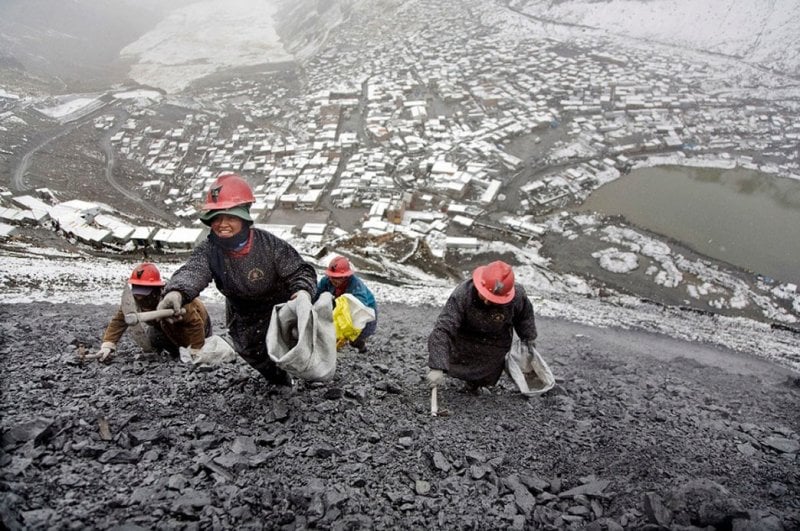
La Rinconada, Puno Region of PeruIt is a city located in . 5100 meters It is the settlement with the highest altitude in the world. The city is located at the foot of the Andes Mountains. As of 2012, it has a population of 50,000 people. This city has mountain climate characteristics, with an average annual temperature of 1.2 °C and an annual rainfall of 707 mm. La Rinconada’s economy is based on gold mining.
of Peru AndesA former gold mining camp located above the tree line in , has developed into a city over time. Even though La Rinconada is only 14 degrees from the equator, its weather is high enough to resemble the west coast of Greenland. This situation means that summers are wet and winters are dry; It means the days are cold and the nights are freezing.

La Rinconada has a reputation for harsh climatic conditions and high altitude, making life quite challenging. People living here often struggle with harsh work conditions such as gold mining. However, these activities may also bring environmental and social problems. La Rinconada, the highest inhabited place in the world, is constantly inhabited throughout the year. Located at an altitude of 5100 meters in Peru, the town can only be reached via a narrow mountain road.

Hard Living in La Rinconada
La Rinconada has no roads, plumbing or sewer systems. Houses are usually made of corrugated tin sheets with little or no insulation. All of the men living in this settlement work in the mines.
In addition to mining gold, miners extract gold by hand using mercury, the second most abundant substance. This has contaminated La Rinconada’s soil, air, water, and even snow, along with nearly everything else downstream. In fact, although it is the highest settlement in the world, La Rinconada is also known as one of the poorest and saddest cities in the world.

Unlike other mining towns, La Rinconada is not owned by a corporation. Most of the mines operating here are informal and have no system of governance or law. This means that it is not possible to improve the conditions of the region. The gold extracted here does not provide much benefit to the people living in the region; Most of the time, gold from the mountains is sold directly through smuggling.
What is even more surprising is that the mining company Corporación Ananea does not pay salaries to its employees. Instead of, “cachorreoThey operate under an old operating system called “. In this system, employees work for thirty days without pay and can get as much ore as they can on the thirty-first day. However, it is not possible to determine the amount of gold contained in the ore taken and it usually contains a very small amount of gold. Despite the company’s unconventional payment system, miners continue their interest in the region. This caused La Rinconada’s population to more than double between 2001 and 2009.

How Do People Survive in La Rinconada?
Although people living in La Rinconada can genetically adapt to this high altitude, researchers state that living in the region is quite unhealthy. This is due to factors such as unhealthy hygienic conditions, low oxygen levels, gold mining and the resulting mercury released into the atmosphere.
In reality, living at high altitudes is not easy for humans. Because as altitude increases, atmospheric pressure, temperature, amount of oxygen in the air and humidity decrease. Additionally, as the density of the atmosphere decreases, the harmful effects of the Sun become more evident at high altitudes.

In this case, the organism begins to breathe faster and increase heart rhythm in order to prevent problems caused by lack of oxygen and to meet the need for oxygen. However, a certain adaptation period is needed for the body to adapt to high altitude conditions. Generally, problems caused by significant oxygen decrease in the human body are not observed at altitudes up to 2500 meters. However, at altitudes between 2500 and 5300 meters, the oxygen saturation rate in the blood drops below 90%. The body begins to show some physiological changes to adapt to high altitude.
Research shows that people have historically lived in high altitude areas. For example, it is known that there were settlements in Peru dating back approximately 12,000 years, established at an altitude of 4500 meters. This shows that humans can genetically adapt to high altitudes.

To join our WhatsApp group CLICK!


