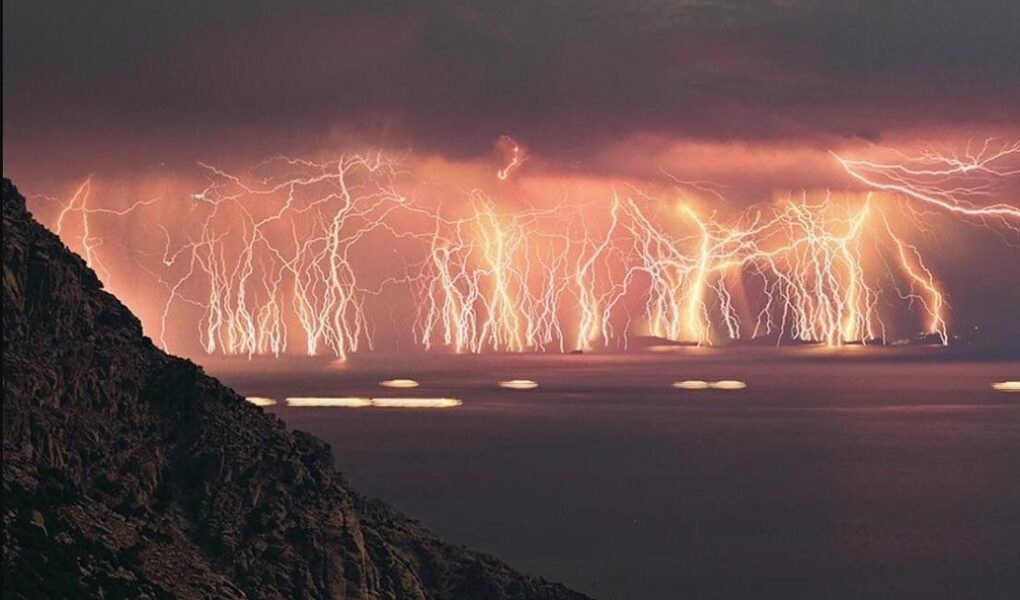
Despite the immense progress of science, there are some unsolved events and places in the world. One of these places, Lake Maracaibo, is the place where the most lightning strikes in the world. Located in northern Venezuela, this lake is struck by 280 lightning bolts per hour. With this feature, the lake entered the Guinness Book of Records.
Lightning occurs at the mouth of the river where the Catatumbo River meets the lake. It is seen in the same place every day, approximately 1 hour after sunset. It is extremely interesting that these lightning bolts, which are no different from other lightning, have the same place and timing. This situation, which repeats itself every day, reveals a miraculous event.

There are almost non-stop storms in the region where lightning strikes. The lake and its surroundings, which are exposed to an average of 260 severe storms every year, are considered to be the most electrically charged place in the world. The high amount of storm clouds in the atmosphere produce intense lightning at night. The lake is illuminated every night due to the lightning strikes. Lightning, which lasts for about 10 hours, also creates a natural source of electricity for the region.
Cause of Catatumbo Lightning
According to researches; An average of 250 lightning strikes per square kilometer in the lake. Lightning decreases in January and February and peaks in October. It has been observed that the number of lightning strikes per minute in October is the most intense period. There has been research for a long time about why there are so many lightning strikes in the region. In a study conducted in the 1960s, it was thought that there was an underground uranium store, and this was thought to attract lightning. In recent studies, it is thought that underground oil deposits are rich in methane gas and this situation increases the conductivity of the air. However, these theories have not been fully proven.

The most focused subject is the topography of the region and the components of the winds. Winds from the Caribbean Sea are trapped between the mountains around the lake. The winds, which heat up and carry moisture in the plains, meet the cold air descending from the Andes Mountains and turn into storm clouds. This causes intense lightning in the region. This assumption is widely accepted, even if it is not fully clarified.

Twice in the history of Venezuela, lightning strikes in the region helped prevent enemy attack. The ships used in a secret British attack in 1595 were revealed by the illumination of a lightning light and the attack was unsuccessful. The other took place in 1823, during the Venezuelan War, when Spanish forces tried to sneak in.
Catatumbo lightning is considered a natural lighthouse by the locals living in the area. Lightning the night sky, lightning helps to find direction in the dark with the light it spreads around. These lightning bolts have become a part of the natural life there.