
Larung Gar is the site of the world’s largest Buddhist academy, the Serthar Buddhist Institute, located in the Garze Tibetan Autonomous Prefecture, Sichuan Province, China. Founded in 1980 by the famous Tibetan Lama Jigme Phuntsok, the institute is an important centre for the teaching and practice of Tibetan Buddhism and other Buddhist traditions.
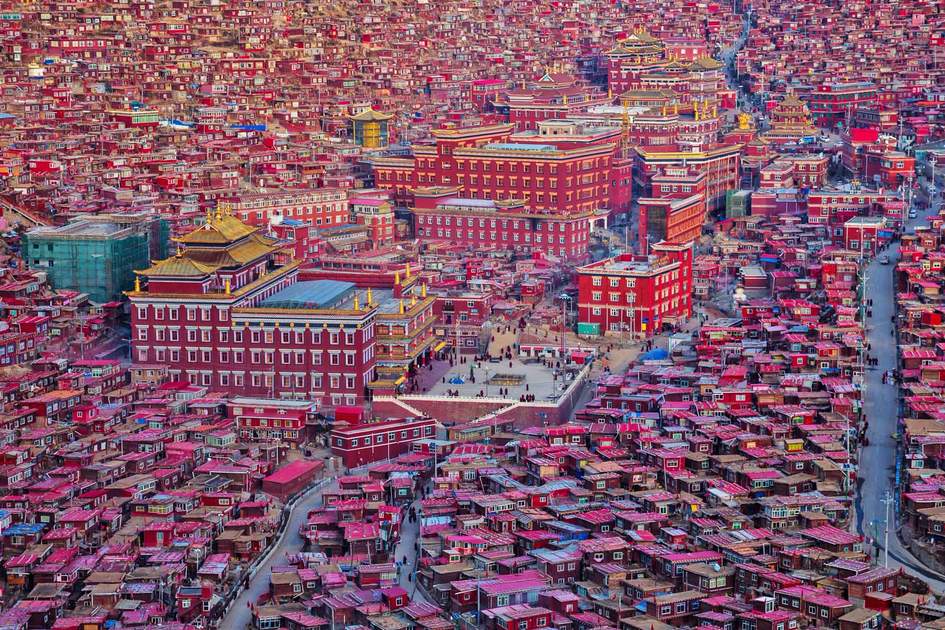
Larung Gar ValleyThis magnificent Buddhist academy, situated among the green hills of 40,000 Buddhist monks and nuns It is home to a number of schools. Although television is banned in the town, smartphones are allowed. Located 595 kilometers from Chengdu, China, reaching this academy requires a long and difficult journey. However, at the end of this difficult road, an impressive red and brown-dominated Buddhist education center You will encounter.
From a Small Community to the World’s Largest Buddhist Academy
Larung GarIt began with just a few students building their residences near Khenchen Jigme Phuntsok’s hermitage. This small community grew as more Tibetan Buddhist monks and lay students came from the Tibetan plateau. As the Serta Larung Five Sciences Buddhist Academy grew in stature and size, more Chinese and international students also built residences at this sacred site to receive teachings from Nyingma Terton Khenchen Jigme Phuntsok. The site is considered to fulfill an ancient prophecy given by the first Dodrupchen Rinpoche. It is considered sacred..
The community consists of mud-brick or wood-built dwellings and meditation retreats. Over time, the community grew, with nuns building guesthouses and footpaths connecting the neighborhoods to the academy. There are also several restaurants near the main square adjacent to the gompa. This layout is designed to meet the needs of both spiritual and daily life.
Larung Gar, at the beginning Although it started with a small group of students, it has become the largest Buddhist academy in the world over time. and has become of great importance as an international education centre. This development has further increased the cultural and spiritual richness of the region.

Education and Spiritual Life in Larung Gar
In Larung Gar, the monks’ and nuns’ quarters are divided into two by a winding road. In addition, the schools where Buddhist monks and nuns receive their education are located in separate buildings. This arrangement ensures that both spiritual and academic activities are carried out in an orderly and disciplined manner. Located in this high-altitude valley, thousands of red housesare spread out on the mountain slopes. These houses are used by monks, nuns and Buddhist students. The color red symbolizes holiness and energy in Tibetan Buddhism.
The Serthar Buddhist Institute provides training in Buddhist philosophy, meditation and spiritual practices to students of all levels. The language of instruction is generally Tibetan, with classes also available in Mandarin and other languages. Students come from all over the world. Buddhist monks, nuns and lay studentsIt consists of.
Larung Gar is not only an educational center but also an important spiritual and cultural center. Buddhist festivals, rituals and various religious events are held here. These events reflect the rich cultural heritage and spiritual depth of Tibetan Buddhism.

A Cultural and Spiritual Heritage
Larung Gar has been in the international spotlight from time to time due to the arrangements and reconstruction efforts made by the Chinese government.In 2016, some of the structures in the area were demolished and some monks and nuns were displaced. This situation has increased concerns about the preservation of the religious and cultural structure of the region.
Larung Gar is the largest Buddhist academy in the world, and is also a vibrant center of Tibetan Buddhism and Buddhism in general. The red houses and spiritual atmosphere here offer a unique experience to visitors and students. These houses are built in red, in accordance with Buddhist tradition, and symbolize holiness and energy. At the same time, these houses represent individual modesty and unity within the community, as they are small, simple structures where monks, nuns and students live their modest lives.

The integrity of the landscape creates an impressive and holistic view on the slopes of the valley. These houses, built in traditional architecture, are made of wood and other local materials in accordance with Tibetan architecture. This reflects the cultural and historical heritage of the region.
Larung Gar is more than just an educational centre, it offers a deep spiritual experience and offers a unique atmosphere to its visitors and residents. These features contribute to Larung Gar becoming a world-renowned Buddhist centre and making the area a spiritually and culturally rich destination. However, the preservation and sustainability of the area remains an important issue for both the local people and the international community.

To join our WhatsApp group CLICK!


