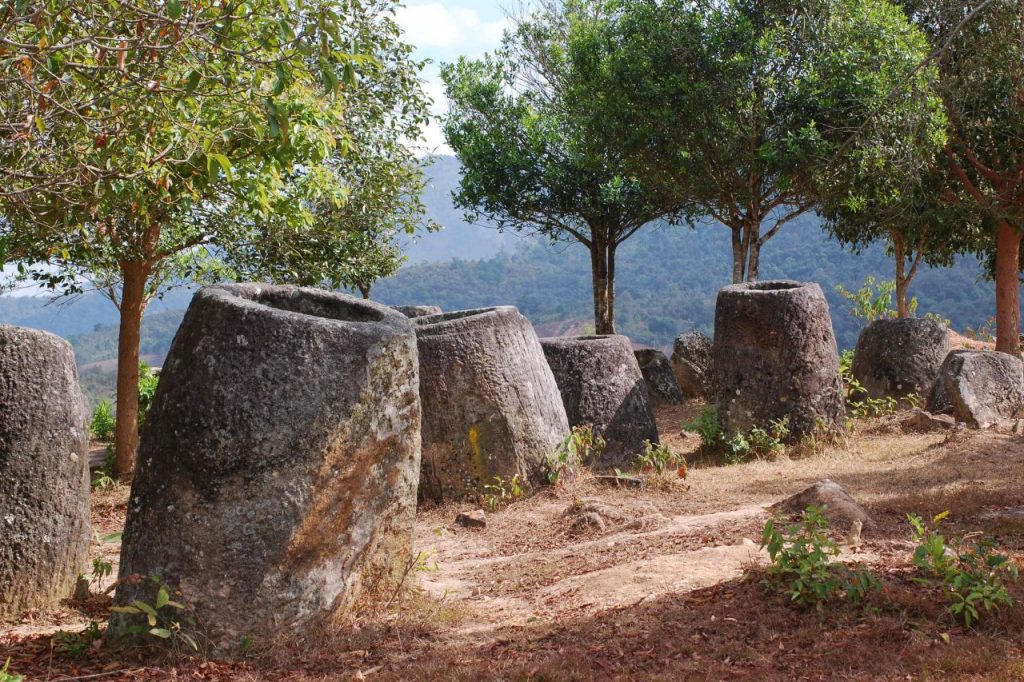
Located in a mysterious atmosphere near the city of Phonsavan in Laos, the “Plain of Jars” continues to attract archaeologists and enthusiasts for years. These ancient jars, carved from rock and made of various materials, provide new information about their purpose, which has long been a matter of debate, with a date determined to be built between 1240 and 660 BC.
Their proximity to burial sites indicates whether these mysterious artifacts were used for ritual purposes or simply marking grave sites While it brings to mind the question of whether it was used for medical purposes, a more pragmatic theory also comes to the fore: Collecting monsoon rainwater. However, the unknowns about these ancient jars are being examined in a new light, with traces of intense bombing by the US Air Force in the 1960s. Research conducted using Optical Stimulated Luminescence (OSL) technology opens the door to important discoveries about the history of these ancient artifacts.
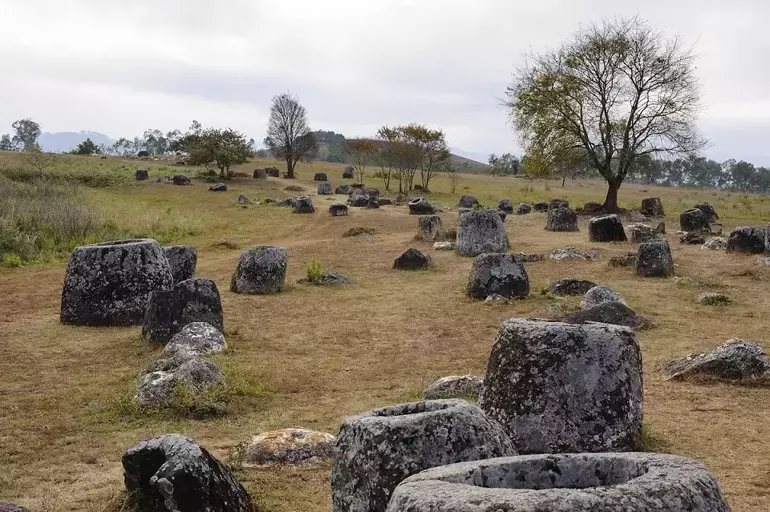
Information about the Plain of Jars
Laos with its official name Lao People’s Democratic Republicis a landlocked Southeast Asian country. Laos’ “Plain of Jars” is a region located near the city of Phonsavan, filled with hundreds of stone artifacts whose construction techniques are still unknown. These interesting artifacts, which academics date back to thousands of years ago, have been attributed to the region in which they were found because they generally resemble jars. “Plain of Jars” It is called (Plain of Jairs).
Clay and stone were used as the basic materials in the construction of hundreds of jars with heights ranging from 1 to 1.5 meters. These ancient artifacts attract attention not only with their history, but also with their unique designs and the variety of materials used. According to new research, these mysterious jars were built between 1240 and 660 BC. After many years of speculation, a team of researchers has managed to determine the date of this ancient mystery.

Stone jar sites spread across various regions of Laos are considered to be one of the most unique and important archaeological discoveries throughout Southeast Asia. These jars, which were detected in more than 90 areas in total, were found in each area. Weights up to 20 tons having, in total Up to 400 jars Contains.
In 2019, UNESCO designated 11 sites containing these jar sites. World Heritage Site declared, emphasizing the cultural and historical importance of the region. The mystical and unknown past of Laos comes to light through these artifacts in the Plain of Jars and continues to attract enthusiasts to the region.

Research and Theories About Ancient Jars
Carved from rock and usually unadorned, mostly made of sandstone but varying in shape and size cylindrical jars, breccia, pebble, granite and limestone It is produced with other materials such as. The exact purpose of these mysterious jars has long been a matter of debate. Given their proximity to burial grounds, for ritual purposes It is thought that they may have been used or simply marked the places where the dead were buried. It is also notable that they contain cremated remains.
A more pragmatic purpose has also been suggested: collecting monsoon rainwater. The Plain of Jars was heavily bombed in the 1960s by the United States Air Force, which specifically focused on these jar sites. The number of bombs dropped on these areas, II. world War262 million cluster bombs in total, more than the entire population.

Using a fossil dating technology called Optical Stimulated Luminescence (OSL), the researchers examined the sediments beneath the jars in 120 different locations and determined that these artifacts were built between 1240 and 660 BC.
From the University of Melbourne, Dr. Louise Shewan, “With these new data and radiocarbon dates for charcoal recovered from skeletal material and other burial environments, we now know that these sites maintained ritual significance from the period of initial jar placement into historic times.” He made a statement. The team behind the research plans to examine more samples from the Laotian jars.