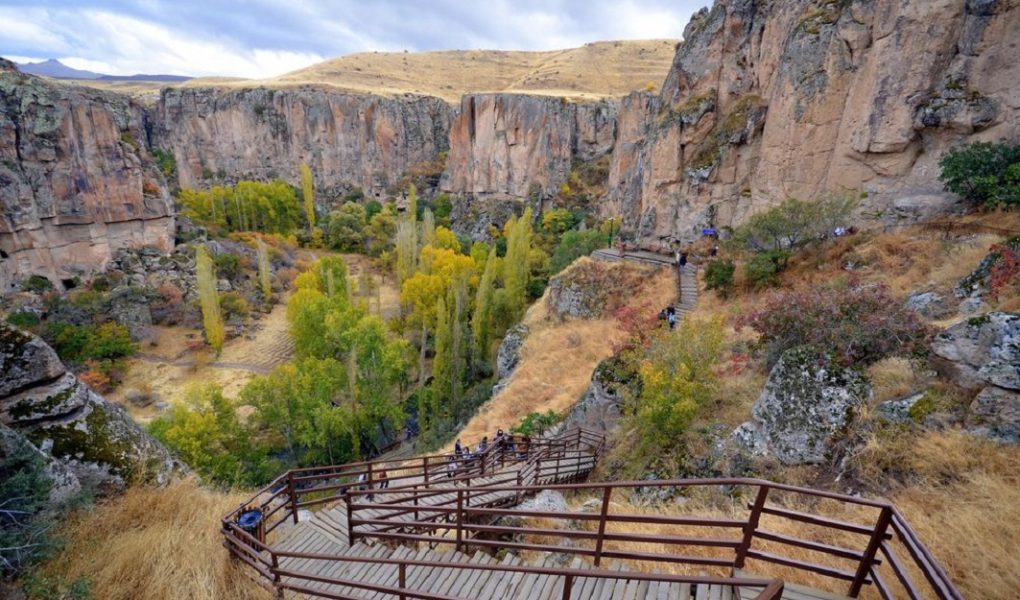
Ihlara Valley is a unique discovery point that hosts the mystical beauties of Cappadocia. Ancient churches hidden within the deep valleys formed by the Melendiz River over the years, rock-carved living spaces, and the impressive texture of nature have created a unique world in this valley. As captivating as Cappadocia’s underground cities, every step in this valley opens a window to the story of the past and nature.
Walking through the Ihlara Valley, you will have the privilege of experiencing the magnificent harmony of history and nature and discovering the secrets of ancient times. This valley, formed centuries ago, attracts visitors not only from Türkiye but from all over the world. The Ihlara Valley is notable for its numerous churches. Guests have the privilege of exploring these churches step by step during their visit.
Formation of Ihlara Valley and General Information
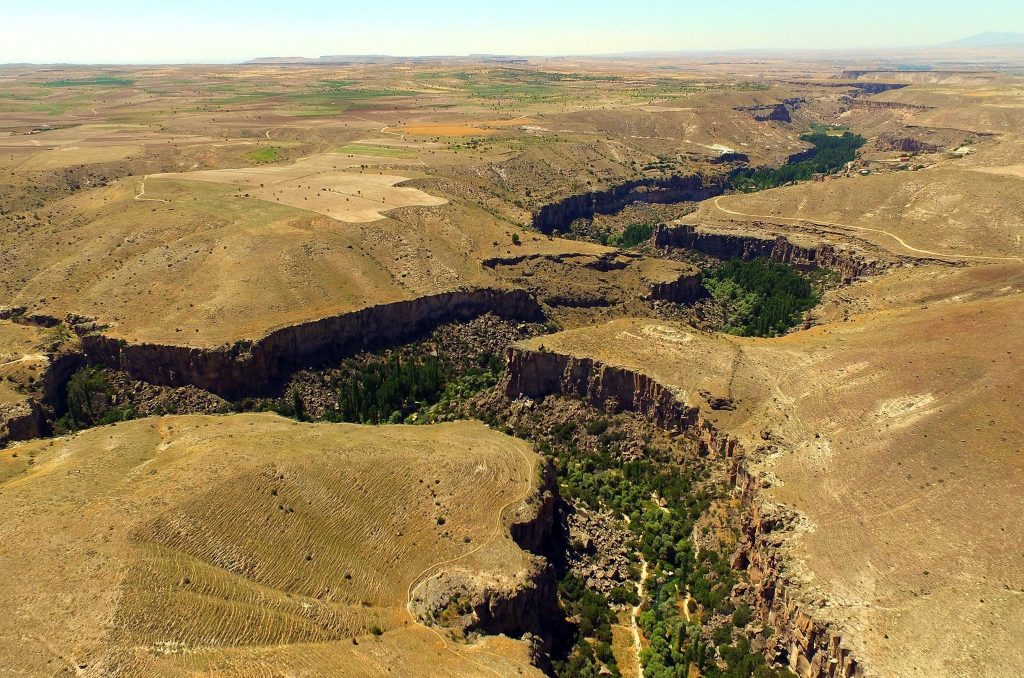
The formation of Ihlara Valley began a long time ago with a volcanic layer created by the lava eruptions of Mount Hasan. Over the years, however, floods, winds, and the Melendiz River eroded this volcanic layer, shaping the valley’s course and eroding it deep into the earth. As a result of this natural process, Ihlara Valley, with its canyon-like appearance and depths exceeding 120 meters in some places, and a total length reaching 14 kilometers, was formed.
Ihlara Valley is a natural beauty that starts in Ihlara Village and ends in Selime. The standard hiking route ends in Belisırma Village, thus completing a total hike of 6 km in the valley. Both banks of the Melendiz River are suitable for hiking, and you can return to your starting point if you wish. If you don’t finish the route in Belisırma Village, you can continue through the valley to Selime and complete the valley in approximately 5 hours .
Structures Located in Ihlara Valley
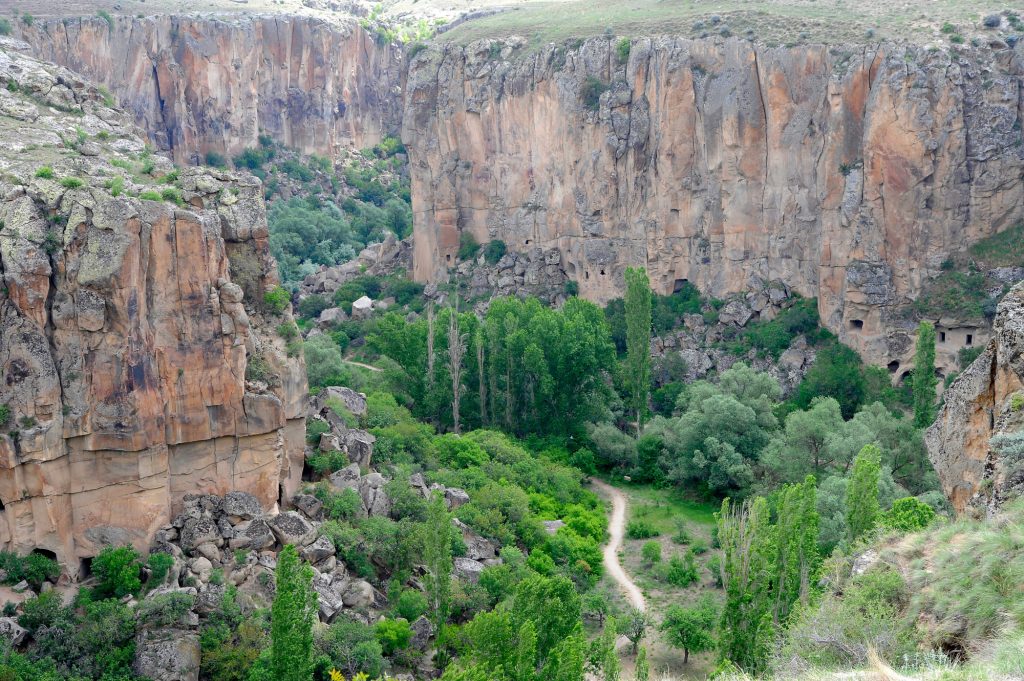
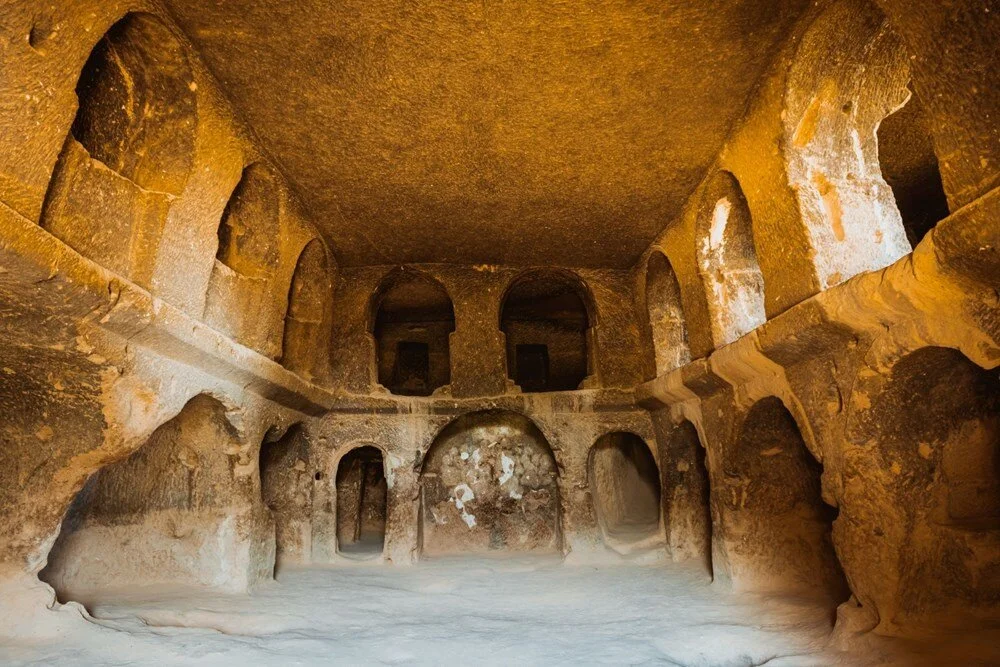
The Ihlara Valley in Aksaray, home to 105 religious structures, offers clues about its former inhabitants. These buildings were places where monks and priests devoted themselves to God in the early days of Christianity. They also served as shelters for those fleeing war. Churches, monasteries, tombs, and shelters, connected by tunnels carved into the valley, give the impression of an endless valley city. While walking through the narrow gorges, you may encounter underground churches. Unfortunately, due to previous collapses, only 14 of the 105 structures remain standing. Among these 14 churches , only two, the Belisırma Church, can be definitively dated.
While exploring the churches and dwellings carved into the valley, one wonders how the people who lived here in that era sustained their lives. It would be misleading to think that life in this natural environment and the sheltered structures made of rocks was trouble-free. Ihlara Valley has witnessed many epidemics in the past. Mummies, including strands of hair, of those who died, including nuns and children who contracted smallpox, were moved from the burial chambers of the churches to the Aksaray Museum.
Places to visit in Ihlara Valley
Aksaray, where the Ihlara Valley is located, was a center of great importance during the birth of Christianity. Among the important founders of religious sects who came to this region in the 4th century were Basil of Caesarea and Gregory of Nazianzus. These individuals left their mark on the region by establishing a monastic life based on Greek and Slavic systems. Unlike monastic life in Egypt and Syria, the monasteries in this region maintained contact with the world and strived to spread Christianity among people speaking different languages. The first center of this movement was Belisırma Village, one of the stops in the Ihlara Valley.
Because the people in the region did not know Latin, the interiors of the churches were decorated with frescoes to depict the Christian faith. These frescoes include elements depicting the life of Jesus, scenes from the Bible, and saints. In many of these churches located in the 14-kilometer valley, frescoes bearing the traces of this formation have survived to this day. The painting technique used in the frescoes has been divided into two categories regionally. The churches in the Ihlara region are called “Cappadocia type,” while the churches around Belisırma are defined as “Byzantine type.”
Ihlara Valley – Ağaçaltı Church
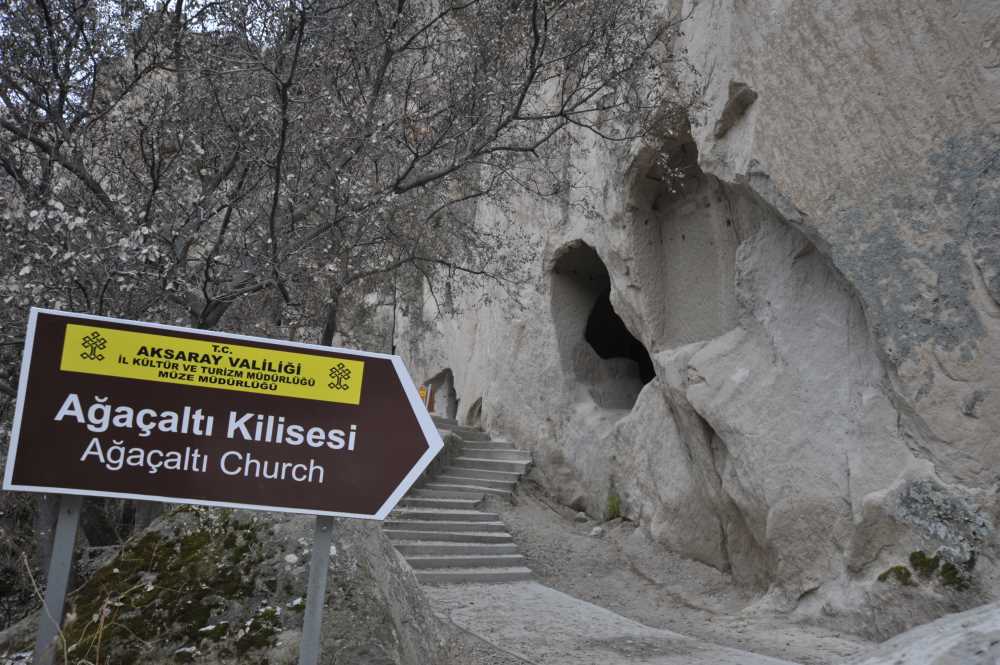
After passing the entrance ticket office in Ihlara Valley and descending the stairs, you will see the Ağaçaltı Church on your right. Being the closest church to the valley entrance has made it the most popular. The main entrance to the church is located on the second floor, in the apse section, as it is underground. According to legend, in ancient times, people entered through tree branches because the main entrance was not clearly visible, hence the name Ağaçaltı Church (Church Under the Trees).
According to some sources, it was also called St. Daniel’s Church due to lion depictions thought to be Persian in a damaged fresco. It has also been referred to as the Pantanassa Church based on an inscription in the church. The church’s frescoes date to the iconoclasm period, between the 9th and 11th centuries. The three-apsed, free-standing cruciform structure is covered by barrel vaults in the arm sections and a dome in the main section. The frescoes are painted in red, yellow, and gray on a white background. Inside the church, there are scenes of the Virgin Mary as well as other biblical scenes.
Ihlara Valley – Sümbüllü Church
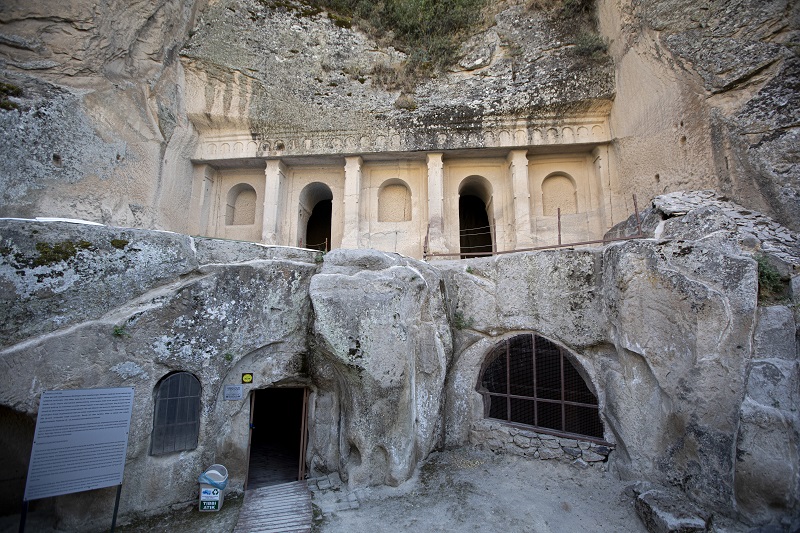
Located just to the left of the valley entrance, the Hyacinth Church takes its name from the hyacinth flowers that grow in the region. Because it is entered through a narrow window, it is one of the most memorable churches visited in the valley. The church is believed to have been built as a cruciform monastery church between the 11th and 12th centuries. Carved into a large rock mass, this two-story church has its first floor left as a cave, without any architectural order. The second floor is accessed by stairs and is divided into five rooms. The church’s frescoes are quite rich and include many important scenes, including depictions of the Virgin Mary.
Ihlara Valley – Snake Church
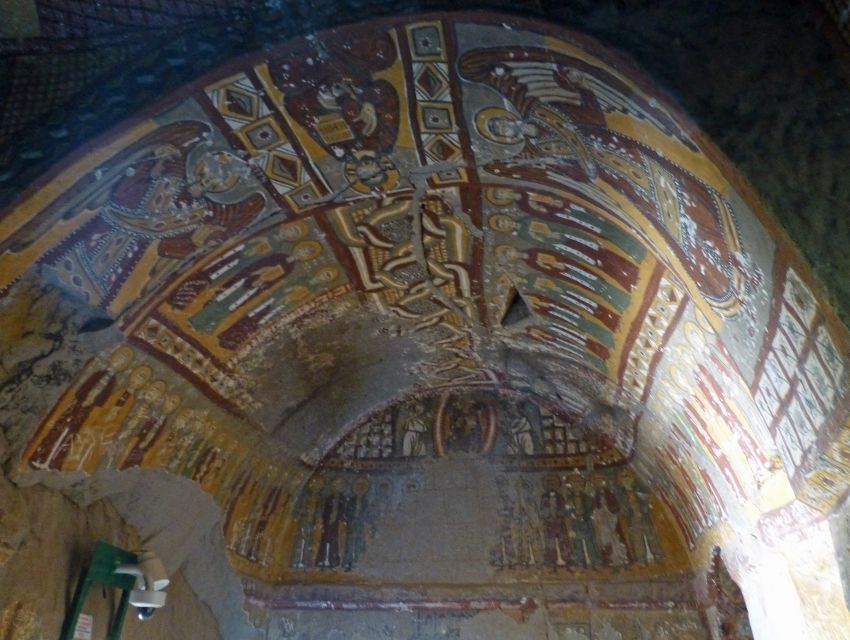
After passing the entrance gates to Ihlara Valley and descending the stairs, you will find the Snake Church on your left towards Selime. Its location and unique design have made it one of the most visited churches in the valley. The Hyacinth Church is located on the opposite slope. The Snake Church has a different plan and fresco themes compared to other churches in Ihlara Valley.
While other churches mostly feature scenes from the Bible, the frescoes in the Serpent Church also depict scenes from the afterlife. The church is estimated to have been built between the 9th and 12th centuries and has a long, wide Greek cross plan. Among its frescoes, a striking image is that of four naked, sinful women being attacked by eight snakes. Other significant scenes include the Entry into Jerusalem, the Resurrection of Lazarus, and scenes related to the Virgin Mary’s family.
Ihlara Valley – Kokar Church
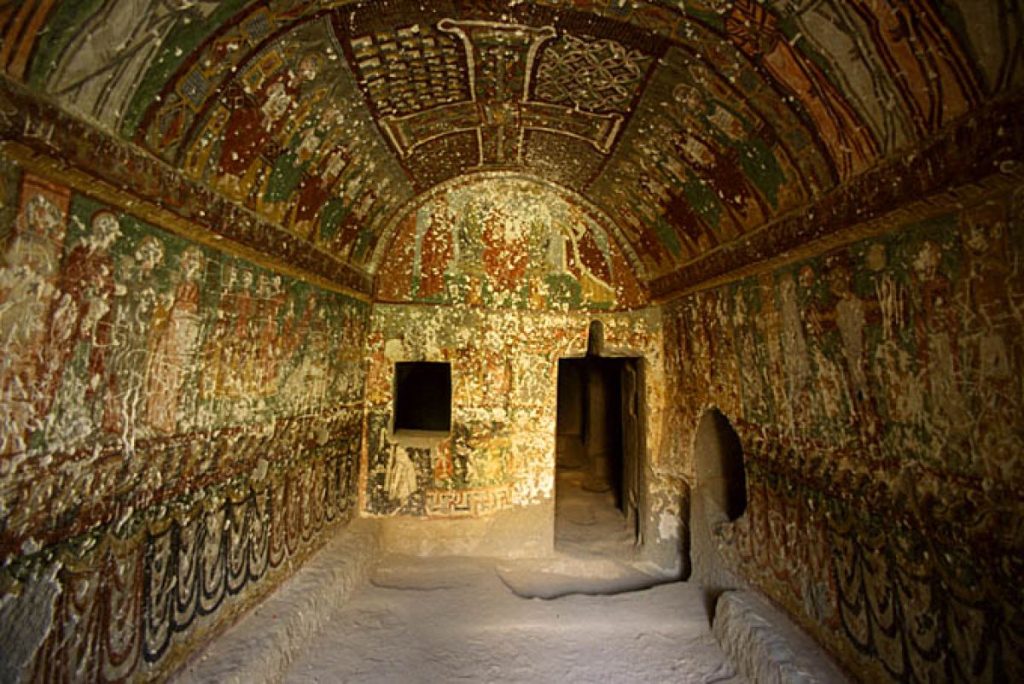
Kokar Church, one of the oldest churches in the Ihlara Valley, dates back to the 9th century, and its frescoes, created in the second half of the 11th century, have survived to this day. It is a cruciform church, and can be entered through its apse, which is covered with ruined frescoes. The church is a single-nave, single-story structure with a barrel vault. During the period it was built, it was carved and expanded further inwards. Inside, there are two burial chambers, and the decorations of these chambers are distinguished by the use of red paint.
Ihlara Valley – Pürenliseki Church
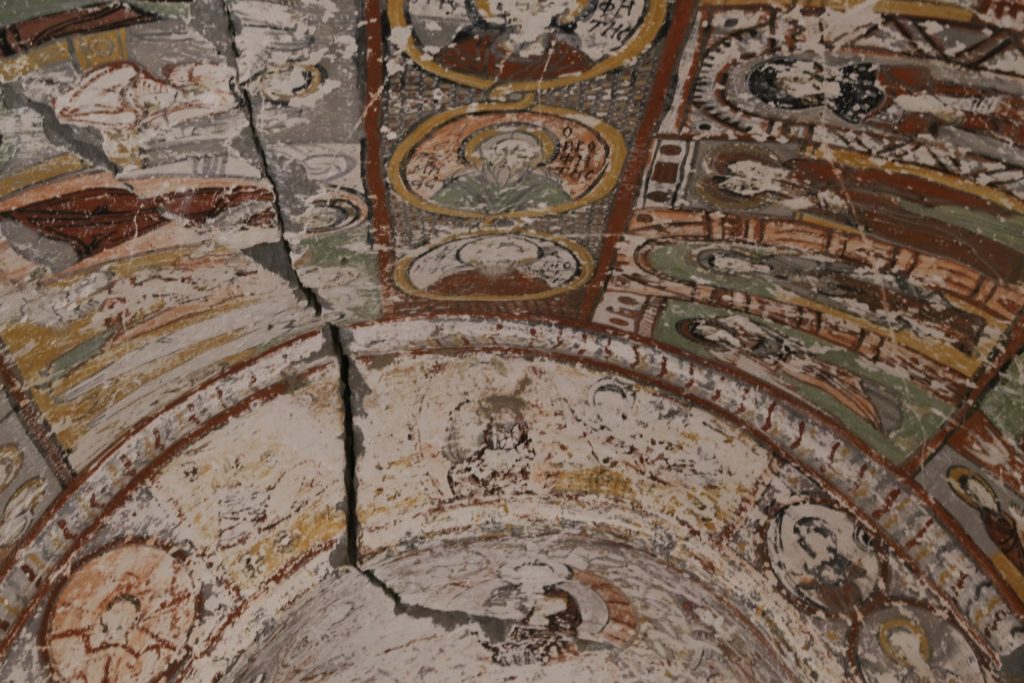
10. Believed to have been built between the 12th and 13th centuries, the Pürenliseki Church takes its name from the heather plants that grow in the valley. It is located north of the Kokar Church. It is a two-nave structure carved into the rocks, with four sections and a barrel vault. The entrance to the church opens into a hall, from which access to other areas is provided. The narthex and burial chambers are also located to the west of the northern nave of the church.
Although some of the church’s frescoes are painted in dark colors, their depictions are quite meaningful. The ‘Forty Martyrs of Sivas and the Deesis’ stand out in the south nave, while the ‘Last Judgment’ scenes are prominent on the west wall. The frescoes in the south nave include scenes such as the Prophet’s Prophecy, depictions of the Virgin Mary, the Annunciation, the Water Experiment, the Visitation, and the Journey to Bethlehem, while the west wall features Daniel Among the Lions and depictions of saints.
Ihlara Valley – Eğritaş Church
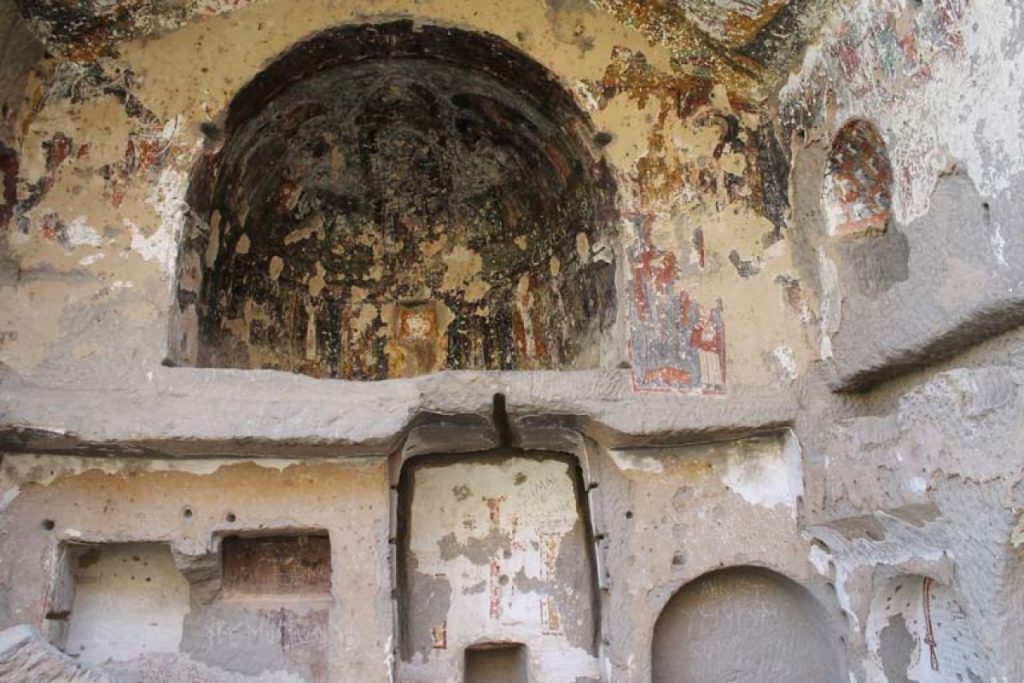
The Eğritaş Church, one of the oldest structures in the Ihlara Valley, was built in the late 9th and early 10th centuries, before the iconoclastic period. One of the most striking features of the church is that it is one of the largest temples and cemeteries in the valley. Two inscriptions on its eastern wall indicate that the church was dedicated to the Virgin Mary. The single-nave church with a barrel vault is extended to the west by a separate space connecting to the cemeteries. The church’s frescoes are quite significant and depict religious stories known as the Cycle of Jesus. The church also contains depictions of Mary and scenes from the Bible.
Byzantine-style churches located in Belisırma Village
In the Belisırma region of the Ihlara Valley, there are churches reflecting the Byzantine style with their architectural structure and fresco depictions. The construction dates of two of these churches are known with certainty. The first is the Direkli Church, built between 976 and 1025, and the second is known as the Saint Georgeus (Kırkdamaltı) Church, built between 1283 and 1295.
Ihlara Valley – Direkli Church
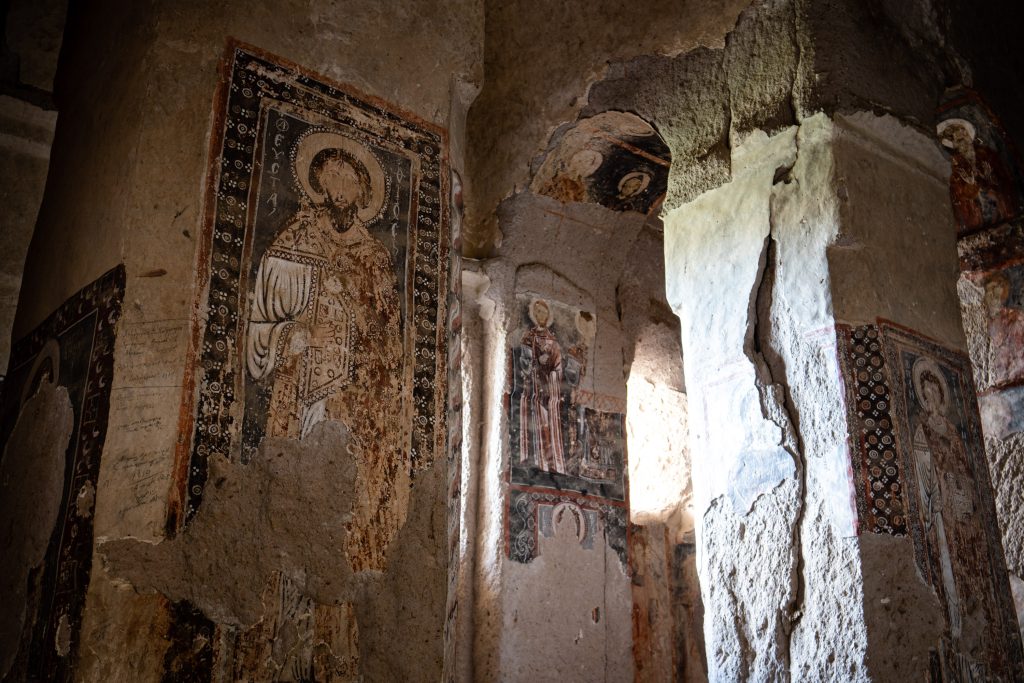
The Pillar Church was originally built as a monastery and takes its name from its central dome architecture supported by six pillars. This feature gave the church its name. Notable for its Latin inscription, this church possesses one of the rare Byzantine-era inscriptions found in the Ihlara Valley. The church has a closed Greek cross plan and is characterized by three apses and a single dome. Inside, there is an entrance leading to the monks’ tombs and the chambers of the church members. Although the frescoes in the church have been damaged over time, depictions of Christian themes such as Jesus, the apostles, and saints are still discernible.
Ihlara Valley – Saint Georgeus (Kırkdamaltı) Church
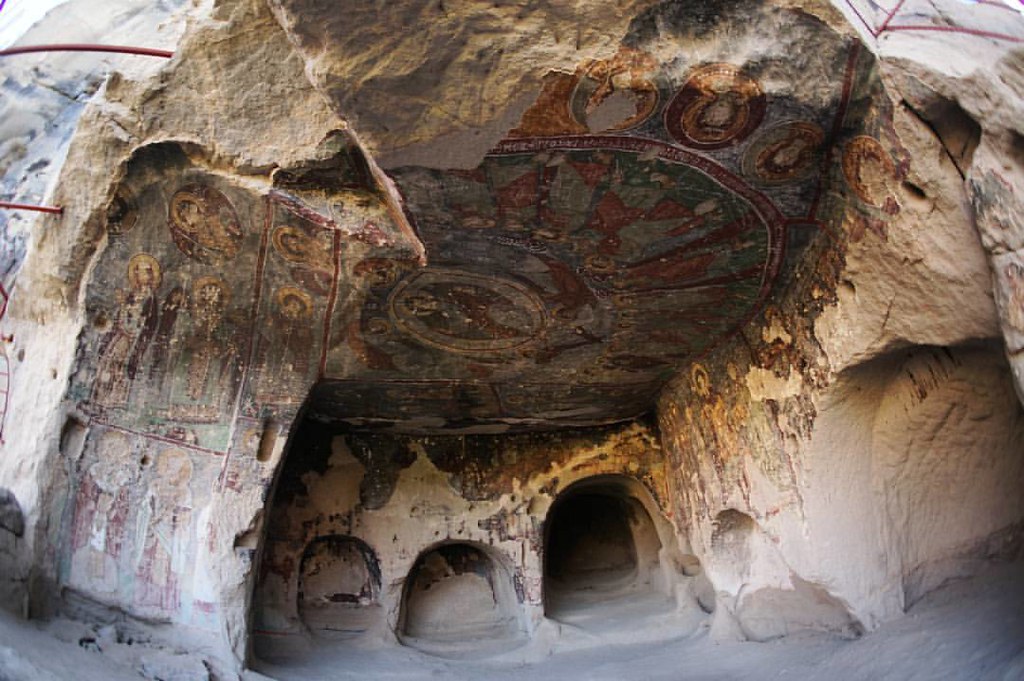
This church was built in the Belisırma region between 1283 and 1295. Also known as Kırkdamaltı, the exact construction date of this church has not been definitively determined. The design and fresco depictions of the Saint Georgeus Church reflect the Byzantine style of the period. The frescoes generally depict themes related to Christianity.
Ihlara Valley – Karagedik Church
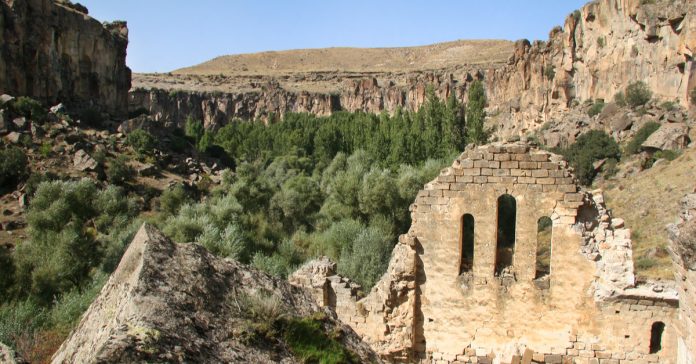
Karagedik Church is a large church located in the Ihlara Valley, reflecting the Late Byzantine style of the 11th century. It was also called “Saint Ermolaos” by the ancient Greeks. The church is built on a hilltop covered with grass, nestled against a steep rock. However, it has deteriorated over time, and much of it, except for its roof and northern wall, has collapsed.
The church’s architecture is in the shape of a closed Greek cross, and the few remaining frescoes on its walls depict the martyrdom of St. George. Scenes such as the Pursuit of Elizabeth, the Killing of Zechariah at the Prothesis, and Salome Washing the Head of John the Baptist are also found in this church.
Ihlara Valley – Ala Church
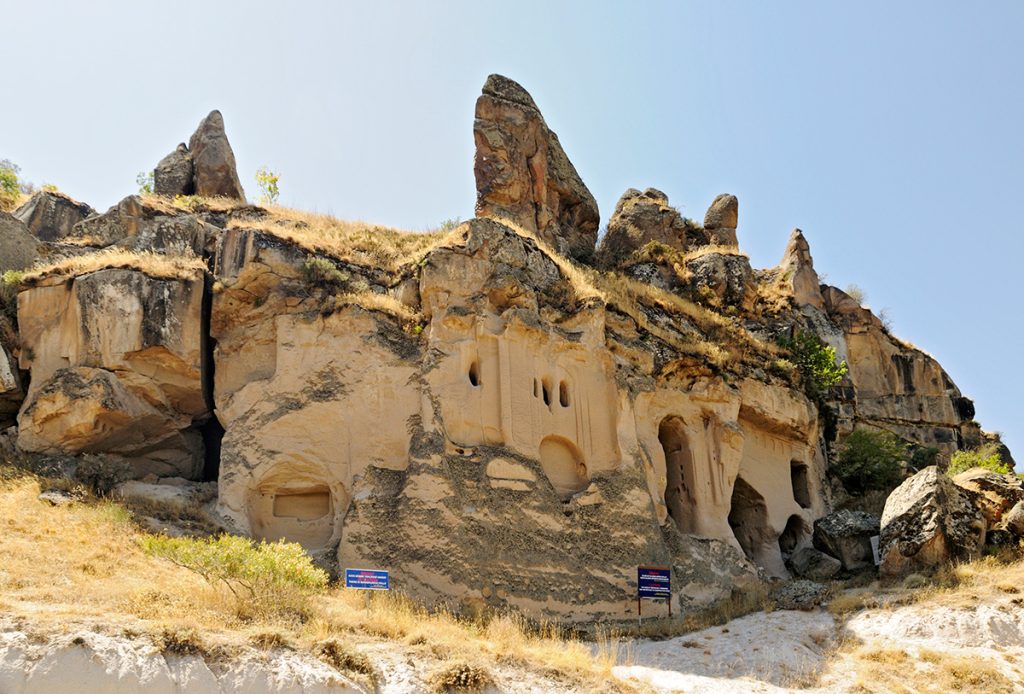
Ala Kilise is located north of Belisırma Village and on the eastern slope of the valley. Dating back to the early 11th century, this church belongs to the period when Christianity became legal. Carved into the rocks, the exterior of Ala Kilise is elaborately decorated and smoothed. Although the interior frescoes are largely destroyed, some frescoes whose stories can be understood are still visible. These frescoes include the Visitation, Anastasis, Nativity, Last Supper, Entry into Jerusalem, the Three Jewish Youths in the Furnace, and depictions of saints.
Ihlara Valley – Bezirhane Church
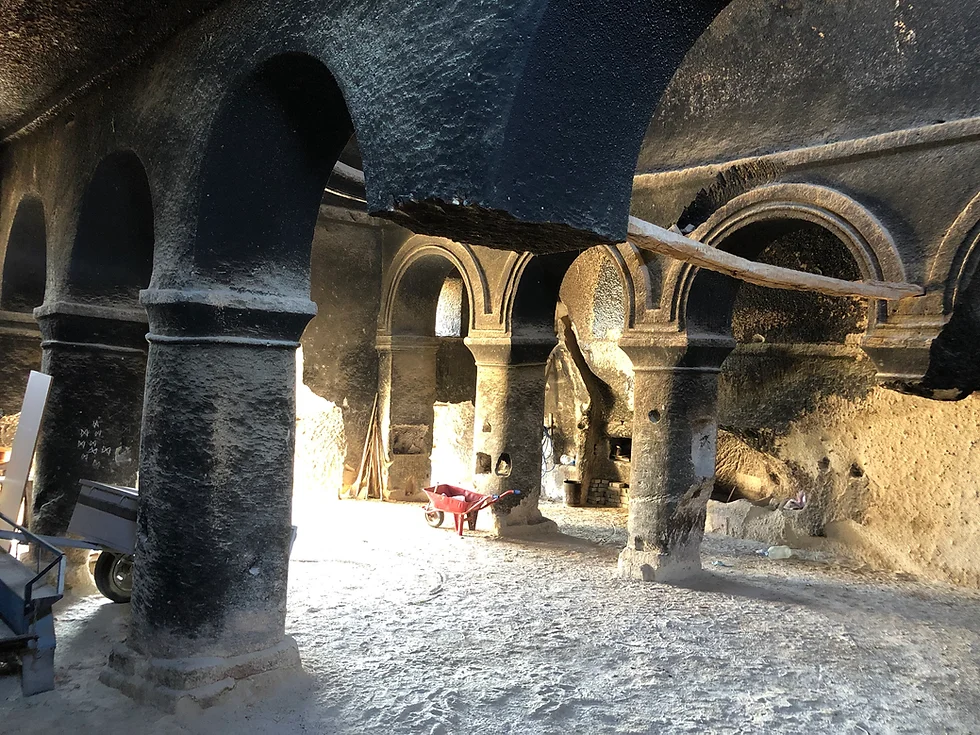
The Linseed Oil Church is located next to the Ala Church. Unfortunately, the former beauty of this church has not been preserved to the present day, and it has been damaged. The church has an arched entrance and is a single-nave structure. It is thought that its frescoes were damaged during linseed oil production in the 12th and 13th centuries. However, traces of scenes such as the Baptism, the Three Hebrew Youths, the Metamorphosis, the Deesis, and depictions of saints can still be observed in this church.
Ihlara Valley – Bahattin Samanlığı Church
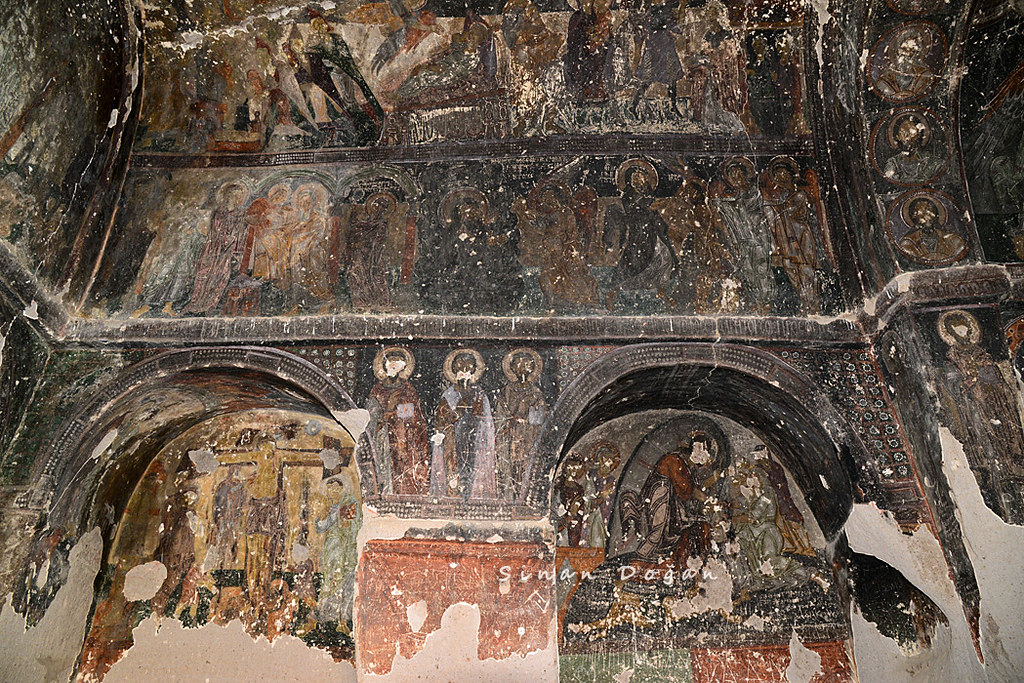
The Bahattin Samanlığı Church is located on the western bank of the Melendiz River, near the village of Belisırma. The church’s frescoes, dating from the late 10th to early 11th centuries, are well-preserved. Named after a villager named Bahattin who lived there, the church is rectangular in plan, with a single apse and a single nave. Its frescoes depict scenes from the Bible, including the slaying of Prophet Zechariah, the dream of Joseph, the Visitation and the Testament of Water, and the crucifixion of Jesus.
Batkın Church (Açıkel Ağa Church)
Only a remnant of this ancient church in the valley, dating back to the 8th century, has survived to the present day. This remnant can be seen as you ascend to a viewing terrace on the road while heading towards Belisırma. The church is located beneath a rock block that supports this viewing terrace.
Other Places to See in Ihlara Valley
As you walk along the Ihlara Valley to Selime, you will encounter two more churches in Yaprakhisar Village. These churches are located on the eastern side of the valley, on the right and left corners of the bridge leading into the valley from the village. The church on the right corner is the Davullu Güvercinliği Church, which contains iconoclastic depictions. On the left corner is the Koyunağılı Church, dating back to the 11th century.
Upon arriving in Selime, you will be greeted by the Castle Monastery Church (Selime Cathedral) at the exit of the valley. This church is one of the largest religious structures in Cappadocia and a significant example of Byzantine art. It reached its peak between the 8th and 14th centuries and remains of great importance to Orthodox Christians. The church’s frescoes depict religious themes such as the Ascension of Jesus, the Virgin Mary, and the Annunciation.
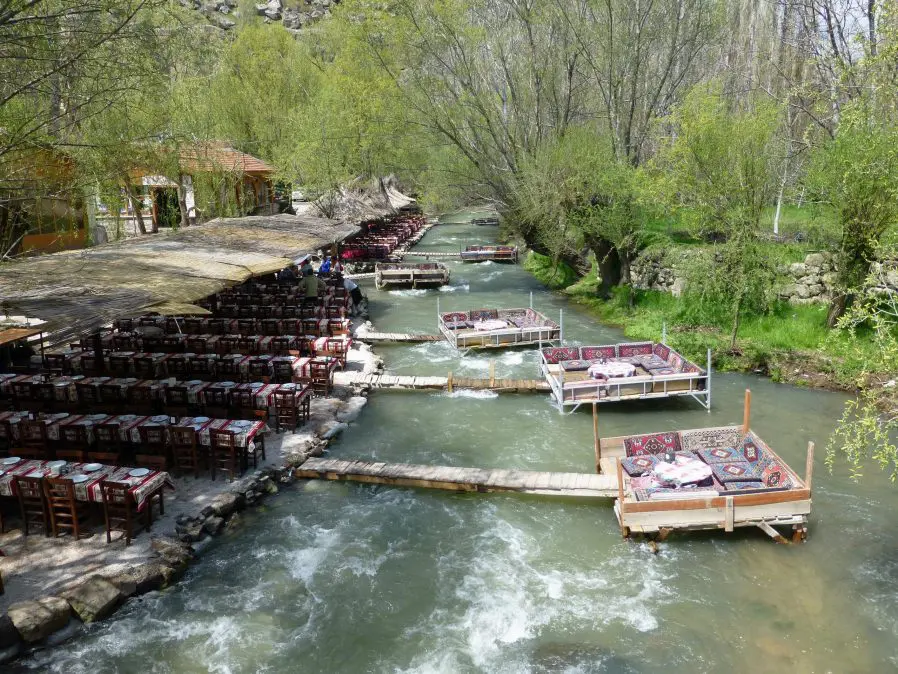
During your walk along the Ihlara Valley, you will see house-style huts along the Melendiz River. If you want to eat or drink something, you can take a break here instead of waiting to reach the valley exit. You can feel the magical atmosphere of Cappadocia by imagining the lives lived in the rock-carved Ihlara Valley. You can immortalize these beautiful moments by photographing the exteriors of the churches, as using flash inside the churches can be harmful and is generally prohibited.


