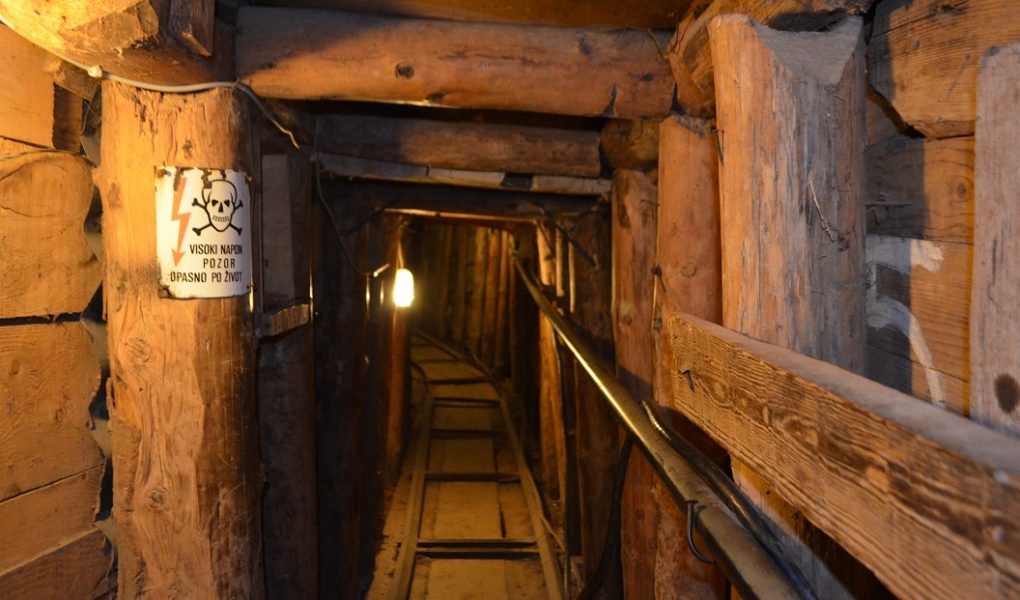
One of the important milestones of Bosnia and Herzegovina’s struggle for independence, the Tunnel of Hope was completed on July 30, 1993, as a result of intense efforts lasting 4 months and 4 days. This tunnel stands out as an infrastructure that saved the lives of the people exposed to the Siege of Sarajevo during the Bosnian War and became the breathing tube between the city and the outside world.
Bosnia and Herzegovina declared its independence with a referendum in 1992. However, Serbian troops, who opposed this decision, launched the Siege of Sarajevo on April 5, 1992, one of the longest sieges in modern history. The siege manifested itself when all the entrances and exits of the city were closed and the basic needs of the people became unmet. At this point, the idea of the “Tunnel of Hope” was born for the people to survive and to supply food and ammunition.

The house, where the northern entrance of the tunnel is located, has been serving as a history and war museum since 1996. While this museum aims to keep the past of the tunnel and the memories of the Bosnian War alive, it contains various materials such as photographs, documents and equipment used in the construction process of the tunnel. In addition, visitors are offered the opportunity to see and explore the first 20 meters of the tunnel. In this way, visitors have the opportunity to understand the difficult days in the tunnel and to feel the traces of the Bosnian War closely.

The Construction and Importance of the Tunnel of Hope
The optimal location for the construction of the Tunnel of Hope was under a house in the Butmir area near Mount Igman. The army of Bosnia and Herzegovina started excavations of the tunnel in 1993 in order to unite the Dobrinja and Butmir regions. The 800 meters long, 1 meter wide and 160 centimeters high tunnel was excavated under the Sarajevo Airport runway and completed on 30 July. The floor of the tunnel was reinforced with wooden blocks and logs. It enabled the transportation of humanitarian aid and the safe evacuation of people from the city.
The Tunnel of Hope provided Sarajevo’s communication with the world, allowing the people in the city to meet their basic needs. This tunnel carried not only the passage of food and ammunition, but also the hope and solidarity of the people. The tunnel has become a breathing point amid the great suffering and losses suffered during the Bosnian War.

A Life-Saving Infrastructure
Aliya Izetbegovic stood out as a leader devoted to defending the independence of Bosnia and Herzegovina. During the Bosnian War, he managed to keep the people who resisted the attacks of the Serbs in hope and solidarity against this threat that wanted to destroy them. The Tunnel of Hope, one of the symbols of this resistance, functioned as a vital line of Sarajevo and firmly connected the people to life. Aliya İzzetbegovic’s leadership and resistance symbols such as the Tunnel of Hope have become an indispensable part of Bosnia and Herzegovina’s struggle for independence.
The use of the tunnel was of great importance to meet the basic needs of the Bosnians during the siege period. The tunnel not only allowed the passage of essential supplies such as food and medicine, but also saved the lives of hundreds of thousands of people. The Tunnel of Hope, built during Bosnia and Herzegovina’s struggle for independence, came to the fore as a symbol of resistance and solidarity against the brutality of the Sarajevo Siege. This tunnel represented hope for people’s survival and strengthened the bonds between people.

”The Happiest Day Of His Life When He Met Bosnians”
Velid Softic, one of the 300 people who participated in the tunnel excavations, remembers the moment he met the Bosnians as the happiest day of his life. “I started working as a volunteer and we started digging the tunnel with great enthusiasm,” he says. He was a young 40-year-old at the time, and his thoughts were that the tunnel would connect with different regions and cities. “We were working in the first shift, and when the tunnel was fully opened, we crossed over to the other side. I can’t remember in my life being as happy as the day we dug the tunnel and met the people on the other side.”

The tunnel was used as a means of salvation in besieged Sarajevo during the Bosnian War, meeting their needs such as weapons, food, fuel and medicine. Aliya İzzetbegovic also used the tunnel during the war. This infrastructure, known as the “Tunnel of Hope”, saved the lives of approximately 300,000 people during the Bosnian War.
Bosnia and Herzegovina witnessed a bloody war that lasted 3.5 years and was dominated by genocide, massacres and great suffering. However, this tunnel, which was dug with the sacrifice of only a shovel and a handful of people, made it possible for the aid to be delivered to civilians for 30 months. The Tunnel of Hope represents the light of solidarity and hope even in the darkest moments of humanity.


