
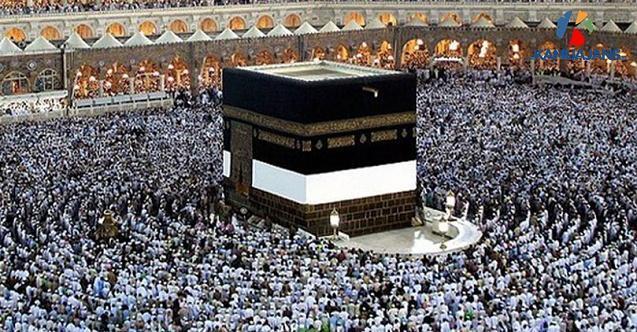
According to Islamic belief, Eid al-Adha is an important religious holiday celebrated for four days, starting from the 10th day of the month of Dhu al-Hijjah in the Hijri calendar. This holiday is a time period that reinforces the feelings of unity, cooperation and sharing among Muslims.
Tenth, eleventh, twelfth and thirteenth days of the month of Dhu al-Hijjah ‘Eyyâm-ı nahr’ (Slaughtering days) While the previous day, the ninth day of the month of Dhul-Hijjah, is called Arafe. Eid al-Adha is also the celebration of the Islamic world every year. Hajj pilgrimage in MeccaIt is the time when they fulfill it.
Eid al-AdhaIn addition to being a religious holiday, it is also considered a public holiday in many Muslim-majority countries. Along with Eid al-Fitr, it is one of the two most important holidays in Islam.
Since the Hijri calendar is lunar-based, years are 11-12 days shorter than the solar-based Gregorian calendar. For this reason, Eid al-Adha is celebrated 11-12 days earlier every year. Approximately every 33 years, the holiday falls on the same dates.
What is the Meaning and Importance of Sacrifice?
in the dictionary “getting closer, something that causes closeness to Allah” Meaning sacrifice, it is used as a religious term in the sense of “duly slaughtering an animal that meets certain conditions at a certain time for the purpose of worship, or the animal slaughtered in this way”. Sacrifice, an Islamic term, passed from Arabic to Persian and then to Turkish. Although all types of offerings are considered sacrifices, sacrifice in Islam is the act of slaughtering an animal in the name of Allah.
Muslims who are mentally healthy, free, resident and wealthy according to religious standards, to gain God’s consent The sacrifice that one is obliged to make for one’s sake enables one to get closer to Allah. Moreover, sacrificeIt also includes helping those who are in poor condition and cannot sacrifice. People who sacrifice animals both get closer to God and gain reward by making those in need happy by giving the meat to those who are financially insufficient.
According to most sects, sacrificing an animal is sunnah; however Wajib in the Hanafi sect, that is, it is a mandatory act of worship. During Eid al-Adha, sacrifice is not only sacrificed; This holiday, like Eid al-Fitr, is a holiday where family members come together, elders and relatives are visited, their hands are kissed, and pocket money is distributed to children. Eid al-Adha lasts four days. People who live far away from their families visit their families and kiss the hands of their elders on this holiday.
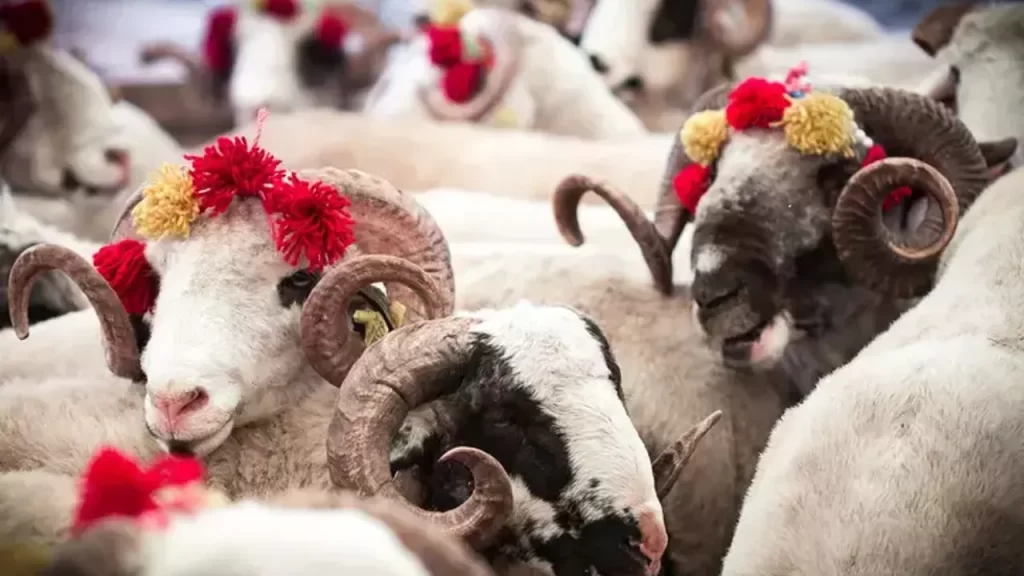
sacrifice The process is usually done on the first day of the holiday, especially in the morning hours. Men go to the mosque for the Eid prayer before sacrificing the animal. After the prayer, breakfast is had and the sacrifice process begins; This is usually completed before the midday heat begins. Animals such as cows, calves, heifers, goats, rams and sheep are sacrificed as sacrifices.
While some people slaughter their animals in their own gardens or courtyards, those who do not have this opportunity or find the slaughtering process difficult may slaughter them in slaughterhouses. The sacrificed meat is distributed to people with poor financial means. Family members can also participate in the sacrifice and the meat can be divided equally and distributed to families.
Eid al-Adha Hz. History Beginning with Prophet Abraham
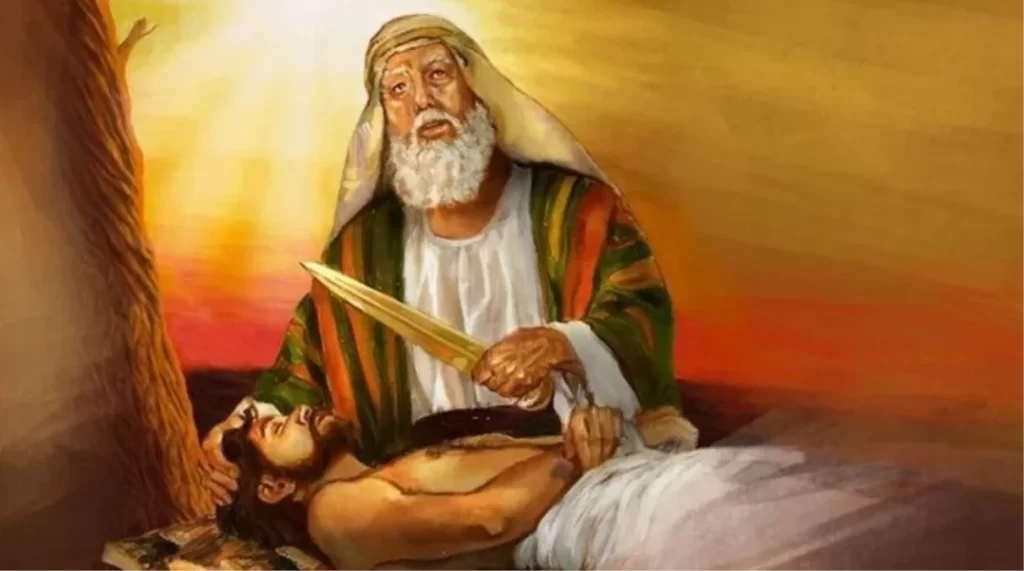
History of sacrifice in Islam, Hz. It begins with Prophet Abraham. Hz. Abraham intends to sacrifice his son Ishmael to Allah. When the time comes, he is reminded of this covenant and he makes the necessary preparations and takes his son to a suitable place to sacrifice him. He lays Ismail down and hits his throat with the knife; but the knife does not cut. Meanwhile, a ram is sent to him by God and he is told that if he slaughters this ram, it will be accepted in place of his son.
A similar incident Abdulmuttalib, grandfather of the Prophet It is also rumored that it happened by. Due to the difficulties he encountered during the digging of the Zamzam well, Abdulmuttalib vowed to sacrifice one of his ten sons to God next to the Kaaba. In the draw, the Prophet’s father, Abdullah, was chosen. Abdulmuttalib decides to fulfill his vow; However, the Quraysh, fearing that such a custom would become established, prevented it. In the end, 100 camels are sacrificed in Abdullah’s place. This event is considered as a sign of the Prophet’s coming to humanity as a savior and shows that the material measure of human life increased 10 times.
The tradition of sacrificing sacrifice in Islam, Hz. It goes back to Abraham.. Hz. It is known that Abraham sacrificed in Mina during his pilgrimage. In the Holy Quran, Allah says: “Then it is said to you: ‘Follow the religion of Abraham and follow the right path! He was not one of the polytheists.’ We revealed: (Nahl, 16/123).
Eid al-Adha is also celebrated by Hz. It is known that it was inherited from Abraham. Hz. Prophet, Eid al-Adha prayer After performing the prayer, he sacrifices the two horned rams he prepared, one for himself and his family, and the other for his ummah, and says: “O Allah! This is from you and to you” (Bukhari, Tejiid, 3/172).
Hz. God’s blessing upon Abraham after his great test ram sacrifice This reminding worship continued in Islam as well. In our religion, sacrifice is made on the days of Eid al-Adha, and cattle, buffalo, camels, sheep and goats can be sacrificed. Sacrificial animals must be healthy and sound. There are also types such as votive sacrifice, akika sacrifice and atonement sacrifice for some crimes and sins.
In the Holy Quran, Allah says: “Neither their flesh nor their blood reaches Allah; but only your piety can reach Him. He has thus given these animals to your use so that you may know Allah as great because He has guided you. (O Muhammad!) Give good news of good deeds!” (Hajj, 22/37). This verse emphasizes the necessity of good will and sincerity in all worship. The basic element that will bring us to Allah’s consent in our worship is the piety of our hearts, that is, performing our worship without ostentation and only to gain Allah’s consent. Hz. The Prophet says in one of his hadiths: “The value of deeds depends only on intentions. “Whatever everyone’s intention is, that’s what they get.” (Bukhari, Tejiid, 1/1).
Sacrifice, Hz. It was instrumental in Ismail’s return to life. It is wajib to shed blood, and it is sunnah to distribute meat; Therefore, the obligation is fulfilled by sacrificing a sacrifice.
To join our WhatsApp group CLICK!


