
The Taliban government is a radical Islamist form of government in Afghanistan that aims to impose strict Sharia law in the country. Since regaining power in 2021, the Taliban has attracted attention for its strict restrictions on women and policies of controlling social order.
Recently, there have been laws that have banned women from showing their voices and faces in public. new rules These rules have been introduced, which has led to widespread debate and criticism in the international arena. These rules reveal the strictness of the Taliban’s understanding of power and its practices, and raise serious concerns in terms of women’s rights and social freedoms.
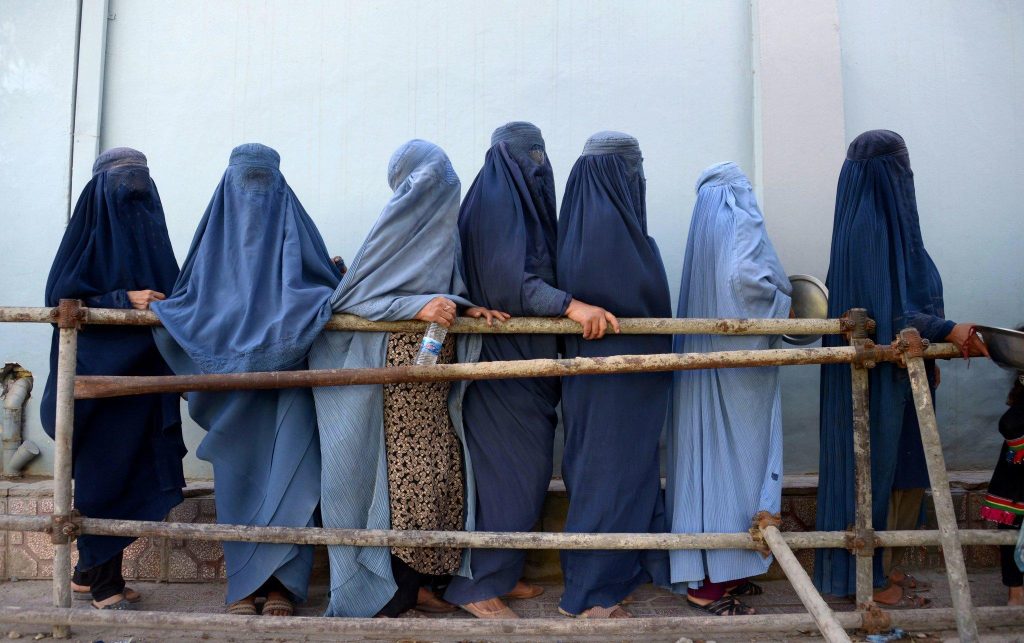
New Rules Announced by Taliban Government
The new rules announced by the Taliban administration in Afghanistan are the first official ethics laws to be issued since the group seized power. Taliban, “to promote good and prevent evil” Within the framework of these laws, which were stated to be put into practice for the purpose of protecting women, it was forbidden for women to show their voices and faces in public areas.
The Taliban, who seized power in 2021, aim to “spread good behavior and prevent evil” Enjoining good and forbidding evil He had set up a ministry called the Ministry of Internal Affairs. According to a government spokesman, the ministry was launched on Wednesday to cover different areas of daily life, such as public transport and public events, and was approved by Taliban leader Hibatullah Akhundzada. new laws published.
The 114-page, 35-article document, obtained by the Associated Press (AP), contains the first official ethics laws to be issued since the Taliban came to power in Afghanistan. Mawlawi Abdul Ghaffar Farooqin a statement on Thursday, “Hopefully, this Islamic law will greatly contribute to the spread of goodness and the elimination of evil,” He used the expressions.

These new laws give the ministry the authority to monitor the personal behavior of individuals and allow for penalties such as warnings or arrests to be imposed on Afghans who violate the law.
According to the ministry’s website, “Promoting goodness” It includes performing prayers, making Muslims’ character and behavior compatible with Islamic rules, ensuring that women cover themselves, and inviting people to comply with the five pillars of Islam. “Elimination of evil” It refers to the prevention of actions that are contrary to Islamic law.
Published last month United Nations The (UN) report stated that the ministry’s instructions and implementation methods created an atmosphere of fear and oppression among the Afghan people. The report also stated that the ministry increased its influence in other areas of public life, such as media control and prevention of drug addiction.
Fiona Frazer, head of the human rights unit of the UN Mission in Afghanistan, “Given the many issues highlighted in the report, the intention of the Taliban authorities to further increase and expand this surveillance is a serious concern for all Afghans, especially women and girls,” he said.
The Taliban rejected the UN report.

What do the Taliban Government’s New Laws Bring?
The new law ensures that women’s voices are heard in society “immorality” This law describes it as: “When an adult woman leaves her home, she must hide her voice, face and body.” It brings a provision as follows.
These strict social rules have been implemented in the country by decree since 2022, but became official with the lawThe Taliban reports that they have detained more than 10,000 people for not complying with this law.
The new laws also detail how women must fully cover their faces and bodies. Women must:
. They should cover their bodies completely,
. They should cover their faces so as not to be dragged into sin,
. Their voices should not be heard in society by considering them as “private”,
Their voices should not be heard while singing or reading aloud, even inside their homes.
. Women’s clothing should not be thin, short or tight. In addition, women should hide their bodies and faces from men who are not related to them by blood or marriage, and men should hide their bodies and faces from women. . Similarly, men are prohibited from looking at women’s bodies and faces, and adult women looking at men is also considered within the scope of this prohibition.

The new rules introduced by the Taliban comprehensively regulate social behavior and personal grooming. Barbers are prohibited from shaving or trimming beards. In addition, Men will be required to cover their bodies from the navel to the knees outside of their homes; these regions “private” is accepted as.
Men are also prohibited from styling their hair in a way that violates Sharia law. The Taliban, It also banned barbers from shaving or trimming beards.i. New rules, It requires men to grow fist-length beards and bans wearing ties.
In addition to the restrictions on women, Men must follow certain dress codes when leaving their homes. It is stated. In addition, Women are also prohibited from taking taxis alone and sitting next to men.in a dead state.
New prohibitions on artistic expression were also introduced; drawing a picture of a bird, animal or family member is banned and identifying living things Buying and selling statues was also banned.
Those who do not comply with these rules could face penalties such as a fine or three days in prison. The law, approved by Taliban leader Hibatullah Akhundzadeh, has not yet come into force.

What is the Taliban Government? Its History, Period of Power and International Reactions
The Taliban, A radical Islamist movement that emerged in Afghanistan and aims to rule the country under strict Sharia law. The Taliban emerged in Afghanistan after the end of the Soviet occupation in the early 1990s. a radical Islamist movement It is known as.
The movement took control of a large part of Afghanistan in 1996, establishing an Islamic emirate in the country and continuing this rule until 2001. The Taliban’s approach to governance is a strict Sharia It is based on an interpretation of the Constitution and includes a series of rules that severely restrict women’s rights and hinder their participation in education and work life.
First Term of Power (1996-2001)
The Taliban captured the capital of Afghanistan in 1996 KabulDuring this period, laws were implemented that severely restricted women’s place in society; girls were banned from school, women were restricted from working, and burqas were required to be worn in public. The Taliban ruled Afghanistan until 2001, but were overthrown as a result of US military operations following the 9/11 attacks.

Second Term of Power (2021-Present)
The Taliban regained power after the US withdrew from Afghanistan in 2021 and quickly took over Kabul, taking over the government again. second term of powerwas characterized by a series of human rights violations that caught the attention of the international community. The Taliban again restricted women’s rights to education and work, imposed strict control over the media, and began implementing harsh morality laws that kept the public’s lives under control.
The Taliban’s style of governance is based on a strict understanding of Sharia law, “commanding good and forbidding evil” This understanding includes the strict control of individuals in a wide range of areas from their daily lives to public spaces. The rules introduced for women have caused serious criticism on a global scale, especially in terms of gender equality and human rights.
International Response and Humanitarian Situation
The Taliban’s return to power has led to a major humanitarian crisis in Afghanistan, with the international community heavily criticising the restrictions on women’s and girls’ rights to education and work, the lack of access to healthcare and the generally oppressive environment in the country.
The United Nations and other international organizations have expressed concern about the difficulties facing the Afghan people under Taliban rule, but the Taliban has not budged from external pressures and continues to maintain its own style of governance.

Taliban’s Governing Structure
The Taliban’s governing structure is based on religious leaders. Taliban leader Hibatullah Akhundzada is considered the movement’s highest authority. Other government Senior positions are often filled by former warriors and clergyThe Taliban imposes its own rule across the country, maintaining tight control over the central government as well as local governments.
As a result, the Taliban regime continues to exist in Afghanistan as a regime that imposes serious restrictions on human rights and freedoms. Its policy towards the international community is generally isolated, and this Afghan peoplemakes living conditions even more difficult.
To join our WhatsApp group CLICK!


