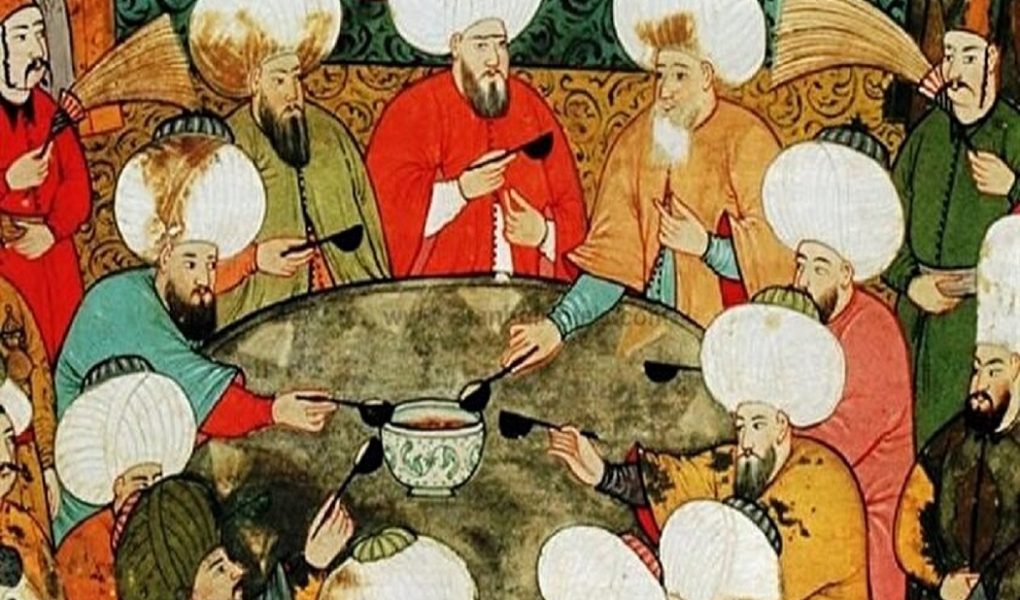
The month of Ramadan, the sultan of eleven months, has always been greeted with great enthusiasm as one of the months rich in spirituality. The Qur’an, which is a guide for guidance for people, shows the right path, and is the clear proof of distinguishing between right and wrong, was revealed in the month of Ramadan. For this reason, it is commanded, “Whoever among you reaches this month, let him fast during it”. The arrival of Ramadan, which was better than a thousand months in the Ottoman period, aroused great excitement in people. During this period, those who heralded the crescent, the harbingers of Ramadan, were given 150 kuruş each.
Today, as we enter this blessed month, we often ask, “Where are those old Ramadans?” the question is encountered. We can find the answer to this question in our ancestors, the Ottoman Empire. The Ottoman state was a world state that left its mark on the world not only with its jihad qualification but also with its culture and civilization. The old understanding of Ramadan that our elders talked about was included in the Ramadan traditions of the Ottoman Empire. Some of these traditions, most of which are now forgotten, are as follows;

Ramadan Proclamations
As the month of Ramadan approached in the Ottoman Empire, the state officials experienced a special excitement and hustle and bustle in the palaces and government offices. All necessary precautions were taken to ensure that the month of Ramadan passed peacefully and smoothly, and admonitions were made to the public. These admonitions were published in the form of calligraphy imperials written by the sultan, grand vizier and other state officials and distributed to the public. Sermons were given in mosques and announced by watchmen and inn operators.
In these admonitions, people were warned about not to waste food, to be careful, to pay attention to dress, to be more strongly attached to the religion of Islam, to arrange working hours according to iftar and prayer times, and not to play drums in their villages so that non-Muslim subjects would not be disturbed.
Dental Rent
Ottoman society left the street doors of the houses open during iftar hours, allowing anyone passing by to have iftar as a guest. This tradition was very meaningful in terms of reflecting values such as sharing of food, hospitality and solidarity. Guests were offered delicious treats, such as Ottoman Sherbets, and at the end the host would give a sum of money, called “tooth rent”. This tradition, which was started for the first time by the Grand Vizier Mahmut Pasha, continued for centuries. Its meaning was “Thank you for adding abundance to our table, eating our meals and giving us rewards”.

Zimem Book
In the month of Ramadan, rich and wealthy people would go to the shops of the tradesmen and ask for a “zimem book”, that is, a credit book. Opening random pages from the beginning, middle and end of the notebook, “Delete your debts, may Allah accept it.” they would pay their debts and earn rewards. In this way, it was not known by whom the debts were paid or who the debtors were. Thanks to this secrecy, the good would be hidden.
Ramadan Entertainments
During the Ottoman period, the month of Ramadan was full of entertainment with an official festival atmosphere. During this month, which was spent resting during the day, colorful events were held at night. Talented people showed off their skills with shows such as Karagöz, meddah and Ortaoyunu, giving the audience a pleasant time. One of the most distinctive features of the month of Ramadan was the tradition of drums and mani that continued until sahur. Drummers roaming the streets during Ramadan would visit the houses and encourage people to get up for sahur and sing mani.

Peace Lessons
The tafsir lessons held in the Ottoman palace during Ramadan were called “Peace Lessons”. These lessons were a practice specific to the month of Ramadan and were held in the presence of the sultan. Lessons consisted of a lecturer and addressees ranging from 7 to 15. The mukarrir would teach the lesson, and the interlocutors would listen to the subjects in a proper way and open them for discussion. These discussions generally focused on Kadı Beyzâvî’s Tafsir.
Although peace lessons were held in previous periods, Sultan III. It was made official during the Mustafa period. Since 1759, it was held every year on Mondays, Tuesdays, Wednesdays and Thursdays during Ramadan, from noon prayer to afternoon prayer. It would end with the sultan’s retreat to the harem after the afternoon prayer. Peace classes were held regularly until the reign of the last Ottoman caliph, Abdülmecid.
ridge farming
Ridges are a common tradition in Istanbul and Anatolian cities during Ramadan. Its history dates back to the 16th century. The ridges were first hung on Fatih Mosque and Beyazıt Mosque. Hadiths and beautiful words were written on the ridges and they were seen like stars in the sky when they were going to tarawih prayers in the evening light. Mahya making was considered a difficult profession in the Ottoman Period, and preparing and hanging the ridges was a very laborious job.
To make the ridges shine, oil lamps were placed inside and these lamps were lit for approximately one hour between iftar and tarawih. People would flock to the streets to see the ridges in this short time. Examples of ridges include “Ya Ghani, Ya Mabut, Ya Kafi”, “Ya Shahr-i Ramadan”, “Ya Kerim”, “Allah”, “Bismillah”, “Alhamdulillah”, “Hello”, “Hello Ya Shahr-i Ramazan”. ”, “The Moon of Gufran”, “You have come to peace” and “Farewell” were found.

eve flower
In the Ottoman period, holidays had a special importance especially for children. Children walking around the streets in their holiday clothes were called “Arife Flowers”. This term comes from the Ottoman Empire and meant that after shopping a few days before the feast, the children would look forward to wearing their clothes the day before the feast, that is, on the eve of the feast.
Holiday in the Ottoman Empire
During the Ottoman period, the feasts started with the Sultan’s coming to the mosque for the Eid prayers. Returning to the palace after the prayer, the Sultan would first kiss his mother’s hand and then celebrate with other family members. After the holiday greeting, the Sultan would share in their joy by scattering money to the children with beautifully embroidered purses. This tradition was part of the way feasts were celebrated in the Ottoman Empire. The sultan’s feast with his family and the people and the distribution of money to the children would reinforce the joy and solidarity of the society.