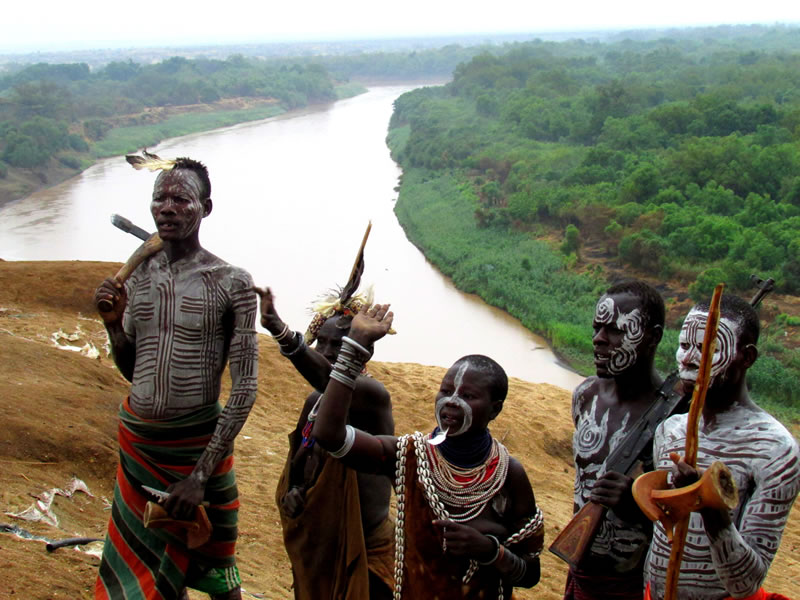
There are many tribes living in the Omo Valley, which stretches over an area of 750 kilometers in East Africa. The tribes living in this valley, where the Omo River is located, keep different traditions alive. The valley covers an area starting from the southwest of Ethiopia and extending to the Kenyan border. There are more than 80 tribes in the valley.
The tribes living here lead a unique life away from technology. Omo Valley, one of the most interesting places in the world, is on the UNESCO World Heritage List. This valley is called the place where time stands still. The tribes, which lead a life far from modern life, differ in traditions, customs and many aspects. The tribes are quite remarkable with their different clothes, make-up on their bodies, different hairstyles, dances and interesting jewelry they wear.
Many international and local tour companies organize tours to this valley. People who want to see the Omo Valley and visit the tribes can join these tours. The number of people who want to see the valley is increasing day by day. Omo Valley, where many living species live, is an extremely remarkable place with its natural beauties, lakes and fertile plains.
Interesting Facts about Ethiopia:
Addis Ababa is the capital city of Ethiopia. Although it is an African country that is very close to the equator, the weather here is very cold. This is because it is the highest city in Africa. In this city, the dates move 6 years behind the Gregorian calendar. Since the birthday of Jesus in Ethiopia is known as the sixth year of AD, that date is accepted as zero.
The oldest human skeleton found in the world is located in the capital of Ethiopia. The skeleton named Lucy (Lusi) is 3.2 million years old. Archaeologists, who found the skeleton in 1974, gave it this name because they were listening to the song of Lucy at that time.
The most famous of the tribes living in the Omo Valley in Ethiopia; Mursi, Consuls, Dorzes, Hamers, Dasanis, Bannas and Aryans. When these tribes are visited, if a photograph is desired, the person must be paid. When a certain amount of money is given to the head of the village at the entrance of the village, as many pictures can be taken as desired.
Interesting Traditions of the Tribes:
Locals living in the Omo Valley, where hundreds of tourists flock to each year, are accustomed to incoming tourists. You may encounter too many people asking for money from those who come. At the same time, they sell handicraft products and plants grown in the region by exhibiting them in the market.
Although the tribes in the valley have similar traditions, they are separated from each other by their partially different aspects.
Some tribes live in houses made of tree leaves that look like elephants. Some are distinguished from other tribes by their red earth-colored hair. There are tribes that perform bull jumping ceremony to prove the power of the groom before marriage. In this ceremony, women are whipped by men.
In the Banna tribe, it is possible to distinguish between married and unmarried women by their hair. Single girls have the same hair as boys. It is completely cut off. In this tribe, men can marry more than one woman. If a newborn baby’s teeth start to come out, it is believed to bring bad luck and is killed.
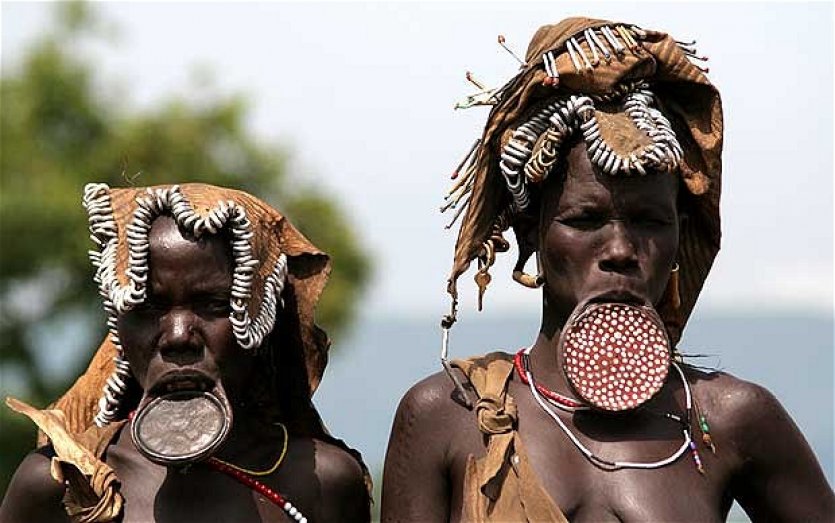
The Mursi people living in the valley are famous for the plates they put on their lips. No man marries a woman without a plate. For this reason, all women have a plate ring on their lips. The larger these plates, which are worn with a cleft lip, the larger the bride price is given to the woman. Although the lifestyles and customs of the tribes in the Omo Valley are different, they generally live by agriculture and animal husbandry and hunting.