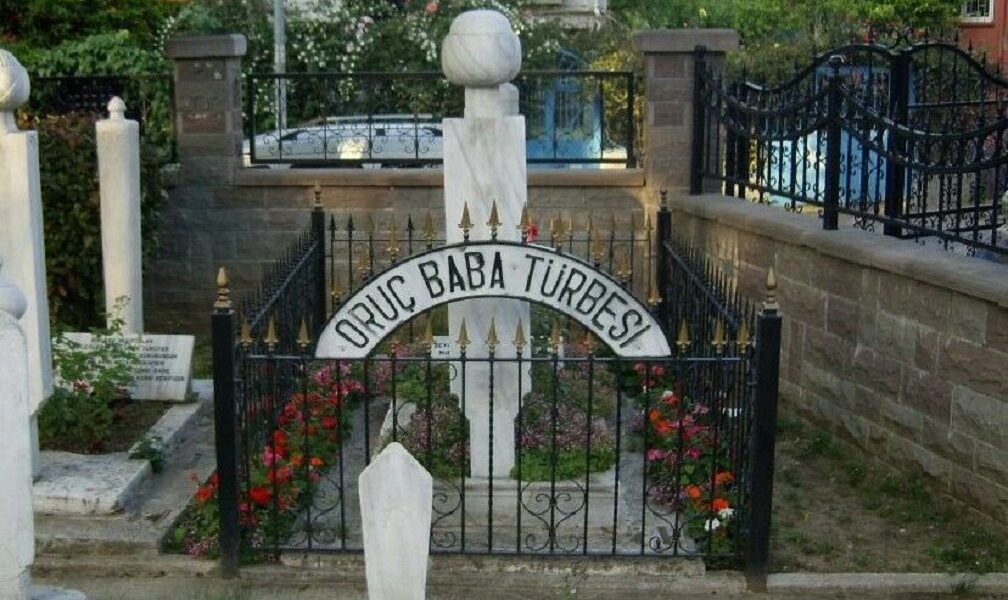
Oruç Baba Tomb is located in Fatih, Istanbul. It attracts great attention from people who want to break their fast in the shrine on the first day of Ramadan. Fasting is broken with foods such as olives, vinegar, sugar and bread, which are thought to represent blessings. In order to bring blessings, iftar meals are shared between people. At the same time, the tomb is visited in order to wish various wishes that are thought to be accepted.
There is not much information about Oruç Baba. It is said that the person known as Oruç Baba was a dervish who lived in ancient times. The dervish, who performed his worship without interruption, was poor, so there was very little food for iftar and sahur during Ramadan. He would usually break his fast with a piece of dry bread and vinegar. Another story told about the fasting father; He is one of the soldiers who fought in the siege of Istanbul in 1453. It is said that Oruç Baba, who was in charge of distributing food and water to the soldiers, continued to distribute water even in times of water scarcity. For this reason, it is said that he received the nickname “Father of Fasting”.
On the other hand, vinegar represents fertility in the Ottoman period. Among the people, if a rich person invites him to dinner, the phrase “come and get your vinegar” is used. This phrase; Due to the appetizing feature of vinegar, it means that the guest first drinks vinegar and then eats plenty of food.

Fasting at the Tomb of Fasting Baba
Oruç Baba Tomb, located in Fatih Şehremini, attracts great attention from the people who want to make a wish since the first day of Ramadan. It is thought that it is very important to break the fast on the first and last days of Ramadan, especially in the tomb. People who break their first fast in the tomb believe that their wishes will be granted. Many people who say their wish is granted visit the shrine to make a new wish or to distribute iftar meals because their wish has been granted.
People who visit the tomb break their fast with vinegar and bread, then pray to Allah by reciting Fatiha to the spirit of Fasting Father and expressing their wishes for the sake of his face. According to Islamic scholars, the main purpose of visiting the tomb should be to take a lesson from that person. In the prayers made in the tomb, it is stated that all wishes should be asked only from Allah, otherwise it may be shirk. While praying, it is more appropriate to say the name of the person in the tomb and pray for the sake of his face water.