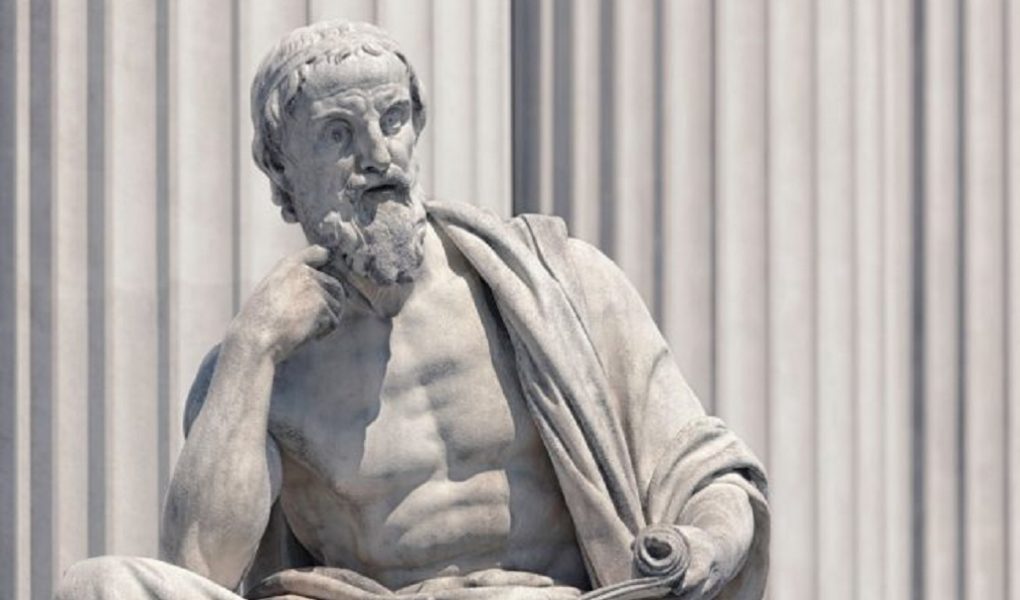
Herodotus, known as the “Father of History,” was an ancient Greek historian and writer. He was born in 484 in Halicarnassus, which is now part of Bodrum district in Muğla province, Turkey. He described the places he visited during his travels in his work, “The History of Herodotus.” Herodotus’s works have been subjected to various criticisms by many historians over time. In fact, he has been nicknamed “The Father of Liars.” Despite all the criticism, Herodotus’s works are considered an immortal masterpiece.
The main theme of his works is the Persian Empire , specifically the Persian-Greek wars between the ancient Greeks and the ancient Greek city-states. Before Herodotus, no writer had written about the past with such a discerning eye or examined past events in terms of cause and effect. Thus, it can be said that Herodotus invented the genre of historical writing. Herodotus is known as the father of history because the Roman scholar Marcus Tullius Cicero described him as the “father of historians” in his work “De Legibus”.
Herodotus is known as the world’s first research historian and writer. His youth was spent traveling extensively throughout the world. He lived in Athens for a long time and visited Egypt, Mesopotamia, Palestine, southern Russia, and the northern coasts of Africa. In his old age, he settled in Italy and wrote his famous work, which earned him the title of “Father of History.” Herodotus, who died in 425 BC, is buried in Thurium, a city on the Gulf of Taranto in southern Italy.

Characteristics of Herodotus’ Works
Although the main subject of Herodotus’ works is the Persian-Greek wars, his works are not merely history books. They are considered treasures providing geographical and sociological information about various nations and countries interwoven with legends. His works, dedicated to Greek and Athenian values, possess an extraordinary sense of tolerance and impartiality. He wrote his famous work, Historia, in Thurium, Athens.
Herodotus has received considerable criticism since ancient times for his approach to the subjects he addresses in his works. Herodotus; Besides being nicknamed “the father,” he was also known as the “father of lies.” His works, which contained very important information, were mostly written in the style of fairy tales. For example, the story he told about fox-sized ants in Iran that scattered gold dust when their nests were dug up was rejected on the grounds that it was a fairy tale.

However, in 1984, French author and explorer Michel Peissel reported seeing a fox-sized marmot scattering gold dust while excavating in the Himalayas. Locals in the region have corroborated the existence of this phenomenon through their experiences with gold dust. Many researchers argue that a translation error may have occurred due to the similarity of the Persian words for “mountain ant” and “marmot.”
Some authors suggest that Herodotus fabricated sources and exaggerated his travels. In many of his works, Herodotus is able to present various alternative perspectives on an event or process if he is unaware of the truth or if the tedious facts do not align with his beliefs.


