Nikola Tesla is a scientist known for his works such as alternating current and the Tesla Coil. Tesla is known as a Serbian-American physicist and engineer and has always said he saw himself ahead of his time. Tesla was both an engineer and a scientist. He pioneered advances in many fields such as radio, television, motors, robotics, and electricity, and proposed ideas for greater inventions.
Although Tesla went down in history with many of his inventions and ideas, some projects could not be realized or implemented. According to some, these failures may be due to Tesla’s business acumen or poor marketing strategies. Others argue that Tesla was hindered by his opponents and therefore some of his inventions were not implemented. However, Nikola Tesla’s contributions to the world of science, his advances in technology and his predictions will continue to have an important place in history. Some of Nikola Tesla’s inventions that never went into production are as follows;
Thought Camera
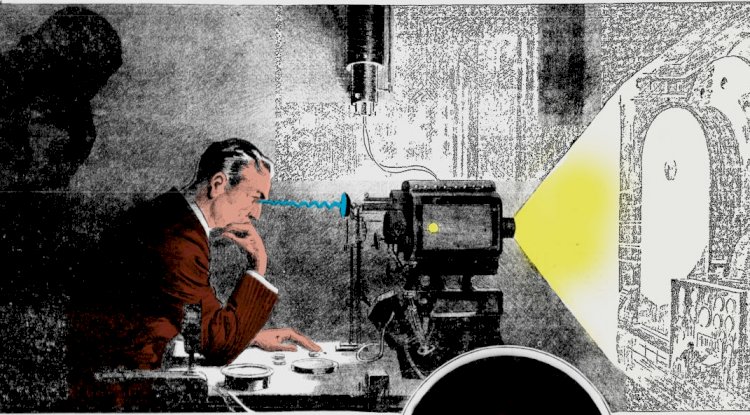
Tesla may have considered inventing a machine that could read the human mind. In an interview with a newspaper reporter in 1893, he talked about the idea of a device that could photograph thoughts. This device would work by having a precise image formed by thoughts produce a corresponding image that could be read on the retina by an appropriate device.
Tesla planned to project the image onto an artificial retina, take pictures and project the image onto a screen. In this way, objects imagined by a person could be projected onto the screen clearly. Tesla stated that this idea emerged at a time when people’s minds were like open books, and he thought that people’s thoughts could be read in this way.
Tesla’s mind-reading machine project never materialized. However, today some researchers are trying to develop devices that can read human thoughts by measuring brain waves. The development of this technology could have great potential in the fields of medicine and communications.
Artificial Tidal Wave
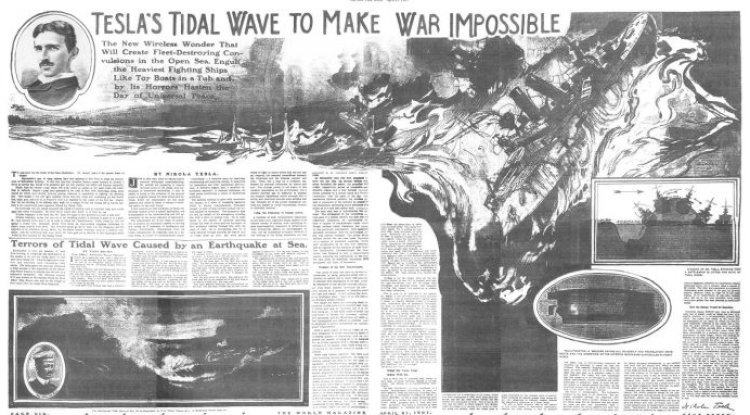
Tesla advocated the use of the power of science for the prevention of war and world peace. He hoped to develop defense technology against enemy navies by generating massive artificial waves, and he thought he could destroy even the largest ships. In this way, no country would need to build a navy and it would be possible to prevent war. For this purpose, Tesla designed remote-controlled ships, which he called teleautomatons, which would carry tons of explosives that could be detonated near an enemy navy.
Tesla calculated that the bursting gas bubble caused by the explosion could hit those within a mile of the explosion with waves 30 meters high. However, he could not implement this project. It was only in the 1940s and 1950s that the United States and the Soviet Union achieved similar effects by conducting underwater nuclear bomb tests.
Death ray
Even in the last years of Tesla’s life, new visions continued to emerge from his creative mind. One of these was the invention also known as the “Death Ray” or the “Death Harness”. Tesla believed that the beam created by accelerating mercury isotopes up to 48 times the speed of sound would be powerful enough to destroy entire armies even at a limited distance by the curvature of the Earth.
This invention would be an “invisible” version of a wall like the Great Wall of China that could not be crossed for many years. Tesla offered his particle beam weapon to many governments, including the United States. Only the Soviet Union showed interest in this invention and gave it a partial test in 1939. However, the project came to an end due to Tesla’s death before the invention could be completed.
Earthquake Machine
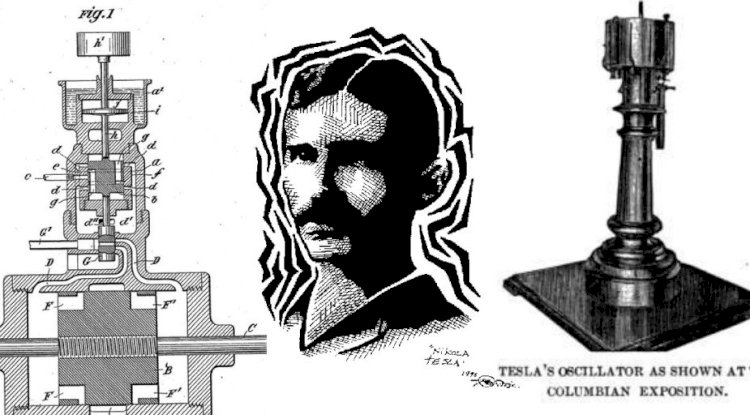
Various rumors and legends circulate about a mechanical oscillator powered by steam that vibrates up and down, patented by Nikola Tesla in 1893, as the “Earthquake Machine”. While there is no definitive proof as to the authenticity of the invention, Tesla has a few anecdotes about this machine.
In an interview, Tesla said that one day he tried to tune his mechanical oscillator to the vibration of the building that houses his lab in New York, causing the ground to shake. However, there is no clear evidence about the reality of this event.
In another story Tesla told, it is stated that when the Earthquake Machine was tested, cracking sounds were heard continuously when the power was turned on, and heavy machinery on the ground was flying around. Tesla says he took a hammer to check the situation and broke the machine. Otherwise, the building could have collapsed in a matter of minutes.
Although there are doubts about the authenticity of this invention called the “Earthquake Machine”, Nikola Tesla’s studies and discoveries on electricity, magnetism and mechanics still gained great respect in the scientific world.
Wireless Energy
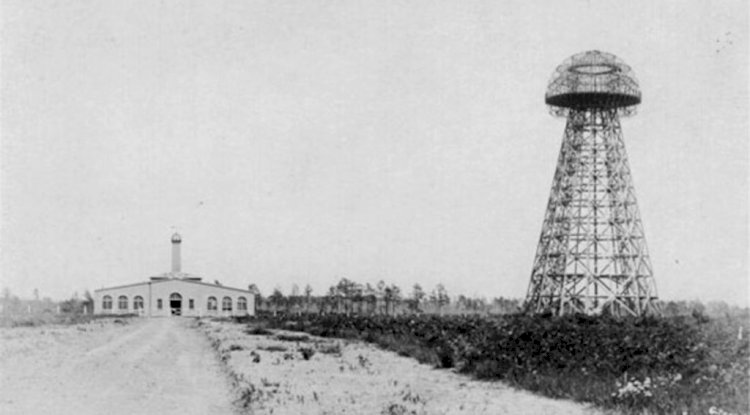
Nikola Tesla had a big dream of providing free electricity to the whole world. He believed he could send telegraphic messages, audio, even visuals, anywhere, using the earth as a conductor. Tesla, which has a prestigious neighborhood in New York, began construction in 1901 in collaboration with investor JP Morgan, who provided $150,000 in financing for the Wardenclyffe tower on Long Island.
Immediately after receiving the financing, Tesla procured the necessary equipment from Westinghouse and together with his close friend Stanford White designed the 57-metre-tall tower. Meanwhile, Marconi had sent his first transatlantic telegraph message. In order to compete against Marconi, Tesla decided to enlarge his tower and asked for additional budget for electricity transmission. However, Morgan did not take kindly to the idea and later stopped financing the project due to rising costs.
After working on the project for a while, Tesla had to dismantle and sell some of the equipment in the tower in order to pay off his debts. Unfortunately, Tesla’s project, which can be thought of as a primitive internet, could not be completed. Tesla had to finish the project before it became operational in 1906, and Wardenclyffe Tower was dismantled in 1917.
Electrically Powered Supersonic Airship
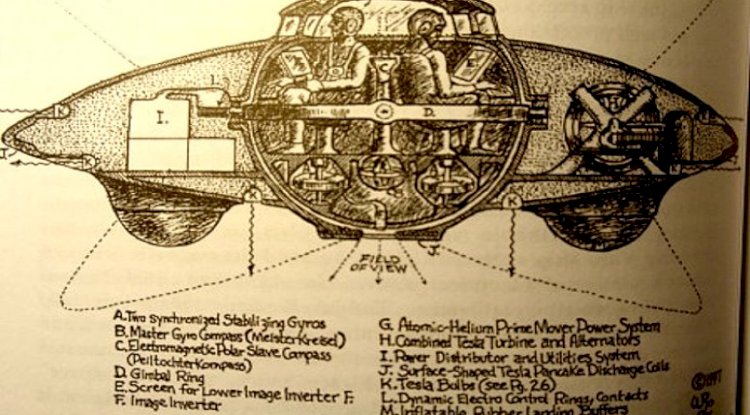
Tesla was fascinated by the idea of flying as a child. Combining his knowledge of electrical and mechanical engineering, he began to think more about aeronautics after his Wardenclyffe (Tesla Tower) project failed. Reconstruction magazine in the July 1919 issue; He published an article describing Tesla’s efforts to develop a high-sound aircraft that receives power from ground power plants via wireless electricity transmission, and that allows passengers to travel from New York to London in three hours.
According to Tesla’s idea, the planes would receive energy wirelessly from power plants on the ground, thus eliminating the need for fuel. In Tesla’s words, “The power supply was almost unlimited. Because any number of power stations could be run together, and planes could now get their energy from rails or wires, just as trains run on rails.”
Remote Controlled Naval Fleet
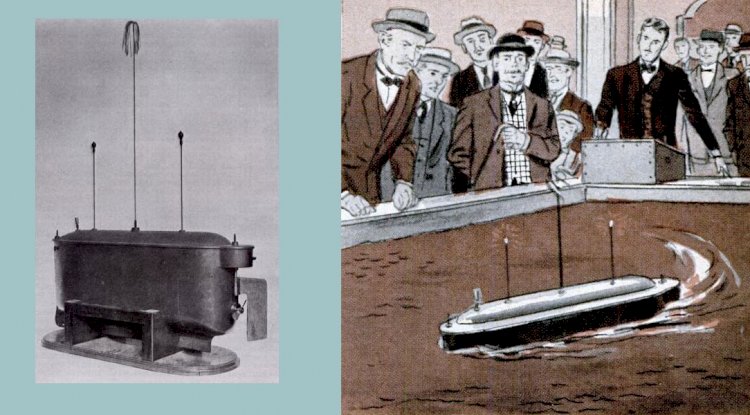
Tesla was known as a genius who continued to come up with new ideas even towards the end of his life. In an exhibition held in Madison Square Garden in 1898, Tesla made a show that excited everyone. In this show, he accomplished something that not everyone could have imagined; steered a boat with a remote control. Some in the audience claimed that there was a trained monkey inside the bot and that the bot was guided by telekinesis. However, Tesla explained that to make this happen, the boat is equipped with a borrowed mind.
Tesla planned to realize this idea on larger scales and even made an offer to the American military about it. However, the US military decided that this technology was not suitable for use in combat. Years later, after Tesla, in World War I, the Germans used this technology in battle using remote-controlled boats.
For the article on the life of Nikola Tesla CLICK HERE.