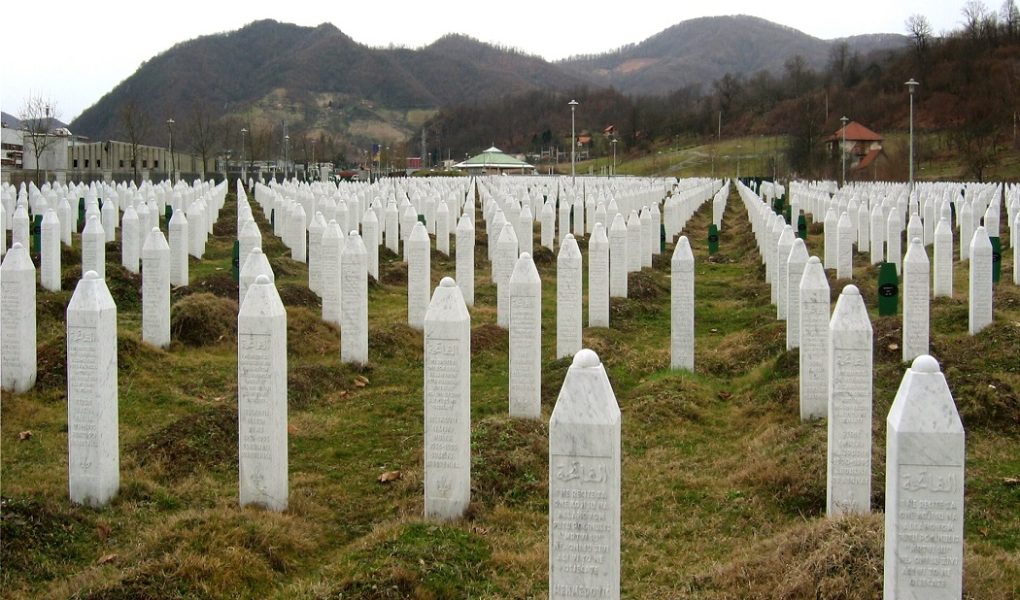
Srebrenica Massacre or Srebrenica Genocide; It is an event that took place during the Yugoslavian Civil War (Croatian War and Bosnian War), which took place between 1991 and 1995. During the Krivaya ’95 Operation of the Republika Srpska Army against Srebrenica, at least 8,372 people lost their lives as a result of the attack against the Bosnian civilian population in Srebrenica, Bosnia and Herzegovina in July 1995.
In this attack, women and young children are among the people killed by the heavily armed Bosnian Serb army under the command of General Ratko Mladic in Srebrenica. This fact is proven by documents. Apart from the Republika Srpska Army, Serbian private security forces known as “Scorpions” also participated in the massacre. Although the United Nations declared Srebrenica a safe zone, 400 armed Dutch peacekeepers deployed to prevent the massacre failed.
Srebrenica massacre, World War II. since World War II The largest mass murder in Europe be and at the same time First officially documented genocide in Europe because it is of great importance.

What Happened Before the Srebrenica Massacre
With the disintegration of Yugoslavia, after the genocide initiated by the Serbs in Bosnia in 1992, the United Nations mandated intervention and declared 6 regions, including Srebrenica, as safe zones.
Srebrenica had a population of around 24,000 in the pre-war period, but with the influx of refugees from other regions, its population reached around 60,000. Unfortunately, Srebrenica had become a “concentration camp” struggling with “hunger” and “sickness”. The weapons in the hands of the Muslim population were collected by the UN Peacekeeping Force for protection.
As Serbian forces led by Ratko Mladic intensified their offensive against Srebrenica, the Muslim application to take back their weapons was rejected by the Dutch commander in charge, Thom Karremans. The UN intervened only by flying two F16 aircraft over the city.
One night, Dutch soldiers evacuated Srebrenica, as per the order they received from the commander of the UN Peacekeeping Force in Bosnia. Dutch commander Thom Karremans, who was responsible for the security of the city, handed over 25,000 refugees and the city to the Serbs. In a video that emerged later, the Serbian general was seen giving a gift to the Dutch commander who evacuated the city. A week-long massacre, II. It went down in history as one of the worst crimes against humanity committed after World War II.
On 27 June 2017, 15 years after the massacre, the Dutch Court ruled that the Dutch soldiers involved in the Srebrenica Massacre acted illegally and the Netherlands was partially at fault. The court declared that the Dutch government was responsible for 30% of the deaths in Srebrenica. The Hague Court of Justice recognized the week-long massacre as “genocide” but did not hold Serbia responsible.

What Happened in the Srebrenica Massacre
After the 1992 Bosnian War, Serbia became a strategic region of Bosnia and Herzegovina. Especially the eastern side of the country was declared a Forbidden Zone by the European Union, and the city of Srebrenica was also included in this zone. This situation created an opportunity for the Armed Forces of Bosnia and Herzegovina. At the same time, the country’s largest mines were Bosnia and Herzegovina’s only economic resource, and the Serbs used this as a tool. Srebrenica was a place with a predominantly Muslim population that struggled against Serbian oppression with limited means.
In Srebrenica’s Tanjarz Rural, a military group, acting under the orders of Mladic, took 10,000 prisoners and began to kill these captives. Serbian brutality was met with a great reaction in Europe and 8,300 people lost their lives in the massacre that lasted for 5 days. The remaining 2,700 people were released. The bodies of these 8,300 killed were dismembered and after their skeletons were removed, they were cremated in the crematorium, and then The Hague CemeteryHe was buried in.
About 13 years after the massacre, Bosnian Serb commander Ratko Mladic was captured and arrested along with Radovan Karadzic while living as a fugitive in the village of Sermiyan. After a week-long trial at The Hague International Criminal Court, an arrest warrant was issued for Mladic and his sentence was set to life imprisonment.
Caught as a result of the work of Serbian intelligence, Mladic was transferred to the international war crimes tribunal in The Hague. In the statement made by the International Criminal Tribunal for the Former Yugoslavia, which was established by the decision of the UN Security Council, it was stated that Mladic would be brought to The Hague after the completion of the legal process in accordance with local laws in Serbia, and it was stated that this transfer was eagerly awaited.

Those Responsible for the Srebrenica Massacre
On 11 July 1995, Ratko Mladic entered the disarmed city of Srebrenica without difficulty. Then Serbian soldiers killed Bosnian Muslims and Bosnian Croats on the roads and in the mountains. To prevent the bodies from being identified, Serbian soldiers dismembered the bodies and buried them in at least 64 mass graves.
The International Criminal Tribunal for the former Yugoslavia (ICTY) in The Hague, the Serbian leader who was tried on 11 counts during the Bosnian War Radovan Karadzic He announced his decision on March 24, 2016. The court found former Serbian leader Radovan Karadzic guilty and responsible for the genocide of 8,000 Muslim Bosnians in Srebrenica.
However, ruling that the crimes committed in other parts of Bosnia were not genocide, the court held Karadzic responsible for crimes against humanity in Bosnian municipalities. Karadzic was found guilty on 10 of the 11 charges. The court also ruled that Karadzic committed war crimes during the siege of Sarajevo and sentenced him to 40 years in prison.


