The Ancient City of Troy is located on the Hisarlık hill in Çanakkale, Turkey. Located in the Troia Historical National Park at the foot of the Kaz Mountains, the city is among the most famous ancient cities in the world. It is the place where the famous Trojan War, mentioned in Homer’s Iliad and Odyssey, which forms the basis of Greek literature, took place. The world’s first beauty contest was held in the city where the Trojan Horse legend came to life.
The Ancient City of Troy is one of the most famous archaeological sites in the world, with a history dating back to 3 thousand BC. The ancient city, which witnessed many wars over thousands of years, was destroyed and rebuilt 7 times. The city, which hosts many different cultures, is visited by many local and foreign tourists every year. The ancient city, which contains many important artifacts, was included in the UNESCO World Heritage List in 1998. With its thousands of years of history, it has been the subject of many movies and legends.
History of the Ancient City of Troy
The Ancient City of Troy was first established on the Hisarlık hill in 3 thousand BC. The name of the city, which is known as Troy in Turkish, is mentioned as Troia (Troy) in Greek documents. Many of the artifacts in the ancient city, which were discovered by the archaeologist Heinrich Schliemann in the 1870s, were taken abroad. Artifacts from Ketten are exhibited in various museums in Turkey, Germany and Russia today.
The ancient city was established as a port city in the south of the Dardanelles. Due to its geographical location, the city has been very important for the civilizations that ruled in the region to establish a commercial and cultural connection with other regions. Due to the fact that the trade ships passing from the Aegean Sea to the Black Sea had to pass through the Dardanelles, it showed a great commercial development during the Bronze Age. Over time, due to the alluvium carried by the Karamenderes River to the city shores, it moved away from the sea and lost its importance. After the natural disasters and attacks, the city was abandoned.

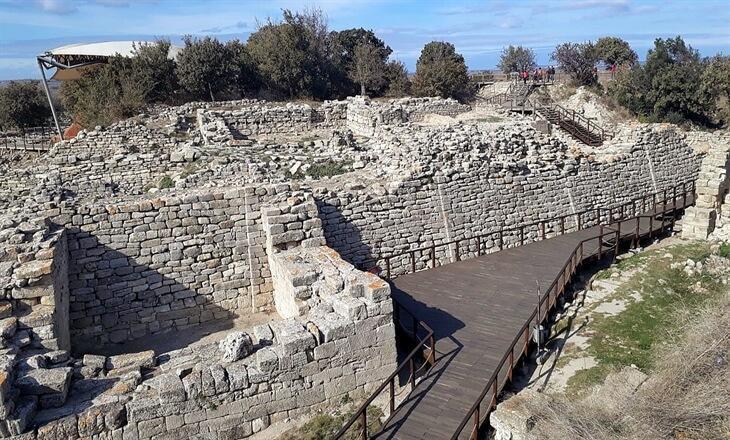
In the excavations carried out after the ancient city was discovered, it was revealed that the city was rebuilt 7 times in different periods. In order to examine the complex historical and archaeological structure of the city more easily, it is divided into 9 main sections according to historical periods. These 9 sections showing a time of more than 3 thousand years; It gives information about the civilizations that settled in the geography where Anatolia, Aegean and Balkans meet. B.C. 85 and MS. The Trojan layers, which cover the dates between the 8th century, end with the Roman Period.
Troy Ancient City Legends
According to the legend told about the city; Paris, son of the Trojan King Priam, fell in love with Helen, the wife of the Spartan King Menelaus. Paris smuggled Helen to Troy with the help of the Goddess of Love, Aphrodite. Then he attacked Troy. SpartansThey built a big wooden horse with the idea of Odysseus and left the horse in front of the Trojan gates. The Trojans took the horse to the city, whereupon the Spartan soldiers hiding inside came out, burned the city down, and took Helen back to Sparta. A model of the wooden Trojan horse is exhibited at the entrance of the city.
In Homer’s famous Iliad Epic; It is told that the Spartans fought and defeated the Trojans. In the Odyssey Epic; It tells the events that Odysseus went through to return to his homeland after the destruction of Troy, and during his 10-year journey.
Hera, Aphrodite and Athena participated in the world’s first beauty contest, which is said to have been held in Troy. Participating in the contest as a selection, Trojan Prince Paris chose Aphrodite, who promised him Helena, Queen of Sparta. This situation started the Trojan War, which would last for 10 years.

Structures Found in the Ancient City of Troy
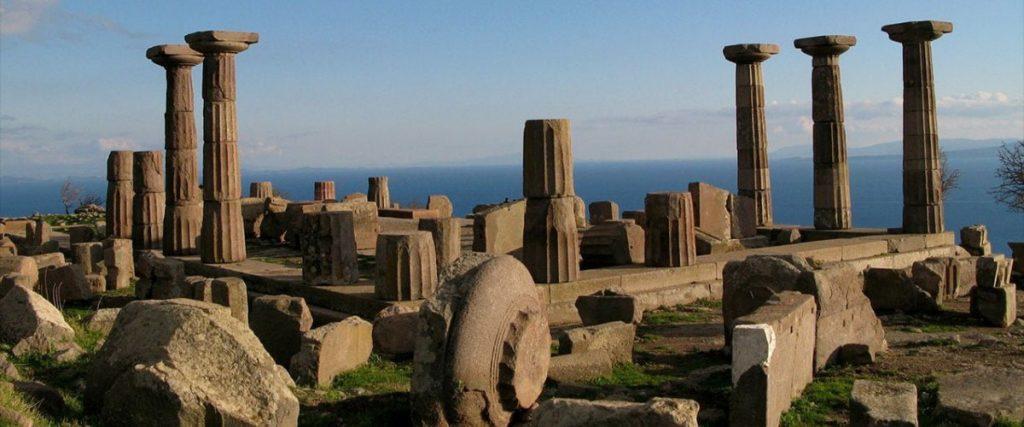
One of the most important structures in the ancient city of Troy is the temple of Athena. B.C. Built between 240 and 150, the temple was renovated during the reign of Roman Emperor Augustus. The temple has been the center of annual celebrations in honor of the goddess Athena. During the celebrations, sacrifices were made and sports competitions were organized.
In historical sources about the Temple of Athena; Alexander the GreatIt is said that during his struggle with the Persians, he visited the city and donated his armor to the temple. During the Persian rule, Emperor Xerxes I came to this temple during his Greek expedition and offered a sacrifice.
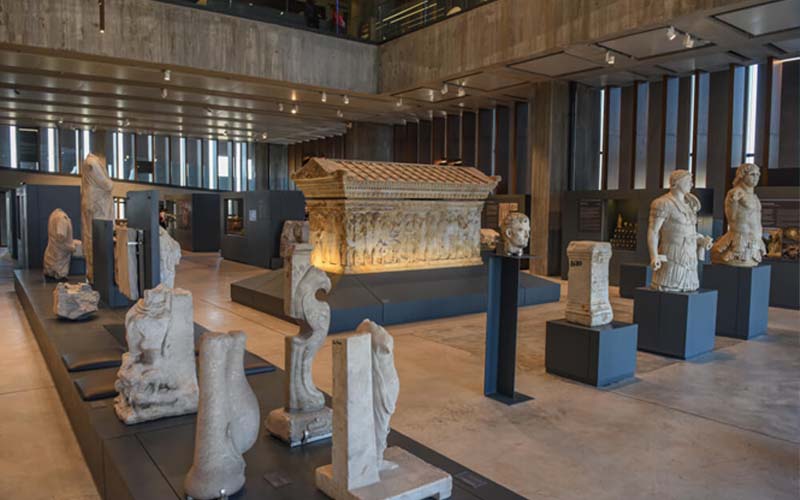
A large number of artifacts from the region are exhibited in the Troy Museum, located at the entrance of the ancient city. In the museum, there are works such as marble statues, sarcophagi, weapons, coins, inscriptions, altars, bone tools, glass bracelets, ceramics, metal vessels, ornaments.
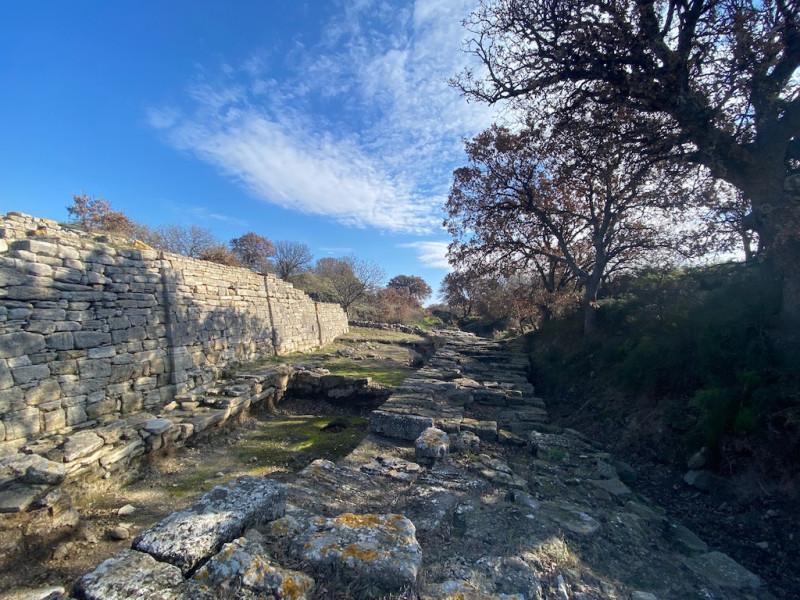
In the city, there are structures such as a Trojan Horse model, storage containers known as pitos, a part of the city wall including the Temple of Athena, the entrance way of the south gate, the bath from the Roman Empire, altars known as sanctuaries and votive wells.