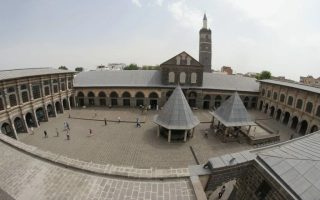
Arap Baba Tomb, located in Harput District of Elazığ, contains a mystery that has amazed its visitors for centuries. The body of Arap Baba, lying in the tomb, has been protected from decay for approximately 700 years, and the secret of this situation is still unsolved. However, there is an interesting detail: Arap Baba’s body is decapitated! The secret of this mysterious saint continues to arouse curiosity for years.
Recent scientific investigations have come one step closer to unraveling the mysteries of this historical and religious figure. Known as both a Seljuk commander and a great saint The legendary story of Arap Baba and the secret of preserving his bodyappears as a miracle extending from the depths of history to the present day.
Arap Baba Tomb and Masjid
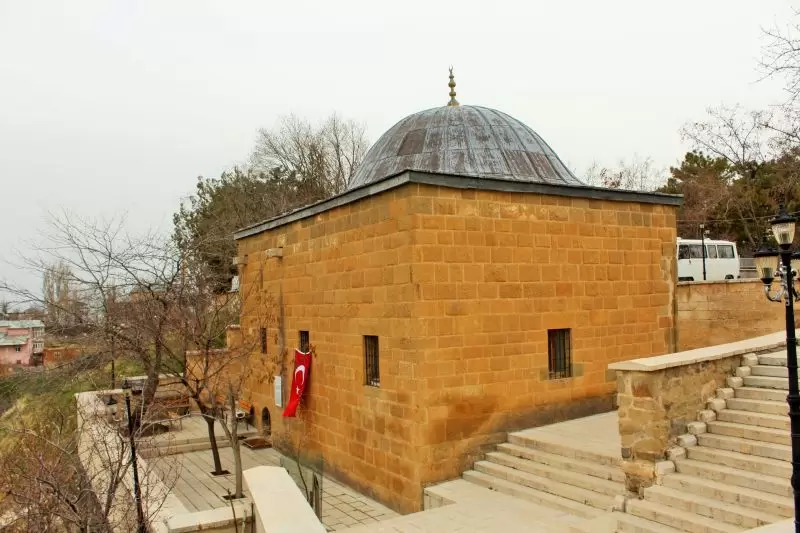
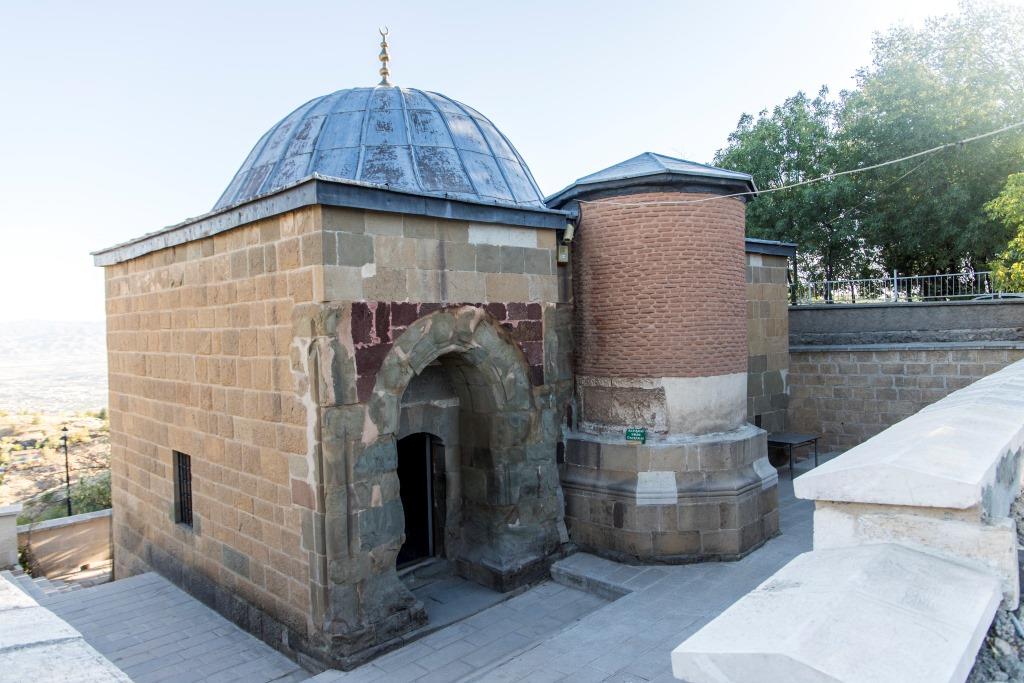
Arap Baba Tomb and MasjidIt is located on Enver Demirbağ Street in Harput District and belongs to the General Directorate of Foundations. According to the information written in its inscription, the mosque was built by Seljuk rulers IV. Kılıçarslan’s son III. It is stated that it was built by Yusuf İbn Arebişah in 678 H. (1279-80 A.D.) during the reign of Gıyaseddin Keyhüsrev.
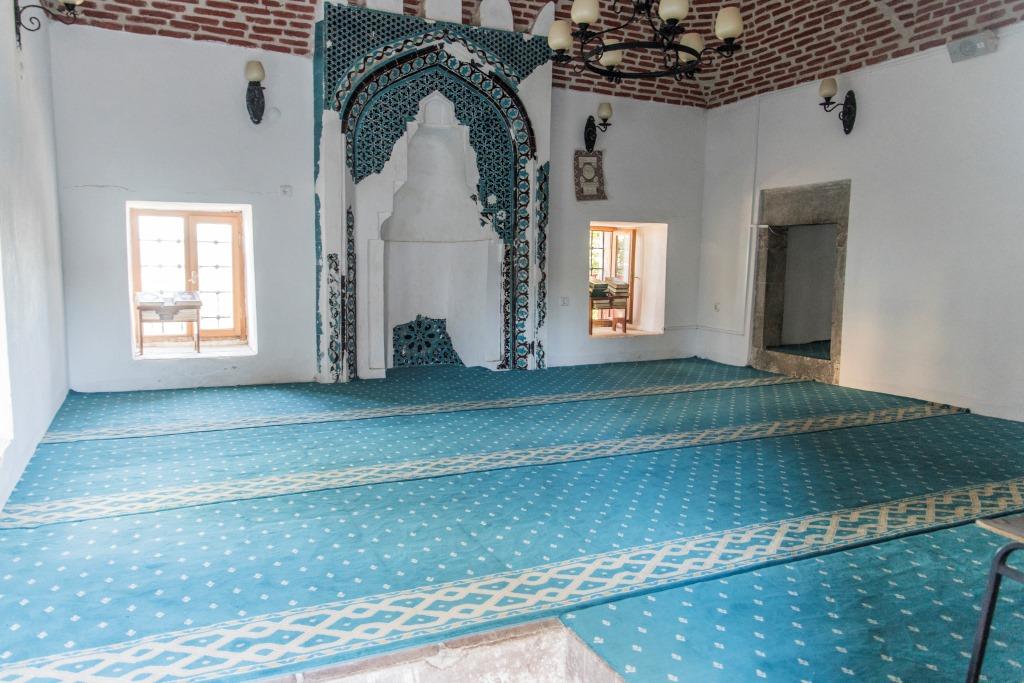
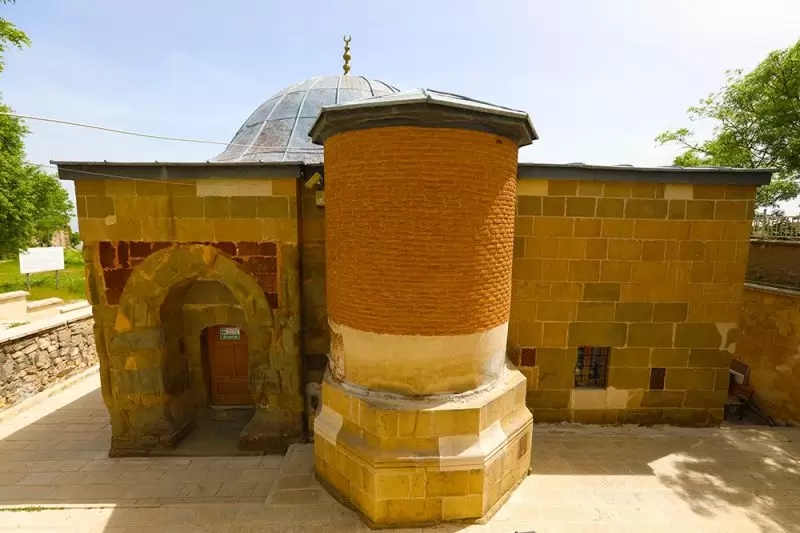
The tomb is a two-storey building with features specific to Seljuk architecture. Arap Baba’s sarcophagus is on the lower floor and the masjid is on the upper floor. The square planned mosque is covered with a dome. The outer part of the crown gate provides entrance to the mosque with a horseshoe arch and a door with a round low arch. There are two windows on both sides of the mihrab. In the middle of the mihrab and the dome, there are 13th century Seljuk period turquoise and eggplant purple turquoise black tiles.
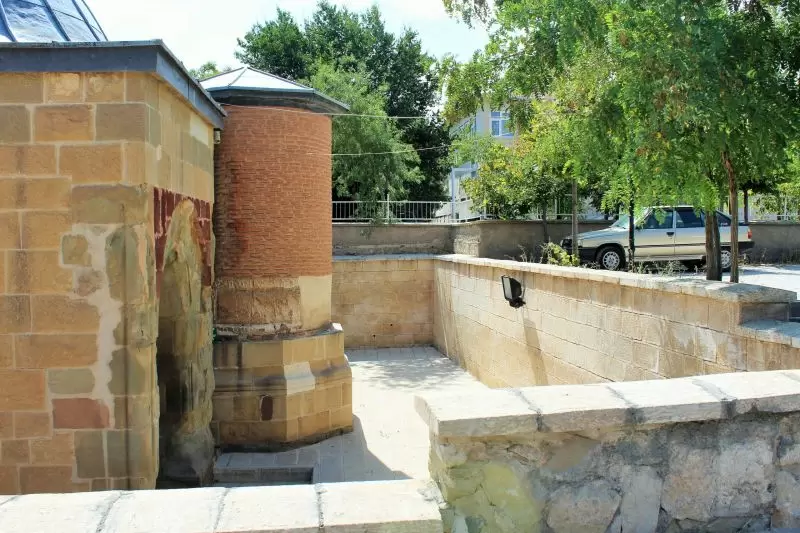
In the northwest of the mosque, there is a passage to a section used as Darül-hadith and Darül-hattat during the Seljuk period, and this section is covered with a vault. The minaret was built in the middle of the tomb and the mosque, but its upper part was destroyed and its door is inside the mosque. The base of the minaret is on five rows of stone and has a glass border with traces of plaster and plaster, but today it is quite damaged.
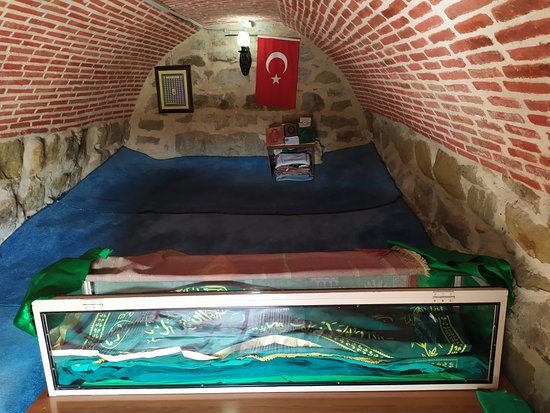
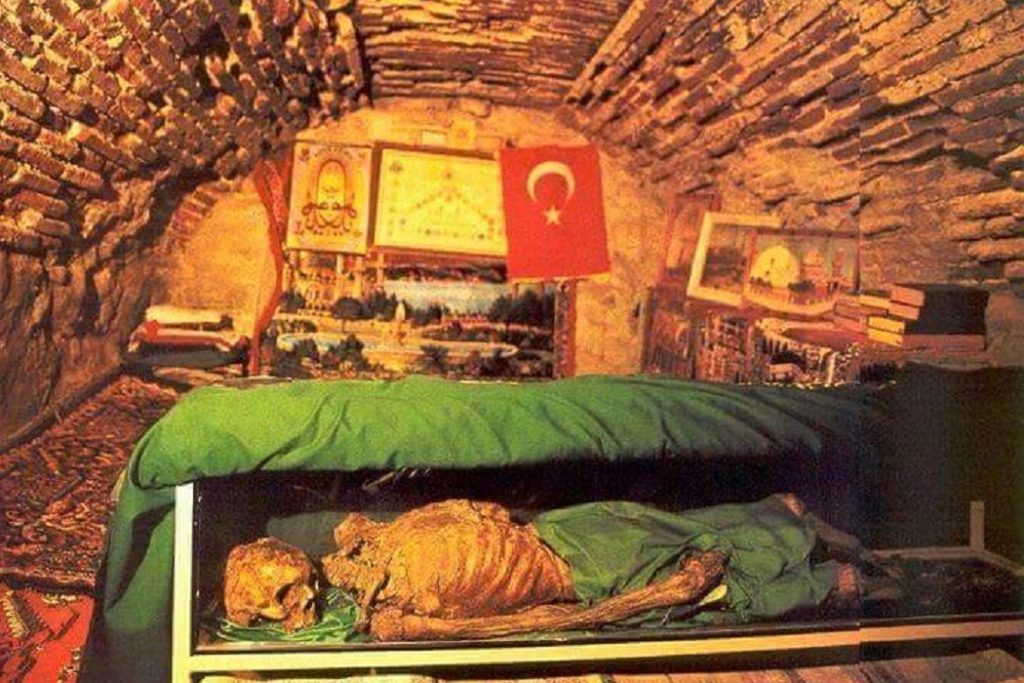
As is common in Seljuk tombs, the funeral or mummification section is under the masjid. This section is a narrow rectangular area covered with a vault and has a small entrance with a round low arch measuring 1 meter. There is a glass-coated sarcophagus inside and the person known as Arap Baba lies here. It is covered with a green cloth.
Arap Baba was an important mujahid, commander or great saint during the Seljuk period. It is accepted as. His body is protected from decomposition, his chest and abdomen are collapsed, and his fingernails and toenails are intact. While this situation can be explained by a technique based on the science of the period, it is also attributed to its high spiritual characteristics.
According to another rumor, it is thought that it did not rot because it remained in a place known as “Körhane” and used as a morgue in winter for a long time. Apart from his military activities, he frequently gives sermons and advice to the public. “I came with a sword, I will leave with a pen” He is said to have said. His date of death is unknown.
Arap Baba’s Body Examined by Scientists
It is claimed to have remained intact for approximately 700 years in the Arap Baba Tomb in the Harput District of Elazığ. Arap Baba’s body was examined by scientists with the permission of the General Directorate of Foundations.
The secret that was wondered about in the tomb, which was visited by hundreds of people, was revealed with this examination. The team that carried out the investigation was composed of Istanbul University Forensic Medicine Institute lecturer and world-famous forensic anthropologist Dr. It consisted of experts led by Mehmet Yaşar İşçan. Scientists who went to Elazığ and conducted research obtained important findings that will refute the centuries-old legend about Arap Baba.
Odor Complaints Prompt Investigation
The request to examine the tomb came from the Malatya Regional Directorate of Foundations, not from us. The Regional Directorate requested a scientific investigation, saying, “We received reports of odors coming from the area where Arap Baba’s body was found.”
One-Year Leave Process
After the bureaucratic procedures, about a year later, we were allowed to inspect the place where the body was found, with permission from the General Directorate of Foundations.
Four Day Review
Archeology expert Bahar Meryen, microbiology expert Asst. Assoc. Dr. Hüseyin Çokan and I went to Elazığ on July 13, 2008. We stayed in the area for four nights. Wearing our masks and special clothes, we went towards the place where the body was found.
Body Found in Inappropriate Conditions
There was no odor in the box where the body was found, as claimed, and no organisms or insects were seen on the body. However, the environment was very humid and the temperature was high. Arap Baba’s body was in an inappropriate condition.
His family is also buried in the tomb
The cemetery was a pit 1 meter 80 centimeters high, but it was empty. There were other bones in the pit that were thought to belong to Arap Baba’s family.
Three-Dimensional Imaging
Arap Baba’s body was taken out of the grave and displayed in a glass chest. We took the body to Fırat University by ambulance, where we took three-dimensional images at the Radiology Department. This technique was applied to a mummy for the first time in Turkey.
How He Looked While Living Will Be Determined
Thanks to this technique, we will be able to photograph the real image of Arap Baba in his life. We took the body back to Fırat University Forensic Medicine Institute.
Second Review and Findings
We examined it again the next morning. There was no deterioration in the soft tissues of his body and his skin was intact. However, some of his right ankle bones were rotted.
Not Beheaded
It was determined that Arap Baba was approximately 40 years old and had a strong bone structure. It turned out that his head was not cut off; If he had been cut, there would have been scars on the vertebrae in his neck. Additionally, the skull found next to the corpse had no cut marks and its lower jaw was missing, so it is estimated that this skull does not belong to the corpse.
It has been confirmed that he was mummified
The claim that Arap Baba’s body was not embalmed is not true. We think that the body was mummified centuries ago, using a technique in accordance with an old Turkish tradition. As a result of this study, we will be able to learn this technique.
An Old Turkish Soldier or Bey
The presence of other bone remains in the grave and the fact that only one person’s body remained intact indicates that this person was a former Turkish soldier or an important leader of the region. According to ancient Turkish traditions, when important people, and usually soldiers, died, they were mummified and buried in the same grave with their family.
We also want to examine his family
There is strong evidence that Arap Baba was a former Turkish soldier who came to the region to spread Islam. That’s why it was mummified centuries ago. If permission is given, we would like to examine the other remains of his family in the grave.
Reason for Odor Complaints
The body was placed in a glass chest in 1977, claiming that it smelled. However, after complaints of odor in the following years, it was treated with chemical solutions in 1988 to prevent deterioration. We are investigating what kind of substances were used.
Rain Started Decay
The biggest reason for the smell of the corpse is the heavy rain in the 1970s that entered the grave. We think that the body left in the puddle has begun to decompose and therefore odor complaints have increased.
Glass Chest Harms the Body
Our research continues. We have not submitted our report yet. However, my suggestion is that the body be in the cemetery. Constantly opening the glass chest causes the body to rot. Therefore, we will recommend that the body be buried in the cemetery.
Who is Arab Baba?
Arab Dad, He is considered one of the saints of Harput. His real name is Yusuf and his father’s name is Arabşah. There is not much information about his life. His date and place of birth are unknown. Rumored to have lived in the 13th century Arap Baba is one of the Seljuk commanders who came to conquer Harput and is also a great saint.
Arab Baba, who sometimes used the sword to spread Islam, mostly gave sermons and advice to show people the right path. It is stated that he often said, “I came with a sword, I will leave with a pen.” Arap Baba’s tomb was built in 1279. There is a grave room on the lower floor of the tomb, and the sarcophagus that is visited on the upper floor. The feature of Arap Baba’s grave is that his body is open for everyone to see. Located in a glass sarcophagus covered with green fabric inside the tomb, Arap Baba attracts great attention with his undecomposed corpse and severed head.
The Legend of the Arab Father
According to popular belief, in ancient times A great drought in Harput It started to rain and the grass stopped growing. People praying for rain and begging for rain did not help. One night, an old woman named Selvi, who lived in one of the houses close to Arap Baba’s Tomb in Harput, dreamed that if she cut off the head of Arap Baba’s body in the tomb and threw it into a stream, it would rain. This dream, which he told to his neighbors, spread throughout Harput.
Days passed and not a drop of rain fell on Harput. Famine is on the way. Desperate people tried to persuade Grandma Selvi to behead Arap Baba. But the old woman did not dare to do this. Thereupon, one night, people gathered around his house and started throwing stones at it.
The next morning, the helpless old woman suppressed the fears in her heart, went to Arap Baba’s tomb, cut off the head of the corpse and threw it into the stream. Thereupon, the rains started, but this time a disaster greater than famine occurred. The floods raged and the streams overflowed. Rain has ceased to be a blessing and turned into a disaster.
Another night, Grandma Selvi saw Arap Baba in her dream. Arap Baba shouted angrily, “If you don’t take my head from where you threw it and put it back, the rains will not stop and your situation will be ruined.” When the old woman woke up in fear in the morning and went down to the stream, she saw the severed head standing by the stream. He immediately took it and put it in the chest. Then the rains stopped and everything returned to its normal state.
To join our WhatsApp group CLICK!