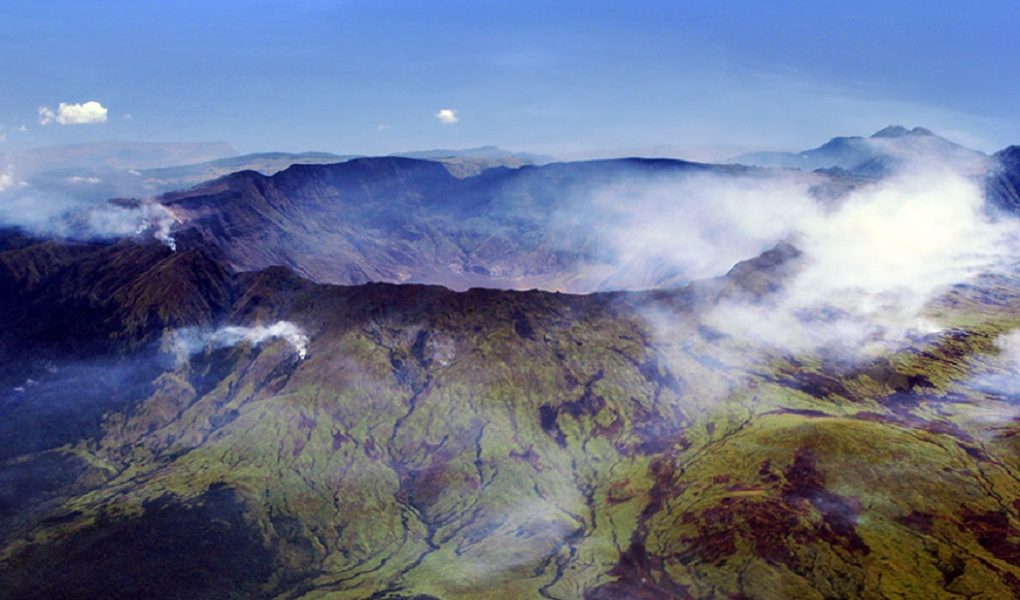
The biggest volcanic disaster in history; It is a volcanic eruption that occurred in Indonesia in 1815. The event, which went down in history as the Tambora Volcano Disaster, had significant effects around the world. Tambora Volcano is part of the Sunda archipelago, a string of volcanic islands in the southern chain of the Indonesian archipelago. Tambora, located in the Sunda Islands region of Indonesia, was recognized by the great eruption on April 10, 1815. In some parts of the world after the explosion, snow fell in June, freezing temperatures were experienced in July, and people died of cold in August.
Tambora Volcano is a volcanic mountain reaching 3,726 meters in height. The eruption of the volcano reduced its height by half and hurled large amounts of volcanic rock into the air. After the eruption, a large ejection formed around the volcano, further lowering the height of the volcano. The cause of the eruption of the volcano is the contact of the magma deep in the ground with the air. An eruption occurs when magma rises in the rocks around volcanoes and comes in contact with air. The very powerful volcanic eruption caused the death of tens of thousands of people.

Effects of Tambora Volcano Eruption
The effects of the Tambora Volcano Disaster were felt worldwide. The ash from the eruption was scattered around the world, causing temperatures to drop. Changes in weather conditions have been observed in many countries. A year after the eruption, unusual cold and snowfall occurred in North America and Europe. Thus, the year 1816 was recorded in the archives as “the year of North America and Europe without summer”. In the USA, the year 1816 was also called the “Cold Year”. At the same time, tsunamis occurred after the explosion, causing the death of approximately 10 thousand people.
Similarly, colds and snowfalls were experienced in Europe. Crops could not be harvested in Europe due to the glacial cover, and this caused an increase in food prices. In addition, the lands around the volcano were damaged after the eruption and the surrounding population was also affected. Changing weather conditions affected the agricultural sector and the products could not be harvested. This led to an increase in food prices and famine occurred.

The spread of volcanic rocks has deteriorated air quality and caused respiratory ailments in humans. In addition, the soils were damaged as a result of the spread of volcanic rocks, which increased the risk of toxic substances in food. After the eruption, the lands around the volcano were damaged and this had negative effects on the local economy. Due to the indirect effects of the explosion such as hunger and disease, an average of 80,000 people died.
In the years when the events took place, it was not predicted that the volcanic eruption at one end of the world could cause a cold summer. But scientists revealed in 1913 that these two events could be linked. A clear link was established between these two disasters with a study conducted in 2019. According to research published in the journal Environmental Research Letters, a cold summer was experienced in 1816 due to a volcanic eruption in 1815.