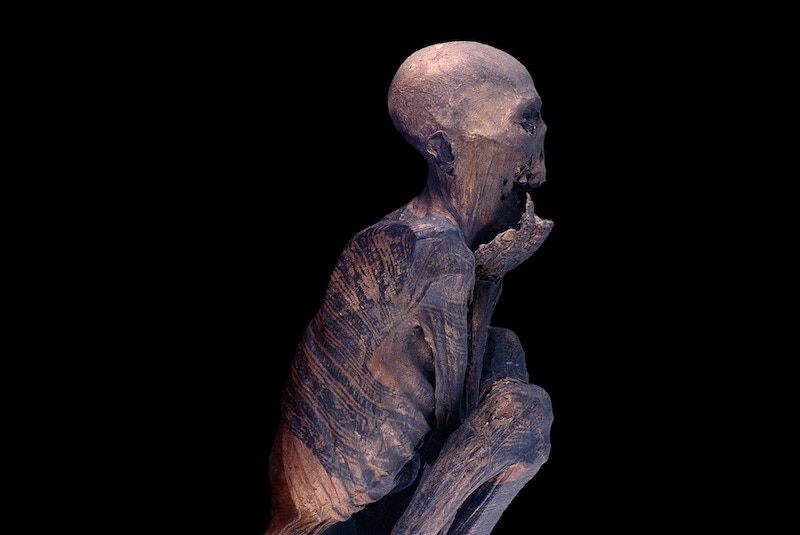
Fire mummies are a name given to bodies found in the Kabayan region of the Philippines that were mummified as part of an ancient tradition. These mummies were mummified with a special preservation method and placed in caves on the tops of the mountains. But the Kabayan fire mummies are now in danger of extinction.
These corpses, which are generally believed to be preserved by smoking, many are adorned with tattoos. Local people in Kabayan consider these mummies as the remains of their ancient ancestors and hold them in deep reverence. However, due to environmental changes and human intervention, the preservation of these valuable relics is threatened.
Efforts to Preserve Fire Mummies
“Fire mummy” The term comes from the preservation methods of these corpses. Although it is not recorded in writing exactly how they were mummified, of the mekings It is believed that it is preserved by smoking for a long time and that this process provides excellent preservation.
The mummified bodies were later benguet regionIt is placed in caves at the top of the highest mountains in the world. However, even cold mountain conditions at an altitude of approximately 3,000 meters can cause some mummies to be destroyed due to factors such as environmental changes, leaks and human intervention. mold and insects It led to invasion by.
Researchers from the University of Melbourne aim to protect the mekings by placing environmental trackers in the caves where these ancient mummies were found. Thanks to these trackers, scientists will be able to monitor changes such as humidity and temperature and have the necessary data before determining the most appropriate course of action to preserve the mummies.

The First Person to Become a Fire Mummy Lived in the 12th Century
More than 200 man-made tombs cavities have been identified, and 15 of them contain preserved human mummies. While the team is hopeful about securing the future of fire mummies, other researchers are still trying to piece together the history of these spooky remains, said researcher Sarah Soltis. Since the secrets of the Kabayan mummification process were passed down only by word of mouth, the end of the tradition means that many details have also been lost.
For example, no one knows exactly how many mummies there are or where their caves are located. It is not clear how and when the tradition began, but local legend says, The first person to become a fire mummy was a ruler named Apu Anno who lived in the 12th century. and claims to be a demigod.
Like many other fire mummies Apu AnnoHis body was so perfectly preserved that the tattoos covering his body can still be seen. The legendary leader’s mummy was displayed as a carnival attraction in Manila after being stolen from its resting place in 1918, then removed to an antique shop and finally returned to Ibaloi in 1999.
Unfortunately, Apu Anno’s mummified body is currently infested with fungal spores and is kept in a cave no longer accessible to the public. Meanwhile, scientists are trying to preserve the body.

The Last Remnants of a Tradition Sustained for Centuries
Mummies are the last remaining remnants of a tradition that has been carried on for centuries. Although so far researchers have not been able to accurately date Apu Anno’s remains, radiocarbon dating of other fire mummies has shown that some 150 to 200 years old shows that it is. this too Kabayan mummification implying that their practices were continued into the 19th century.
The procedure itself is also largely unknown, except that corpses were cleaned with salt water and dried with the smoke of burning plants. “death chair” It is believed to be connected to a mechanism called . No one knows for sure which plants were used, but interviews with local indigenous elders indicate that a local plant called Embelia philippinensis was specifically chosen for its antimicrobial properties.
According to local beliefs, mekings were placed on the tops of mountains to be closer to the gods. If their extinction is not prevented, some believe disaster will befall the present and future generations of Ibaloi.

To join our WhatsApp group CLICK!