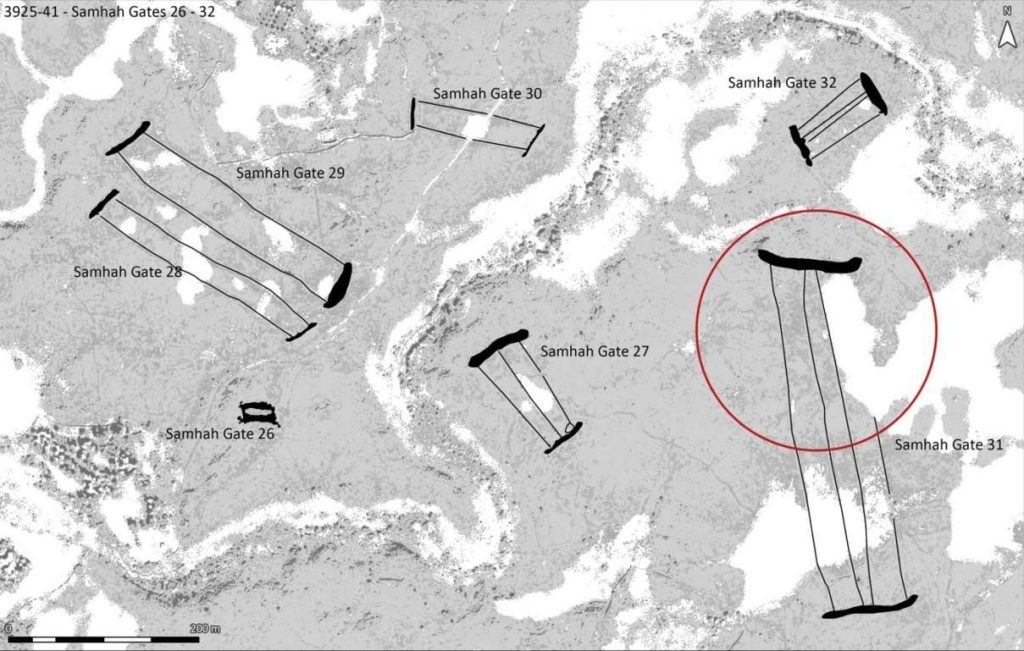
For years amateur and professional archaeologists have used satellite imagery to discover mysterious structures in many parts of the world. Over the past 10 years, Google Earth has helped find thousands of burial sites and artifacts of ancient people on Saudi Arabian soil. Again, thanks to Google Earth, archaeologists have unearthed about 400 previously undocumented gate-like structures they call “gates”. The structures are thought to have been built by nomadic tribes thousands of years ago in the Arabian deserts.
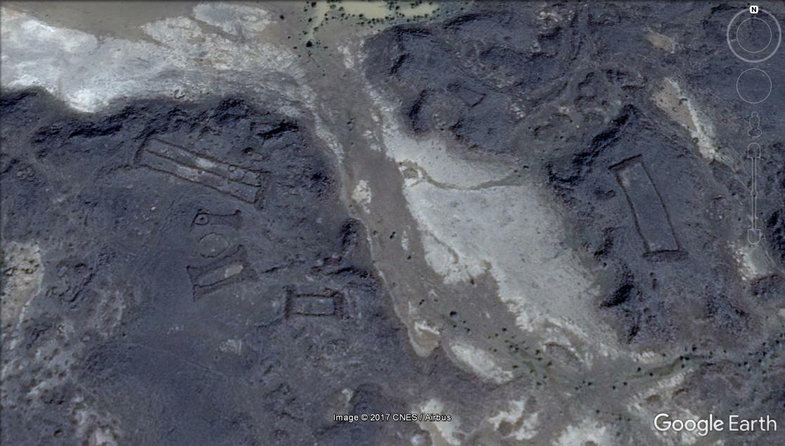
Google Earth, updated using photos of next-generation observation satellites, discovered nearly 400 stone structures of different shapes and sizes in Harrat Khaybar, a volcanic field in western Saudi Arabia, by archaeologist David Kennedy and his team. “There is a huge archaeological treasure in Saudi Arabia that needs to be uncovered and identified,” said David Kennedy of the University of Western Australia, who has studied the natural structures in and around Arabia since the 1960s. Using satellite imagery in the past, archaeologists have discovered many tombs and other ancient structures in Saudi Arabia. Archaeologist Kennedy said that these structures cannot be seen clearly from ground level, but they become apparent as you go higher.
Discoveries Made in the Arabian Desert
David Kennedy has been flying in a helicopter over Jordan, within the borders of Saudi Arabia, since 1997. During these observations, he explored Jordan and discovered ancient wheel-like structures. It is thought that these structures date back 2,000 to 9,000 years and were built by the ancestors of the Bedouin people.
The “kite” structures, which were first seen by pilots in the 1920s, stand out as the prominent shape in the Arabian Desert. These structures are thought of as kites drawn on the ground using basalt rocks and were once used by nomads for hunting. The connecting arms of the stone kites, which were almost two kilometers long, kept many gazelles trapped inside. Kennedy stated that the lava beds in Jordan, which contain archaeological treasures, extend as far as Syria and Saudi Arabia, but they could not get permission from Riyadh to conduct research.
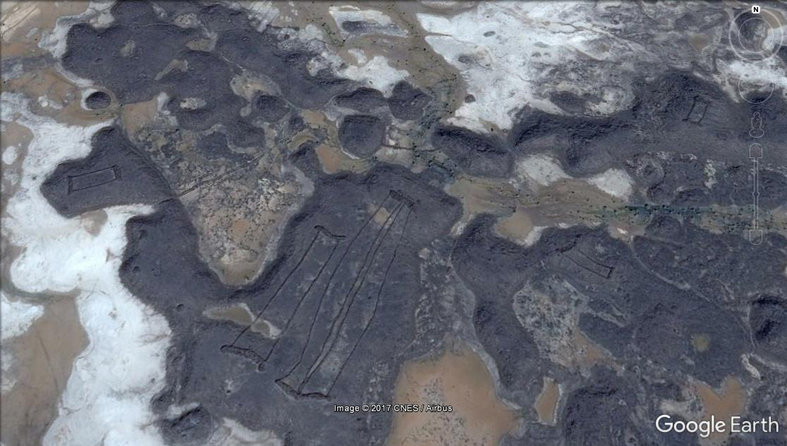
Founder of the Desert Team research group working in Saudi Arabia, Dr. Abdullah El-Saed examined the lava region called Harrat Haybar in 2004, but said that the 1 meter long piles of stones did not make any sense to him. However, when he examined the same region again with Google Earth in 2008, he could not believe his eyes. El-Saed and his team named the horizontal shapes that appear to be joined by iron bars as “doors” in their research by traversing the lava beds.
The function of these doors is unclear. According to Kennedy, neither a tomb nor a house resembles a trap.
After the 2008 discoveries that astonished archaeologists, David Kennedy spent nine years cataloging nearly 400 doors. The longest gate Kennedy identified is about 500 meters long. While most of them are between 50 and 150 meters, their thickness reaches up to 10 meters. Kennedy stated that the stone gates may represent the oldest ancient structures in the area and will work with other archaeologists to determine their ages.