The world is intensely discussing the tension between Israel and Palestine. Hamas’s military wing announced it was launching an operation against Israel, and the announcement came alongside a call to arms by Saleh al-Arouri, deputy head of Hamas in the occupied West Bank. These latest developments bring the historical context of the Israel-Palestine issue back to the agenda.
Israeli-Palestinian conflict It is known as one of the longest-running and most explosive disputes in world history. The root causes and turning points of this conflict have been shaped by various events between Palestinians and Israelis over the last century. Here are some of the important turning points in this historical process:

How Did the Israeli-Palestinian Conflict Begin?
After the First World War, while the Jewish population living in the Palestinian territories was around 10 percent, the demographics of the region underwent an organized change in a short time. Jewish immigration to Palestine began to increase before the First World War, especially from the 1880s onwards. This migration movement had a religious dimension within the Jewish community and these waves of migration were called “aliyah” was named. This word means “to rise” or “to go up.” Aliyah can be classified as:
1882-1903: First Aliyah
1904-1914: Second Aliyah
1919-1923: Third Aliyah
1924-1928: Fourth Aliyah
1929-1939: Fifth Aliyah
These waves of migration led to tens of thousands of Jews settling in Palestinian territories. Following the end of the Second World War, Jewish immigration to Palestine continued intensively between 1948 and 1951. These migrations caused a significant change in the demographic structure of the region and formed the basis of Israel’s population following the establishment of the State of Israel. This process is considered one of the origins of the Israeli-Palestinian conflict.

In addition to settling in Palestinian lands, Jewish immigrants tried to achieve this goal by establishing various organizations to support the establishment of the State of Israel. Some of the organizations that stand out in this process are:
Haganah: Founded in 1920, the Haganah was an organization aimed at ensuring the security of Jewish settlers. However, over time, he began to cooperate with more radical organizations for the establishment of the State of Israel.
Irgun Z’vai Leumi: Founded in 1931, the Irgun carried out violent actions against British colonial rule and Arabs. This organization used radical tactics to accelerate the establishment of the State of Israel.
Conflicts between Jews and Palestinians began to increase during this period. In particular, the events of April 1920 and May 1921 caused the death and injury of many Jews and Arabs. The events and strikes that started in 1936 continued until 1939 and escalated the tension in the region.
in 1946, Irgun terrorist organization, A bomb attack on the King David Hotel organized. In this attack, 91 people, mostly civilians, lost their lives, including Arabs, British, Jews, Armenians, Russians, Egyptians and Greeks. Such violence led to the escalation of conflict in the region and the loss of more lives.

Deir Yassin Massacre
The Deir Yassin massacre is considered an important turning point in a dark period in the Israeli-Palestinian conflict. on April 9, 1948, west of Jerusalem. This attack on Deir Yasin village, It was carried out by Avraham Stern, the leader of the Lehi (Stern) organization, and Menahem Begin, the leader of the Irgun organization. Other organizations such as Palmah and Haganah also supported this attack.
In this brutal attack, 254 Palestinian civilians were killed. Among these victims were many children and 25 pregnant women. Additionally, during the attack, some women were raped, pregnant women were disemboweled, and people were tied to trees and burned. These horrific events were reported to British authorities by eyewitnesses.
Deir Yasin massacre, It created great outrage both in the international community and in Israel. Some Jewish clergy also condemned this brutality. However, organization leaders such as Menachem Begin tried to legitimize this action by arguing that such acts of violence accelerated the establishment of Israel. The Deir Yassin massacre is remembered as one of the historical origins of the Israeli-Palestinian conflict, and the trauma of this event still continues.

The Great Disaster or the Day of Nakba
May 15, the day after the establishment of Israel, is called “Nakba Day” or “Great Disaster” for Palestinians. After the 1948 war, Israel expanded the lands it occupied and subjected many Palestinians to forced migration in the process. Torture, rape and massacre Palestinians experienced a huge wave of migration due to reasons such as fear of death. While various sources give different numbers regarding the extent of this migration, according to Israeli sources, 500 thousand Palestinians, according to Arab sources, 900 thousand, and according to the United Nations (UN), 726 thousand Palestinians had to emigrate. These numbers correspond to approximately 65-70 percent of the Palestinian population at that time.
In this period, Palestinian settlements, including 675 villages and towns, were eliminated. Palestinians who had to migrate faced difficult living conditions in refugee camps. This started the Palestinian refugee problem, and this problem still continues. With its decision No. 194 dated 1948, the UN granted the migrating Palestinians the right to return, but the implementation of this right has encountered many difficulties and continues to be a problem waiting to be solved. The Israeli-Palestinian conflict and the events that took place during this period constitute an important part of the history and political dynamics in the region.

Naksa Day When Decline Begins
June 5th is known as the day the 1967 War began and is referred to by Palestinians as “Naksa DayIt is called ” (Regression). The consequences of this war triggered a new wave of Palestinian emigration, causing some Palestinians who had already emigrated in 1967 to emigrate once again. It is said that an estimated 500 thousand Palestinians emigrated during this period.
However, an important development after 1967 was that Israel began to rapidly build new Jewish settlements. More than 250 new settlements were established, especially in East Jerusalem and the West Bank, and approximately 650 thousand Jews settled in these settlements. Israel’s new settlement policies and projects are considered a factor that increases the complexity of the Israeli-Palestinian conflict and limits Palestinian access to its land. These policies and settlements It hindered the Palestinians’ goal of establishing their own state and contributed to the deepening of the conflict.
This process continues as part of a long-term and complex problem within the Israeli-Palestinian conflict. This issue continues to be one of the focal points of the international community and peace efforts.

The Wall Built Around the Palestinian Territories
The wall built by Israel, which has become both a tool of violence and a symbol for the Palestinian civilian population, is a structure built around Palestinian lands. Approximately 500 kilometers of this wall, which was originally planned to be 720 kilometers long, have been completed.
This wall It reduced the Palestinian territory by approximately 9.4% and this has negatively affected the living conditions of approximately three million Palestinians. In this process, more than 1,200 Palestinian civilians lost their lives, more than 130 thousand were injured, 2,500 houses were destroyed and more than 20 thousand Palestinians were imprisoned.
In addition, during the Second Intifada period, which lasted from 2000 to 2005, 4,412 Palestinians lost their lives, 48,322 Palestinians were injured, and thousands of Palestinians’ houses were destroyed.

2008 December-2009 Cast Lead Attacks
In the attacks called “Cast Lead” carried out by Israel against Gaza between December 2008 and January 2009, 1,000 people, including 355 children and 100 women, were killed. More than 400 people lost their lives and 5,400 Palestinians were injured.
8 November 2012 Cloud Column
On November 8, 2012, a 13-year-old boy playing football was killed by Israeli forces. As a result of the events that started after this incident, Israel launched the attacks it called “Cloud Pillar”. This time, more than half of the attacks targeted women and children. 167 Palestinians lost their livesi and more than 1,200 Palestinians were injured.

2014 Protective Line
In the attacks called “Protective Line” in 2014, which lasted 51 days, Gaza was almost completely reduced to rubble. In these attacks, 551 of them were children. 2 thousand 158 Palestinians lost their lives, More than 11 thousand Palestinians were injured and more than 60 thousand Palestinians were left homeless. These events demonstrate the devastating consequences for humanity of protracted conflict in the region.
May 14, 2018 – US Embassy in Israel Moved to Jerusalem
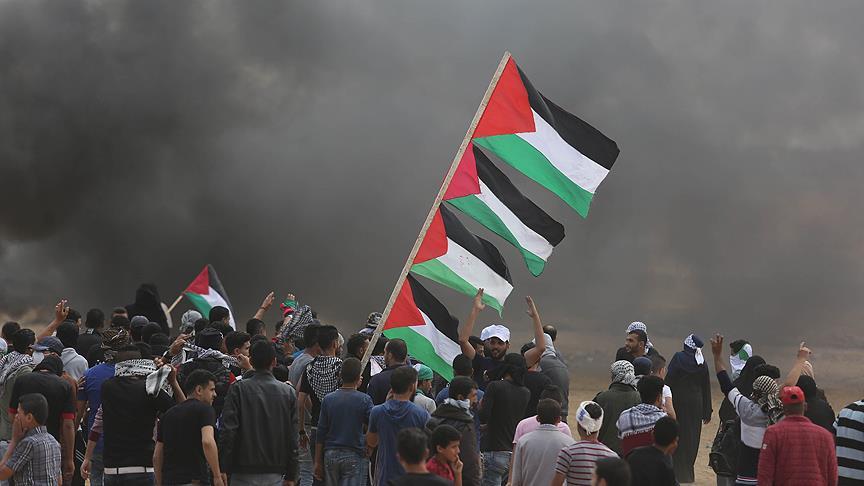
When the US decided to move its embassy from Tel Aviv to Jerusalem, Israeli security forces intervened against the protesters and many Palestinians lost their lives as a result of this incident. Tens of thousands of Palestinians gathered at the Gaza border are still protesting. In his video message at the opening ceremony of US President Donald Trump, he committed to ensuring peace in the Middle East, but the Palestinian administration in the West Bank held Israel responsible for the deaths in Gaza.