
A discovery that sheds light on the deep history of Egypt brings together archaeologists and religious historians in pursuit of the mysterious tomb of the Prophet Joseph. Leading Egypt researchers and Torah experts from Europe and America are discussing whether an ancient house unearthed during excavations between the Nile Delta and the Sinai Peninsula points to the tomb of the Prophet Joseph.
This discovery allows us to consider not only archeology, but also the story of Prophet Joseph, who is believed to have lived in the 15th century BC, from a new perspective. Now, at the intersection of these archaeological finds and the stories in the Torah and the Quran, get ready to discover mysterious clues about the life and tomb of Prophet Joseph.
Great grandfather of Prophet Abraham, grandfather of Prophet Isaac and father of Prophet Jacob. Prophet JosephIt is explained in detail in the Surah Yusuf of the Holy Quran. At the same time, Hz. Yusuf, Hz. He is a prophet who has a hadith stating that Muhammad (pbuh) encountered him on the third floor of the sky while ascending to Miraj.

Hz. Features of the Tomb Thought to Belong to Joseph
Archaeologists excavating between the Nile Delta and the Sinai Peninsula in Egypt discovered a large house whose outlines could be easily determined underground in a location that has not yet been fully determined. It was clear that the house belonged to a wealthy Egyptian; 12 graves in the courtyard, there was a small temple, and in the temple there was also a tomb and a statue broken into pieces. These and similar details reminded archaeologists of what the Torah tells about Prophet Joseph:
Prophet Joseph, who is believed to have been born in the 15th century BC, lived in Palestine with his family. According to the Quran, Prophet Yusuf, who was thrown into a well by his brothers and then sold to a caravan going to Egypt, faced a series of troubles after being brought to Egypt, remained in prison for many years, and was finally released. Afterwards, he became Pharaoh’s vizier, got married there and have 12 children has happened.
What started the debate about whether the underground house belonged to the Prophet Joseph was the statue broken into pieces. In the Torah, he is the favorite son of Prophet Joseph’s father, Prophet Jacob. A coat sewn from colorful fabric for Yusuf It was written that he gave it as a gift.
On the back of the stone statue in the temple part of the house, there was a colorful garment resembling the cloak mentioned in the Torah. The house, which appeared to belong to an important person who came after the Pharaoh, did not resemble ancient Egyptian structures. The construction style was reminiscent of Mesopotamian, Palestinian and Syrian architecture. Moreover, there were 12 graves in the courtyard, as many as the children of Prophet Joseph! The statue did not represent an Egyptian, but a red-haired and blond foreigner, an uncommon sight in that region, but his face was later engraved.

Hz. Reasons That Make Us Think It Belongs To Prophet Joseph
After the discovery of the statue and the tombs, ancient Egypt experts determined that the tomb Hz. JosephIn order to determine whether it belonged to or not, he again referred to an incident described in the Torah. In the Torah, it is stated that shortly before the death of Prophet Joseph, he said to his children and relatives, “When the Israelites leave Egypt, they should not leave my bones here; my real hometown ShechemIt was written that he made a will saying “let them take it to .
Many years after the death of Prophet Joseph, the Prophet Moses, who became the leader of the Children of Israel, came to the Prophet for three days to fulfill this will when he was going to take his people out of Egypt. He searched for Joseph’s coffin, found it in a river, crossed the Red Sea and went to Palestine, wandered around the deserts with this coffin for forty years, and the bones were buried near “Shechem”.
However, the exact location of the region called “Shechem” at that time is still unknown. Some Western historians of religion, PalestineConsidering the presence of a tomb in the city of Nablus, which has been believed to belong to the Prophet Joseph for centuries, they say that “Shechem” could be Nablus and its surroundings.
Hz. Although the place of Joseph’s grave is not mentioned in the Quran, some Islamic sources provide information on this subject and write that his body was buried somewhere on the banks of the Nile. The area where the burial took place is mentioned in Jewish and Christian sources as “Goshen“.
The exact location of Goshen is still unknown; It can only be expressed as “a region in the north of the Nile Delta, close to the Sinai Peninsula”. The house, which was unearthed and thought to be the tomb of Prophet Joseph, was found in this area believed to be “Goshen”!
It seems that the studies and discussions of archaeologists and religious history experts on the tomb will continue for a while.
What is Known About Vizier Yuya
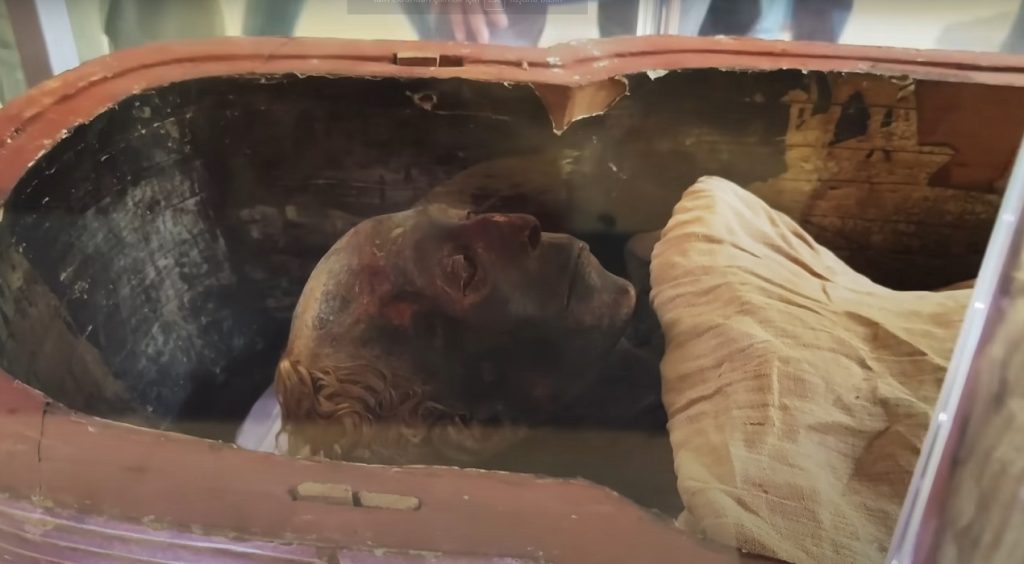
Yuya is exhibited side by side with his wife Tuya in the Egyptian museum. While Yuya’s origins are known as someone who owned a wealthy estate and held a respected position among the local nobility, probably in the town of Akhmim in Upper Egypt, his exact origin remains unclear. Anatomist Grafton Elliot Smith’s study of Yuya’s mummy reveals its characteristics While revealing that he is not a classical EgyptianConsidering that there was intense immigration from neighboring countries in Egypt’s history, he stated that “it would be hasty to present a final opinion on this issue.” This explanation The ambiguity of Yuya’s origin It appears as an emphatic point.
As Quibell points out, the only evidence for Yuya’s claim to being a foreigner is that his name can be spelled different ways. However, no trace of foreign origin was found in the furniture in the tomb and they all have typical Egyptian features. Some Egyptologists believe that due to the different spelling of Yuya’s name and his unusual characteristics, he was of foreign origin, usually Syrian. However, this hypothesis is far from definitive and contains many uncertainties. “Biographical Dictionary of Ancient Egypt” suggests that the knowledge of horses and chariots came to Egypt from the northern lands and that Yuya may have Mitanni ancestry. However, this hypothesis cannot be confirmed either, since there is little information about Yuya’s past.
While living in Upper Egypt, Yuya, an assimilated descendant of Asiatic immigrants or slaves, may be thought to have risen among the local nobility. Another possibility is that Yuya may have had an Asiatic origin before becoming a native Egyptian, in which case he may have married a native Egyptian. Yuya’s death is estimated to have occurred around 1374 BC, when he was in his mid-fifties. At this point, Yuya’s mysterious origins and life remain a puzzle that reflects the various cultural interactions in Egyptian history.
Discovery of Yuya’s Tomb and Characteristics of the Mummy
On February 1, 1905, researchers discovered the coffins and mummies of Yuya and his wife Tuya. This coffin, approximately 3 meters long, included magnificent wooden coffins decorated with gold and precious stones and various mummification materials, among Yuya’s finds. The magnificence of his tomb and its finds indicate that Yuya occupied an important position in Egypt.
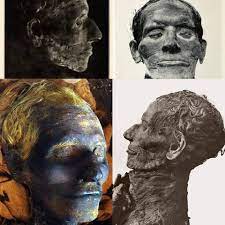
But the real attraction was Yuya’s mummy. Color and physical characteristics of the mummy, did not fit the typical Egyptian profile. His hair was light-colored, unlike the dark tones usually seen in Egyptians, and his facial features were different from those of the natives of Egypt. This shows that he came from outside Egypt and had a foreign origin.
There is an interesting aspect to this. Where all the pharaohs and kings are buried Valley of the Kings in LuxorYuya was the only person not from the pharaoh’s lineage buried in . This unknown stranger makes the wool mummy one of the museum’s most fascinating artifacts.
Yuya’s facial features were quite different from those typical of Egyptians. At this point, Egyptian historian and writer Ahmet Osman, “Stranger in the Valley of the Kings” He attracted all the attention with his book. Yuya’s Hz. In his book, in which he shares his research files on whether he could be the Prophet Joseph, Yuya is said to be the Prophet. He presented arguments that he was Yusuf.
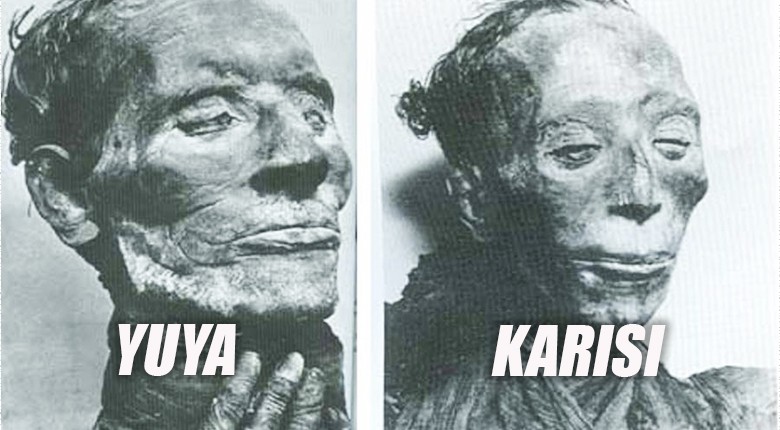
Yuya’s burial style is among the factors that support the idea that he was not of Egyptian origin. Yuya, who served during the 18th dynasty, did not have his ears pierced, as other royal mummies were usually buried with their ears pierced. Additionally, the position of Yuya’s hands was different; Unlike most royal mummies, his hands were in front of his neck, not under his chin. Yuya’s physical characteristics and the findings in his tomb showed that he was not an ordinary Egyptian.
According to Ahmet Osman’s research, Yuya’s Hz. There is a lot of evidence that he is Joseph. However, this theory is refuted according to Islamic belief. According to the hadith of our Prophet Muhammad (pbuh), the soil does not touch the corpse of a prophet and they always continue to look just like when they were first buried.


