The scientific world approached one step closer to answering one of the biggest questions about the origin of life in the universe. NASA’s examples of Bennu asteroids reveal that the basic building blocks of life are not only unique to the Earth, but may also be present in the depths of space.
Chemical foundations of life such as amino acids, DNA and RNA bases, Bennu asteroidFor the first time with the analyzes made in such a clear way. These findings cause the idea that the theory of Panspermia, that is, the origin of life may have begun in space, to the center of scientific debates.
However, these discoveries Whether life on Earth really comes from space does not answer the question. Nevertheless, data from Bennu increase hopes that life may be a universal phenomenon.
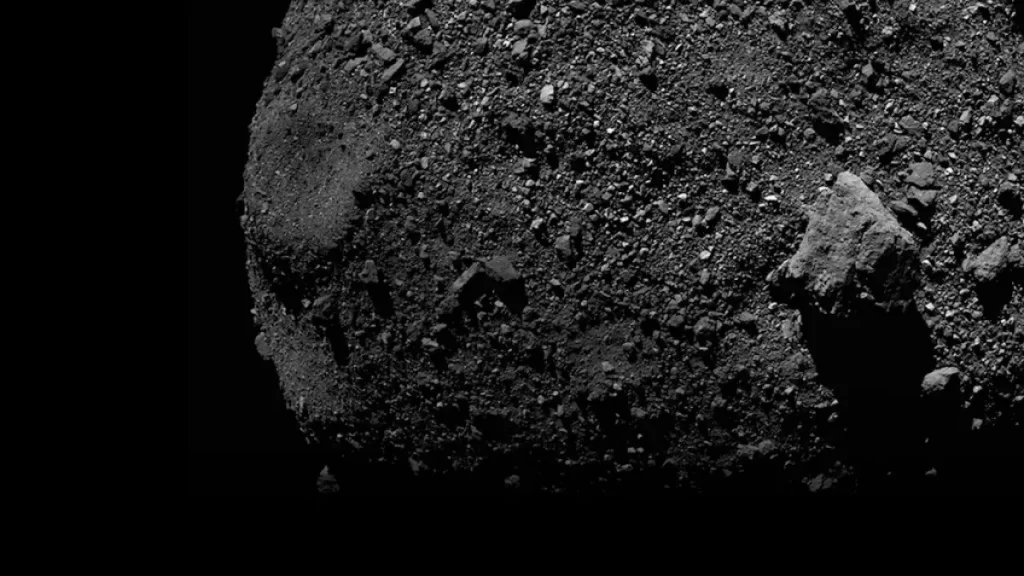
Ore from space: Success of Osırıs-Rex Mission
NASA Bennu asteroidThe examples he collected from the world presented new clues that the beginning of life in the world can withstand materials from space. Researchers discovered the chemical building blocks of life in materials obtained from Bennu.
Bennu is an asteroid consisting of rock and metal pieces from the early days of the Solar System. NASA started in 2016 OSIRIS-REX He set out with the goal of closely examining this celestial body with his duty and gathering samples. The collected examples were brought to Earth in September 2023 and were subjected to detailed analysis. These analyzes revealed that Bennu broke out of a main body with water and organic molecules 4.5 billion years ago.
The building blocks of the life offered by Bennu
In the examples brought from Bennu, scientists detected a high amount of ammonia, the building blocks of five nucleobas and amino acids, one of the basic components of DNA and RNA. These findings support the theory that the chemical foundation of life may have been moved to Earth through asteroids such as Bennu.

In the footsteps of salty waters: Bennu’s underground treasures
Research, Killi in Bennu minerals, sodium carbonate, potassium chloride and magnesium phosphate showed the presence of minerals. These minerals are formed in the salt water pockets under the surface of the main body, which Bennu originated. This process is similar to the evaporation of the old lake beds on Earth. However, it was understood that some minerals were dissolved by exposure to the world atmosphere and therefore could not be detected in the meteorites before.
Discoveries that shed light on the first days of the world
It is thought that the components such as water, phosphate and ammonia carried by Bennu can provide the appropriate environment for the emergence of life in the early stages of the world. Scientists argue that such asteroids hit the Young Earth to carry the basic chemicals of life.
These findings give the scientific world about the origins of life a whole new perspective. It also opens new ways to investigate other potential life traces in the universe by offering important clues for future space mission.

Panspermia theory and tips on the origin of life in space
Panspermia hypothesis Does these findings prove certainly? No. However, the discoveries in Bennu show that this theory is not completely invalid and offers important clues that can be supported. The data obtained from Bennu reveal that the basic building blocks of life are present in the celestial bodies in space.
The fact that the components such as amino acids, DNA and RNA bases such as salty water environment required for prebiotic chemistry are found in Bennu asteroid contributes to the strong support of the panspermia hypothesis. Nevertheless, it is not yet possible to say that the origin of life on Earth stems from these asteroids.
Panspermia Theory: The Story of Universal Seeds
Panspermia theoryHe argues that life has reached Earth through seeds or sports coming from the universe. This concept, which is literally “scattered seeds everywhere ,, was scientifically discussed in the 19th century, and today it is still one of the focal points of research.
The origin of the theory dates back to ancient. Anaksagoras, one of the ancient thinkers, argued that the Evren had a chaotic seed pile before becoming an arranged system. According to him, thanks to the regulatory principle of the Evren, “NOS ,, these seeds have formed living and inanimate beings.
This idea was from time to time in different ways until the theory of evolution, one of the cornerstones of modern science, was developed. For example, the 18th century philosopher Benoît de maillet argued that life consists of seeds scattered all over the Evren and sprouted in the primitive oceans around the world.
Later, in the 19th century, the Swedish chemist Jroger Chemist Joh Berzelius discovered substances similar to organic compounds found in the earth on the surface of a meteor in the 19th century, which led to the support of Panspermia theory with the first scientific findings.

Bennu asteroid: New data that strengthens the theory
Bennu asteroidThe prebiotic components found in the nine re -raised the defense of Panspermia theory. The fact that amino acids and DNA-RNA bases exist in this asteroid shows that the basic chemistry of life is not only unique to the Earth and potentially exist in many parts of the Evren. These findings bring the theoretical biology studies on the origin of life in the world to a new dimension.
The focus of scientific debates: Where did life come from?
Today, Panspermia theory is considered as part of different explanations about the origin of life in the world. It contains various sub -theories in itself:
Litopanspermia: He argues that life can be carried by rock pieces that break from the surface of a planet and reach another planet.
Radiopanspermia: He argues that microorganisms can be moved from one planet to another based on interstellar radiation.
Directed Panspermia: It is the theory that life is deliberately sent to the Earth by a conscious, perhaps by an alien civilization.
These ideas, each of which are open to discussion, can be placed in a wider context with the data from Bennu. However, it should not be forgotten that such theories only offer a possibility of the origin of life and do not provide a definite explanation.

Future Studies and Questions
The findings in Bennu asteroids have made us better understand the chemical foundations of life in space. However, we know that only environments suitable for the formation of life are available on other planets or asteroids. The examples obtained from Bennu are a starting point for the full verification or refutation of the Panspermia theory.
So, did life really come from space? Finding the answer to this question will depend on future space tasks and new scientific discoveries. Understanding the origin of life in the Universe can be an important step not only to the story of life on Earth, but also to explore the possible forms of life in the depths of cosmos.
To join our WhatsApp Group Click here!