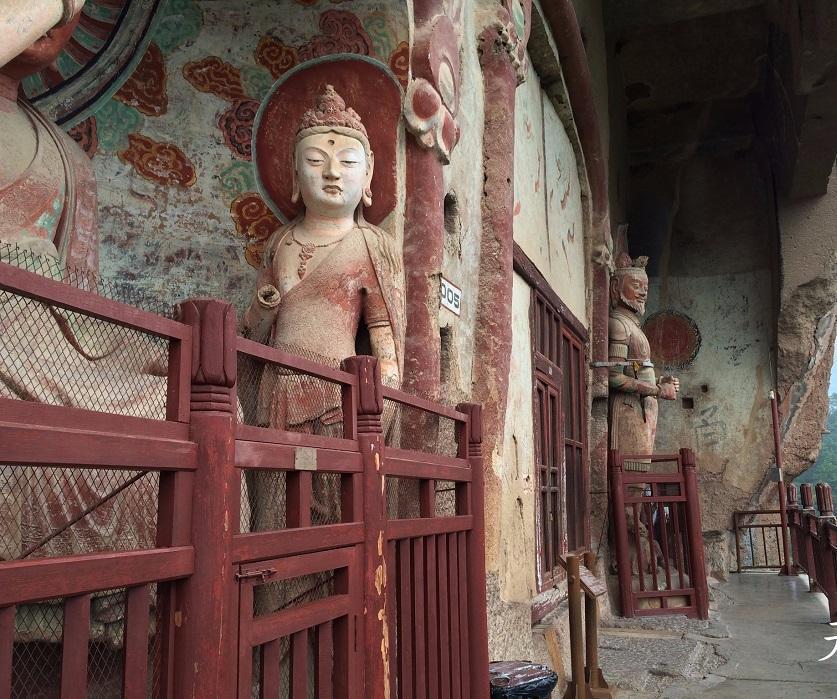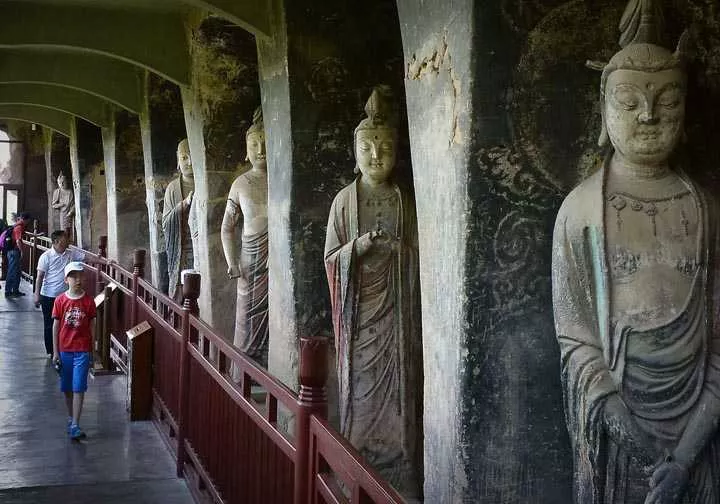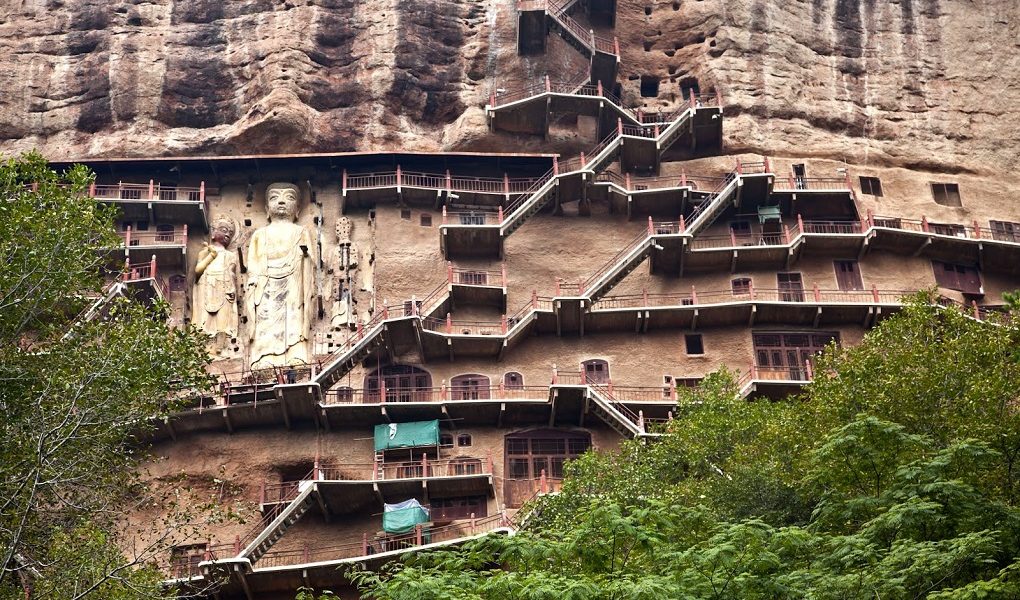
Maijishan Caves, which are accepted as a world cultural heritage site; It is located in the province of Gansu in northwest China. The caves carved into the steep cliffs of Maiji Mountain are the largest Buddhist cave temples in China. The caves contain more than 7,000 Buddhist sculptures and murals covering more than 1000 square meters. The caves, which are very difficult to access, are very well preserved.
In Chinese, the word Maiji means “heaps of wheat”. The history of the caves is AD, when the belief in Buddhism reached China. It dates back to the 400’s. The caves, located in the south of the historical silk road, have been frequented by monks and traders. There are 194 caves carved into the side of Maijishan hill. These caves are one of the four great caves of China known as the “Oriental sculpture gallery”. The other three caves are; Longmen Caves, Yungang Caves, and Dunhuang Mogao caves.
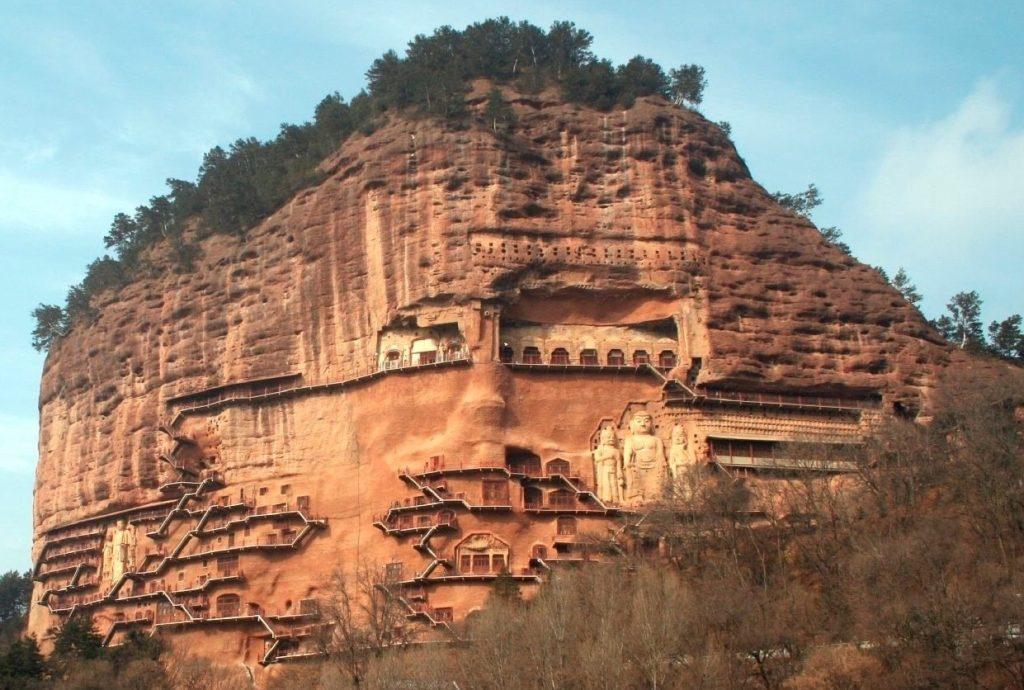
Maijishan Caves and Structures Inside
Located about 35 km southeast of Tianshui city, the Maijishan Caves are recognized as a world-renowned art treasure. Maiji Mountain, one of the Qinling Mountains to the west of Xiaolong Mountain, has an altitude of 1742 meters and a height of 142 meters from the ground. The caves were added to the list of cultural heritages recognized by UNESCO in 2014 as part of the silk road start and Tianshan corridor network.
In addition to the caves where the sedimentary rocks of the mountain were carved, there are also many natural caves. There are 54 caves on the eastern cliff of the mountain and 140 caves on the western cliff. The sculptures in the cave are in the form of those made by carving the stone and those made of clay. The height of these statues starts from 10 centimeters and can reach a height of 16 meters. Sculptures, which are considered to be treasures, were made with the art of sculpture, which requires delicacy. Besides the early works, there are Buddha statues from the beginning of the Northern Wei dynasty. Buddha statues, which are among the statues and considered as gods, were also carved like ordinary people.
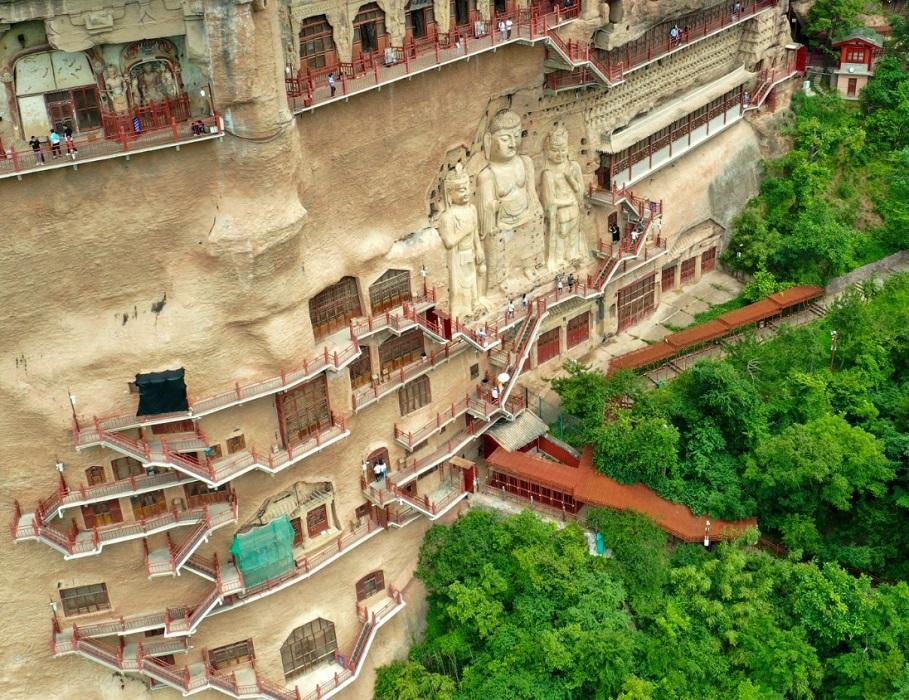
It is thought that the caves were used as local shrines to worship their ancestors or various nature gods before Buddhism came to China. After the arrival of Buddhism, it was influenced by the cave temple traditions of India and Central Asia. Some of the caves numbered by the researchers are as follows;
Cave No. 004
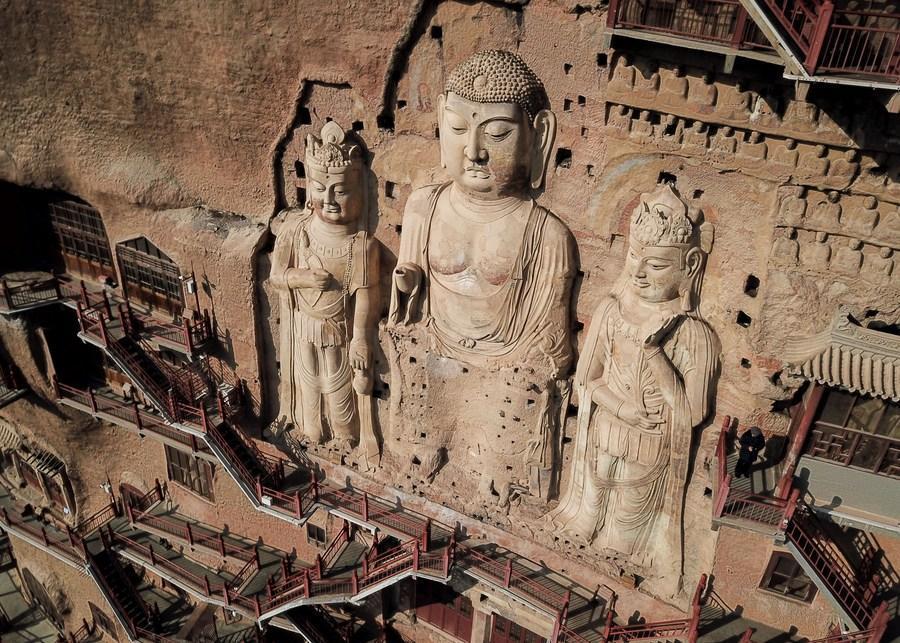
It is the largest, highest and most magnificent cave in the Maijishan Caves. It is located above 3 buddha statues on the eastern cliff. The cave, which is 70 meters above the ground, has a width of 31.7 meters and a depth of 13 meters. Buddha statues and wall paintings are located in each room of the cave, which resembles a large palace with 7 rooms.
Cave No. 003
Built during the Northern Zhou Dynasty, the cave was rebuilt during the Song and Ming Dynasties. There are 6 rows of 297 Buddha statues made of stone and clay inside.
Cave No. 013
This cave reaches a height of 17 meters and a width of 18 meters. There is a Buddha statue made during the Sui Dynasty and known as the largest Buddha of the eastern cliff. The largest group of clay sculptures is located on Maiji Mountain. A manuscript of the Golden Light Sutra, written in the late Tang Dynasty, was found on the right cheek of Amitabha Buddha. This work is carefully written, well-preserved, and is the oldest manuscript found on Mount Maiji.
Cave No. 121
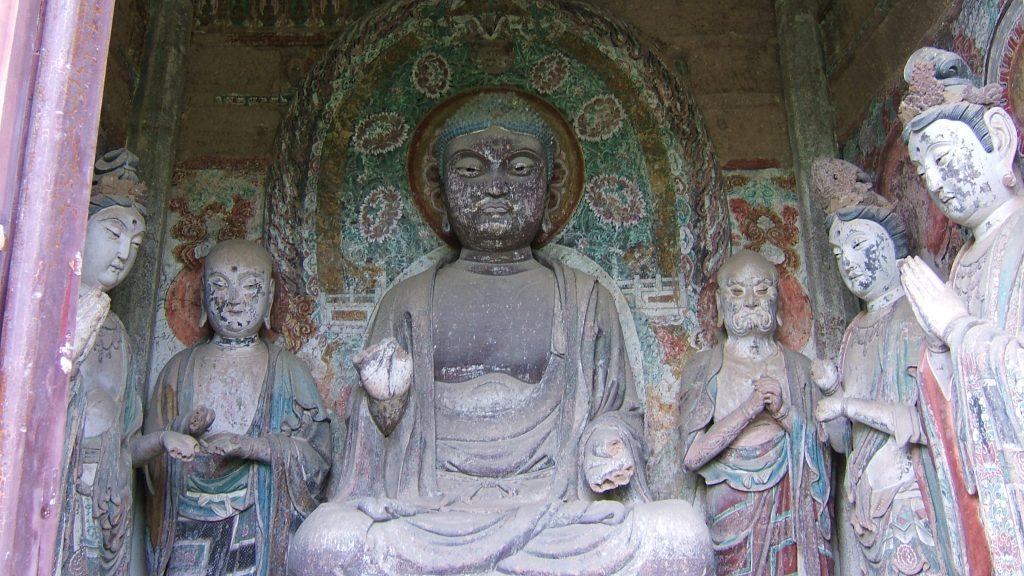
It is located at the western end of the upper layer on the western cliff. It was built during the Northern Wei Dynasty and additions were made during the Song Dynasty. The most famous of this cave is a group of statues of the Bodhisattva and the disciple. The statues, leaning towards each other’s shoulders, seem to be whispering to each other.