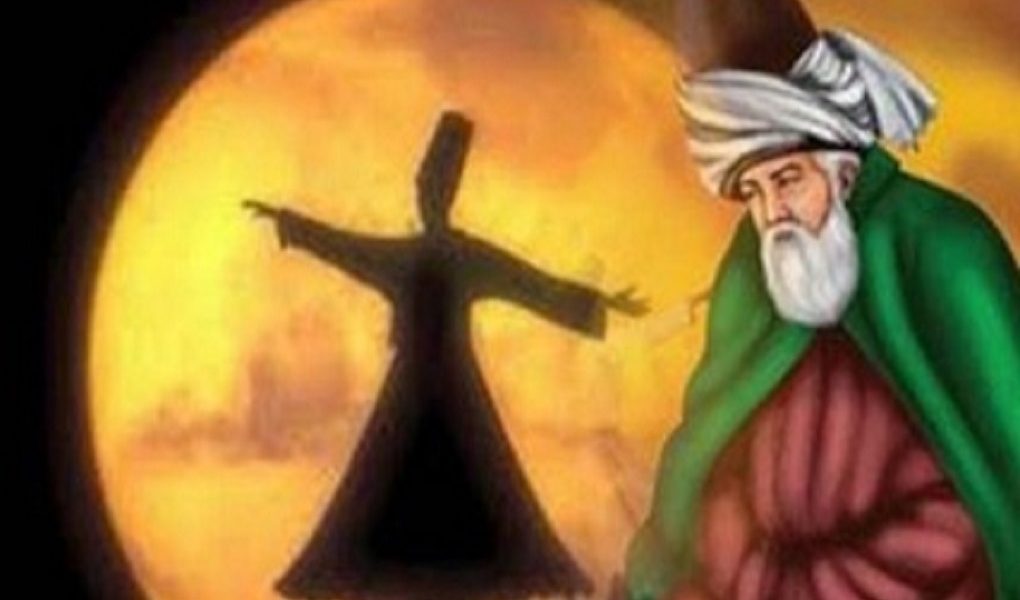
Şeb-i Arus, which means “Wedding Night” in Turkish, is the night Mevlana Celaleddin Rumi died in Mevlevi. Mevlana this night; He called it the wedding night because he thought it was the night of reunion with his Lord. The word “Arus” means “ascension” in Arabic. Therefore, it means the soul’s ascent to the sky after death. In order to better understand and commemorate Mevlana, who died on December 17, 1273, December 7-17 is considered as “Mevlana Week”. This week, commemoration ceremonies called “Vuslat Anniversary International Commemoration Ceremonies” are held.
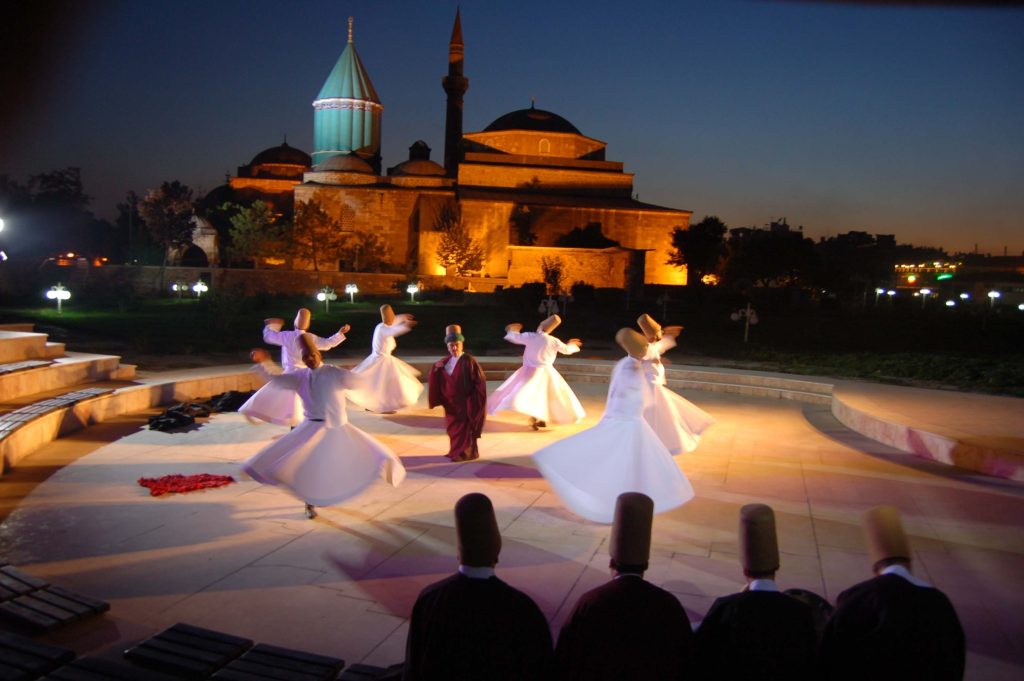
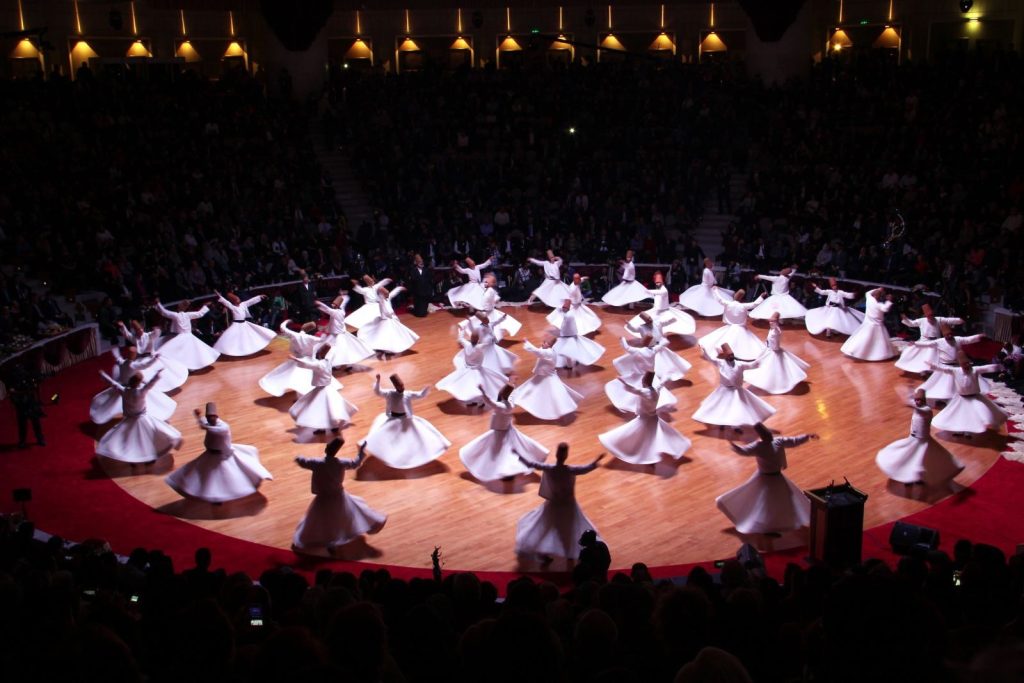
Mevlana celaleddin Rumi; Since he saw the day he died as the day of reunion with the Creator, he said, “Everyone talked about separation, I was about reunion.” Mevlana, who has been a symbol of tolerance and peace for hundreds of years, is commemorated with events held in many places, especially in Konya. Within the scope of the event, Mevlevi Sema ceremonies, which are included in the UNESCO Intangible Cultural Heritage List, are held. Within the scope of the ceremonies that started on December 7; Many activities such as photography contest, Mesnevi lessons, concerts, panels, poetry recitals are held. The commemoration ceremonies end on 17 December.
Who is Mevlana Celaleddin Rumi?
Mevlana or Rumi, as he is commonly used, is an important religious scholar who lived in Anatolia in the 13th century. His real name is Muhammed Celaleddin. While the name “Mevlana” means our lord, “Rumi” derives from his long residence in Konya, which was known as the Greek land in the past. Mevlana’s Tomb, who spent a long part of his life in Konya, is located in Konya. Mevlana, who is accepted as a symbol of peace and tolerance, has been continuing his influence for many years with his way of life and words. Mevlana’s influence has crossed international borders and ethnic divisions, and his poems have been translated into most of the world’s languages.
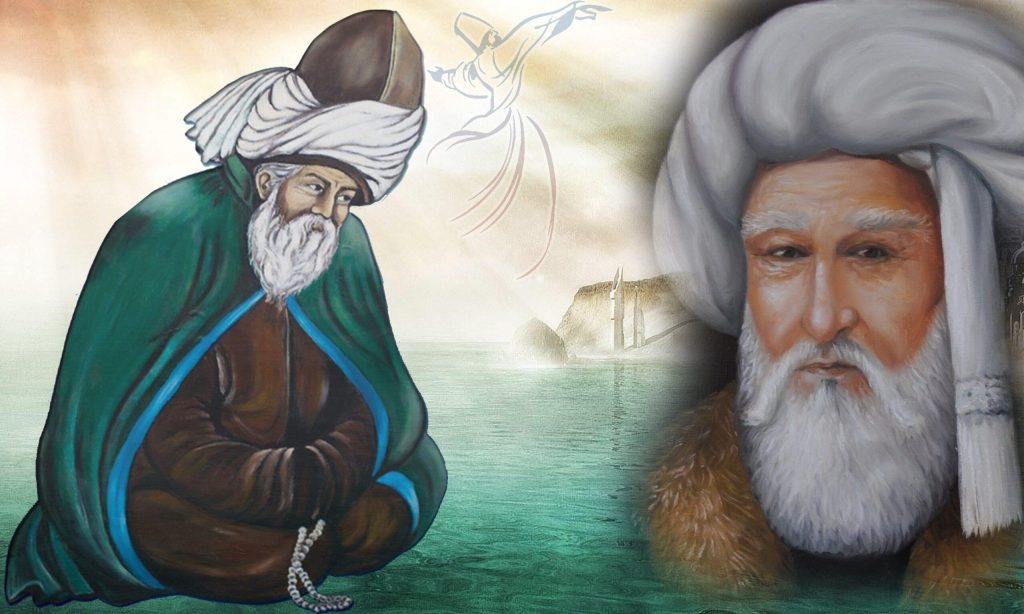
Birthplace of Mevlana, who was born in 1207; It is the city of Balkh in the country of Khorasan, located within the borders of Afghanistan. His mother is Mümine Hatun, the daughter of the Emir of Belh, Rükneddin. His father is Bahaeddin Veled, the son of Hüseyin Hatibi, who was one of the leading scholars of the city of Belh and took the title of “Sultanü’l-ulema”, the sultan of the scholars. Due to some political events and the upcoming Mongol invasion, his father left the city of Belh and went to Nishapur. Mevlana met the mystic Ferüddin Attar in Nishapur, although he was a child, he attracted his attention and earned his praise.
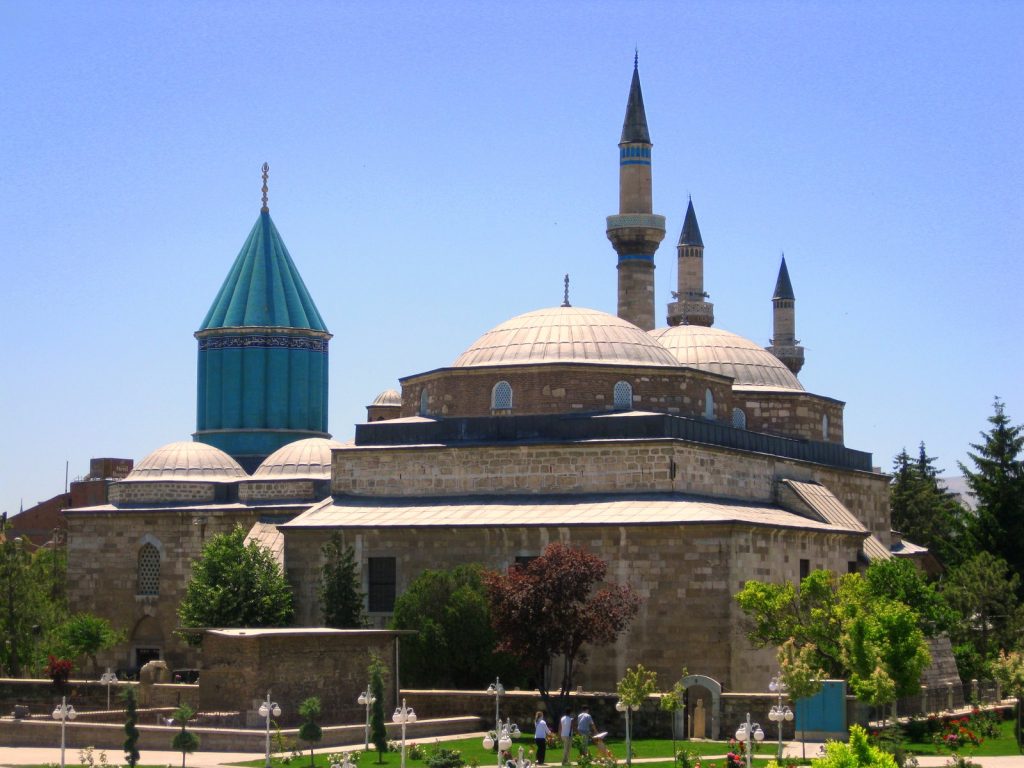
Bahaeddin Veled went from Nishapur to Baghdad and then to the Kaaba via Kufe. After fulfilling his pilgrimage, he came to Karaman via Damascus, Malatya, Erzincan, Sivas. Bahaeddin Veled and his family, who came to Karaman in 1222, have lived here for about 7 years. Mevlana married Gevher Hatun in 1225 and had two sons, Bahaeddin Muhammed (Sultan Veled) and Alaeddin Çelebi. After the death of Gevher Hatun, he married Kira Hatun. He migrated to Konya in 1228 upon the invitation of the Anatolian Seljuk Sultan Alaaddin Keykubat. They were greeted with a ceremony by Sultan Alaaddin Keykubat and the Altunapa (İplikçi) Madrasa was allocated for them to reside. His father, Bahaeddin Veled, died in 1231 in Konya. His tomb is in the place where Mevlana Lodge is located, which is the rose garden of the Seljuk palace and is used as a museum today.
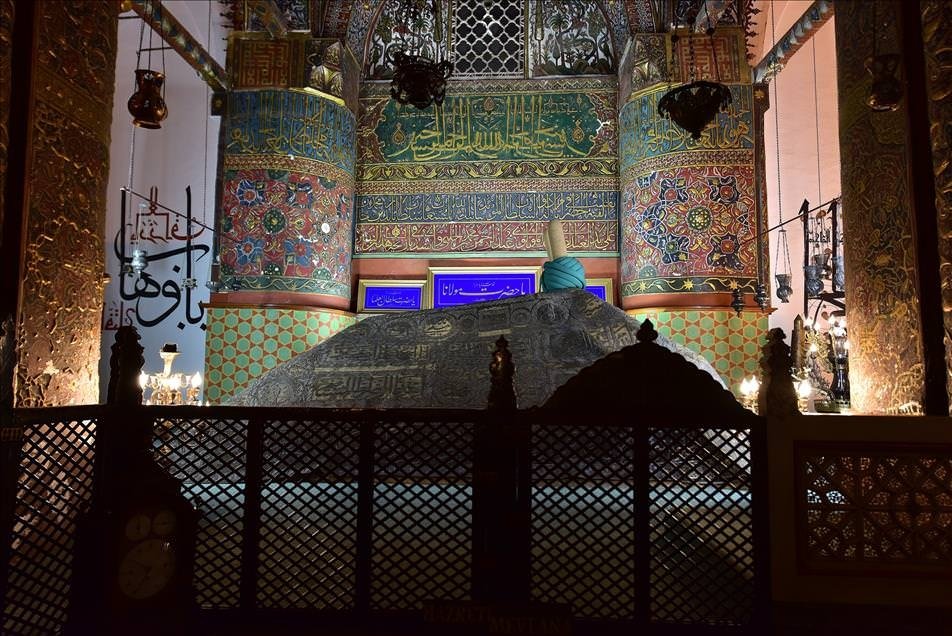
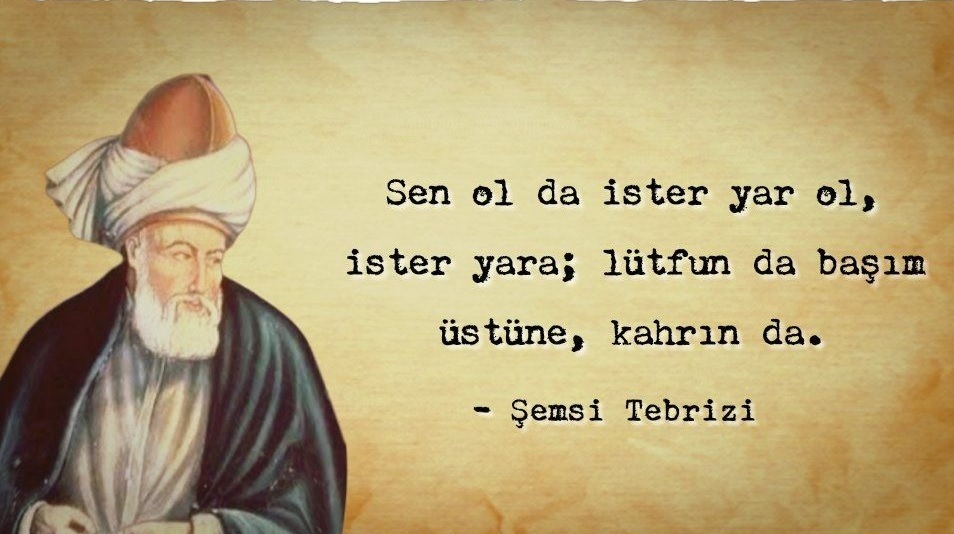
Mevlana Celaleddin Rumi went to Aleppo and Damascus to complete his education after settling in Konya. After the education period, starting from 1240, he started to teach religious sciences and guide the people in Konya. He met the dervish Shams-i Tabriz on 15 November 1244. Şems-i Tabriz, which has an important place in Mevlana’s life, has been a turning point for Mevlana. Mevlana and Şems-i Tabriz are known as two different symbols of tolerance that cannot be considered separately. Mevlana Celaleddin Rumi was granted the mercy of the Right on 17 December 1273. It has been a name for centuries as a symbol of tolerance, peace and love.