
Laika made history as the first living creature sent into space by the Soviet Union on November 3, 1957. Laika, a dog collected from the streets of Moscow, quickly became the symbol of space exploration.
Selected as the passenger of the Sputnik 2 spacecraft Laikawas launched to collect survival data for scientists on human spaceflights. However, from the beginning of space travel it was known that his death was certain. Because the spacecraft was designed without a return plan and the technologies necessary for Laika’s survival had not yet been developed.
LaikaHe died due to overheating within a few hours of his time in orbit. However, this dramatic journey provided the scientific world with important data on how living things react in space, paving the way for human space flights. Laika has become an unforgettable symbol not only in space history, but also at the center of ethical debates. Laika’s dramatic story revealed the bitter reality of sacrificing a living being with the ambitions of science.
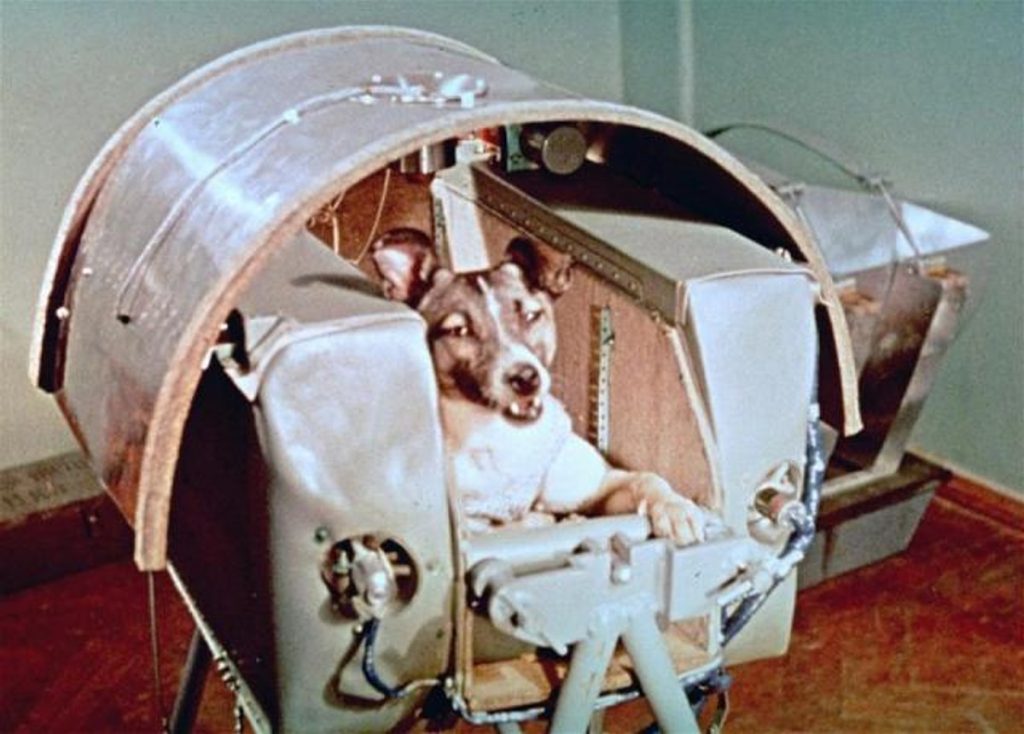
The First Animal to Orbit the Earth
Laika (Russian meaning “barking”), The first animal to orbit Earth is the Soviet space dog. Laika, a hybrid dog found on the streets of Moscow, was launched on November 3, 1957 Sputnik 2 He was chosen as the spacecraft’s passenger.
Some scientists predicted that humans could not survive in space and thought that sending an animal into space could pave the way for human spaceflight. At that time, there was very little information about the effects of space flights on living things, and deorbit return technology had not yet developed, so Laika was not expected to survive.
Laika died a few hours after launch, probably due to overheating due to a malfunction during the separation of the R-7 rocket and the capsule containing the dog. The exact cause and time of his death were not revealed until 2002.
It was generally said that he died on the sixth day as a result of running out of oxygen. However, this experiment showed that a creature could survive in orbit and cope with the zero-gravity environment. It also allowed scientists to obtain the first data on how living organisms respond to spaceflight. This data helped advance human spaceflight. Nearly four years later, on April 12, 1961, the first human space flight was carried out by the Soviet space program Vostok 1.
On April 11, 2008, Russia opened a monument dedicated to Laika. This monument, consisting of a dog figure on top of a rocket, was built in an area close to the facility near Moscow where Laika was prepared for space flight.

The Soviet Union’s New Success in Space
Sputnik 1Following the successful launch of , Soviet leader Nikita Khrushchev requested the launch of another spacecraft on the 40th anniversary of the October Revolution on November 4, 1957. A spacecraft was under construction at the time, but it would not be ready until November. For this reason, Sputnik 3 A new satellite to be named was prepared and launched into space on May 15, 1958.
However, the Soviets, who wanted to achieve a new success in November, aimed to send a dog into space. Soviet scientists had gained experience in space flights by sending twelve dogs on ballistic flights since 1951, and were now preparing for an orbital flight. In line with Khrushchev’s demands, this flight was postponed to November.
According to Russian sources, the official decision for the construction of Sputnik 2 was taken on October 10 or 12. This meant engineers had to design and build the spacecraft in just four weeks. In conclusion, Sputnik 2was a rushed project and many of its components were assembled quickly. However, the main purpose was to send a living creature into space.
There were devices inside the vehicle that measured solar radiation and cosmic rays. Additionally, there were oxygen generators, oxygen poisoning prevention devices and carbon dioxide absorption systems to protect the dog’s health. A fan was also designed to cool the dog when the cabin temperature exceeded 15 °C, food to feed it, bags to collect waste, and a type of harness to limit its movements. Additionally, various devices are installed in the cabin to monitor heart and other health data.

Challenging Training Process: From Street Dog to Space Hero
Soviet scientists chose Moscow’s stray dogs for the space flight because they were resistant to harsh conditions such as cold and hunger. Laika was a 3-year-old female dog, weighing about 5 kilograms, who lived on the streets of Moscow.
The Soviets gave him many nicknames, including “Kudryavka” (Little Curly), “Juchka” (Little Bug), and “Limonchik” (Little Lemon). The American press named the dog “Muttnik”, combining the words Sputnik and “mutt”, which means hybrid dog. Although the Laika’s exact breed is unknown, it was generally thought to be a mix between a Siberian husky and a terrier.
The Soviets had previously only made suborbital flights and trained animals for these flights. In addition to Layka, two other dogs named Albina and Mushka were trained for the Sputnik 2 flight. Laika was selected and trained by Oleg Gazenko. Other dogs were used in different tests.
Laika and other dogs were kept in cages of small sizes and subjected to long-term training. During this training, the dogs stayed in narrow spaces for a long time, causing them to become restless and deteriorate their health. However, researchers concluded that long-term training would be effective. They also received training on a centrifuge that mimics a rocket takeoff and on machines that mimic the sounds of a spacecraft. The gel-like foods used in the training simulated how dogs would get their food in space.

Final Preparations and an Emotional Farewell
Before takeoff, a scientist took Laika home to play with his children. Dr. Vladimir Yazdovsky described this memory in his book about Soviet space pharmacy with the following words: “I wanted to do something nice for him. “He had very little time left to live.” It was an emotional farewell moment in preparation for Laika’s final moments.
Sputnik 2 was a turning point. This journey of Layka would lay the foundations of human space flights and constitute an important step in space sciences.

Journey: Layka’s Journey to Space
Laikaon 31 October 1957, three days before takeoff. Sputnik 2 was placed in the spacecraft. At that time, temperatures in the departure area were quite low and a hose connected to a heater was used to keep the cabin where the dog was located warm. Before takeoff, Laika’s feathers were wetted with a mild alcohol solution, carefully combed, and the places where devices measuring body functions would be placed were painted with iodine. Just before the launch from the Baikonur Cosmodrome on November 3, 1957, all preparations for the dog were completed.
At the fastest moment of takeoff, Laika’s heart rate and breathing increased rapidly; his breathing increased to three times his pre-takeoff rate. The devices measured heart rates from 103 beats per minute to 240 beats after takeoff. Once in space, Sputnik 2’s nose cone was separated from the other parts. However, because “Block A” was not reserved as planned, the temperature control system was disabled and the cabin temperature rose to 40°C.
After three hours of weightlessness, Laika’s pulse dropped again to 102 beats per minute. Initial data showed that Laika was agitated but ate. However After the fifth hour of the flight, no signs of life were detected from the spacecraft.

Laika’s Death and Controversies
Soviet scientists had planned to deliberately cause Laika’s death with poisoned food. However, years later, conflicting statements were made on this subject. In 1999, some Russian sources stated that Laika died from overheating.
In 2002, Dmitry Malashenkov, who took part in the Sputnik 2 mission, announced that the dog died of overheating before completing its fourth orbit. “It was impossible to make a reliable temperature control system in such a short time,” Malashenkov said.
Sputnik 2, which completed 2,570 orbits over five months, fell out of orbit on April 14, 1958, fell to Earth and disintegrated.

Ethical Debates and Their Legacy
Since the Space Race between the Soviet Union and the USA was at the forefront when Sputnik 2 was launched, Laika’s health and death were not discussed much. However, over time, this issue became an ethical debate. After Laika’s death, animal rights activists began to protest this incident.
In the United Kingdom, the National Dog Defense League and the Royal Society for the Prevention of Cruelty to Animals organized protests against the Soviet Union. Some groups also demonstrated in front of the United Nations building in New York.
In the Soviet Union, this situation was less discussed. However, following the collapse of the Soviet Union, in 1998, incumbent Oleg Gazenko expressed regret for allowing Laika to die. Gazenko, “Working with animals is a source of suffering for all of us. As time goes by, my sadness for this grows. “We shouldn’t have done this.” He emphasized the ethical aspects of using dogs for the space program.

Commemorations and Cultural Effects
Laika’s memory began to be commemorated around the world after the collapse of the Soviet Union. many countries, A stamp was issued in memory of Layka and reminders symbolizing his sending into space were produced. The Soviet Union, Romania, Mongolia, Hungary, Poland and other countries issued special stamps to keep Laika’s memory alive. In 2007, the comic book “Layka”, written by Nick Abadzis and about the sending of Layka into space, attracted great attention and was nominated for many awards.
American singer Jonathan Coulton wrote the song “Space Doggity” honoring Layka. Also, in the Soviet Union, cigarette packs with Laika’s image and name were produced. All these commemorations and cultural influences continue the ethical and scientific debates that began after Laika was sent into space.

To join our WhatsApp group CLICK!


