The story of the Man in the Iron Mask has inspired literature and cinema with its mystery and secrets that have lasted for years. However, his identity has never been definitively resolved. Who was this man? Why was he kept in prison for years and the mask on his face was never removed? After his death, all his belongings in his cell were destroyed and his body was not even buried with ceremony. The person who ordered this was King Louis XIV of France. It was Louis. So who was this man whom the king so excluded?
various rumors, Man in the Iron MaskHe claims that he is the King’s illegitimate son and that his face is hidden by a mask because he resembles the King so much. According to another theory, the Man in the Iron Mask was actually the King himself. Another even more surprising claim is that the masked man was King Louis XIV. That he is Louis’ twin brother and that’s why he was kept away from him as a big secret.

A Prisoner is Carried from Paris to the Bastille in 1698
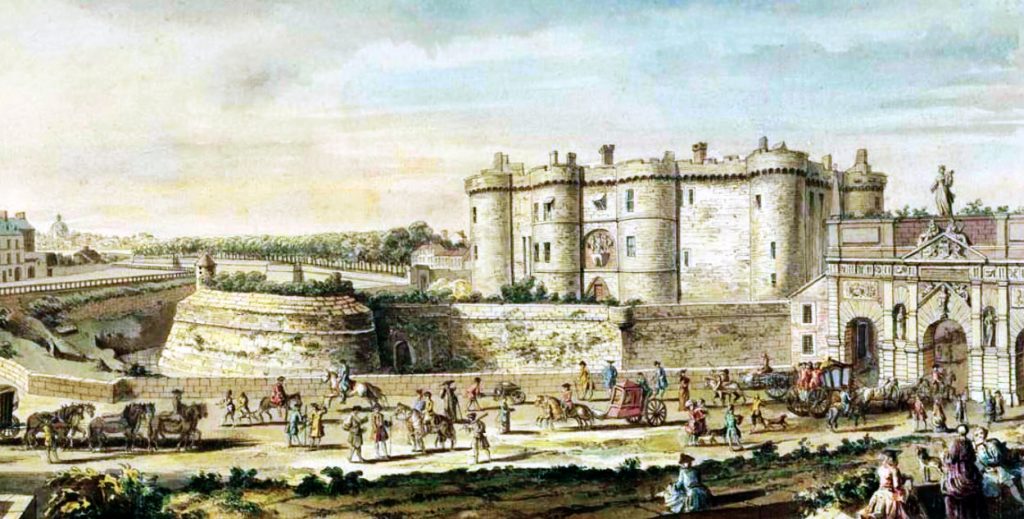
On September 18, 1698, an unusual prisoner arrived from Paris, France’s most famous prison. bastilleHe was taken to. No information was given about the identity of this man, whose face was covered by a black velvet mask. But the king ordered that he be taken very good care of.
The prisoner was immediately taken to a dark room to wait out the night. This was a security measure so that no one could see him while he was being carried to his cell. At 21:00, prison officials and other relevant people took him to the third room in the Bastille’s Bertaudièret Tower.
The Unfortunate Situation Encountered by the Man in the Iron Mask
When this mysterious man was brought to prison, he had been held in different prisons for 29 years. According to rumors spread in France at the time, his mask was said to have been soft velvet at first, but over time it turned into hard iron. This man had such a powerful influence that he was respected by his guards, even behind his mask. Rumor has it that this person has noble blood and perhaps The real king of France It was thought that it was.
But all these rumors were exaggerated. But the life of the man in the iron mask was extraordinary. His stay in prison for over 30 years was unusual at the time. At the time, prisons were generally reserved for minor criminals or nobles who received short sentences, while major crimes were punishable by death or worse, life as a slave in the French navy. Whatever the reason, XIV. Louis handled this prisoner differently than other criminals.

King’s Intervention and Secret Identity
King Louis intervened directly in this case and an arrest warrant was issued in 1669. In this arrest warrant found by historians in the 1860s, the prisoner’s name was Eustache Dauger It was mentioned as. However, at that time, pseudonyms were frequently used for prisoners detained secretly in France.
Dauger was arrested in the French port of Calais and sent to the prison at Pignerol in southern France. there, to him King LouisHe was accompanied by one of ‘s musketeers, a prison guard, and the prison governor, Bénigne d’Auvergne de Saint-Mars. Saint-Mars was solely responsible for this mysterious prisoner.
Strict Security Measures
King Louis’ secretary, the Marquis de Louvois, had instructed Saint-Mars to take strict security measures for the prisoner. The prisoner should not have been given the opportunity to talk to anyone, and limited communication should have been provided only with the person providing food and water.
Dauger was also told that he would face the death penalty if he tried to talk to Saint-Mars unnecessarily. Building the prisoner’s cell with double doors was a precaution taken to prevent conversations inside from being heard.

The Mysterious Prisoner’s Years of Captivity
The mysterious prisoner was moved from 1681 onwards to various prisons in France, most notably with Saint-Mars. From Pignerol to Exilles, the French stronghold of that period, and then to Cannes, Sainte-Marguerite IslandHe was taken to I.
It was still unclear whether Saint-Mars knew who this man was. However, he was careful never to mention the prisoner’s name in his annual correspondence. It’s just “the man in the lower tower” It was defined as .
Voltaire’s Theory: The Secret King
In 1771 Voltaire Man in the Iron MaskHe put forward a remarkable theory about the identity of . During his 11-month detention in the Bastille, he had heard a number of stories about the prisoner from guards and other prisoners. According to Voltaire, putting a mask on a prisoner a person who fears public recognitionIt showed the existence of . There could not have been anyone more famous than a well-known king in France at that time, so who could this be?
Voltaire, the prisoner The Sun King’s secret twin brother He claimed that he was imprisoned to avoid a power struggle for the throne. Although it is unclear how seriously Voltaire took this theory or simply introduced it to criticize the monarchy, the idea spread quickly among the French people. Before the revolution, among the people, of a king suffering under the tyranny of a cruel twin brother The story became very popular.

Napoleon’s Brother Theory
Napoleon Bonaparte He also claimed that he believed that the person behind the masked man was the brother of King Louis XIV and that the prisoner was actually his descendant.
The Theory of Baron de Heiss: Count Ercole Antonio Mattioli
But in 1770, French baron De Heissrevealed another theory regarding the identity of the Man in the Iron Mask. De Heiss, prisoner, Italian diplomat Count Ercole Antonio Mattioli He claimed that it was.
Mattioli, King Louis XIV of France. He agreed to sell Louis a castle in Italy. However, after receiving the money, he violated the agreement by informing the governments of Austria, Savoy, Spain and Venice.
To punish this treason, King Louis brought Mattioli to France and imprisoned him in the prison at Pignerol. However, a letter discovered in 1869 undermined this theory. In the letter, Saint-Mars never mentioned Mattioli’s name.

New Theories and Mysterious Identity
Some historians today argue, in light of contemporary documents from the royal archives, that Louvois was correct in describing the prisoner as a “simple servant”. It is thought that Eustache Dauger may have been one of Louis XIV’s personal servants. This servant had perhaps discovered great state secrets and therefore could not be brought to trial. King Louis sentenced this person to imprisonment for his entire life.
Dauger’s Identity and Legacy
French historian Jean-Christian Petitfils writes that Dauger was the son of King Henry II of England. He suggests that he may be Charles’ envoy. According to Petitfils, this envoy had secretly negotiated a strengthened alliance with France in exchange for Charles’ conversion to Catholicism. This theory is also consistent with Dauger’s arrest in Calais.

Conclusion: Myth and the Puzzle of Identity
Man in the Iron MaskHe died in the Bastille on 19 November 1703. His identity has never been definitively clarified, and new theories continue to be put forward. Some historians even argued that the famous character D’Artagnan was related to real life. However, this theory seems unlikely.
Despite many different claims and theories, the identity of the Man in the Iron Mask remains a great mystery. This myth has given rise to new speculations and theories throughout history and will likely never be fully resolved.
To join our WhatsApp group CLICK!