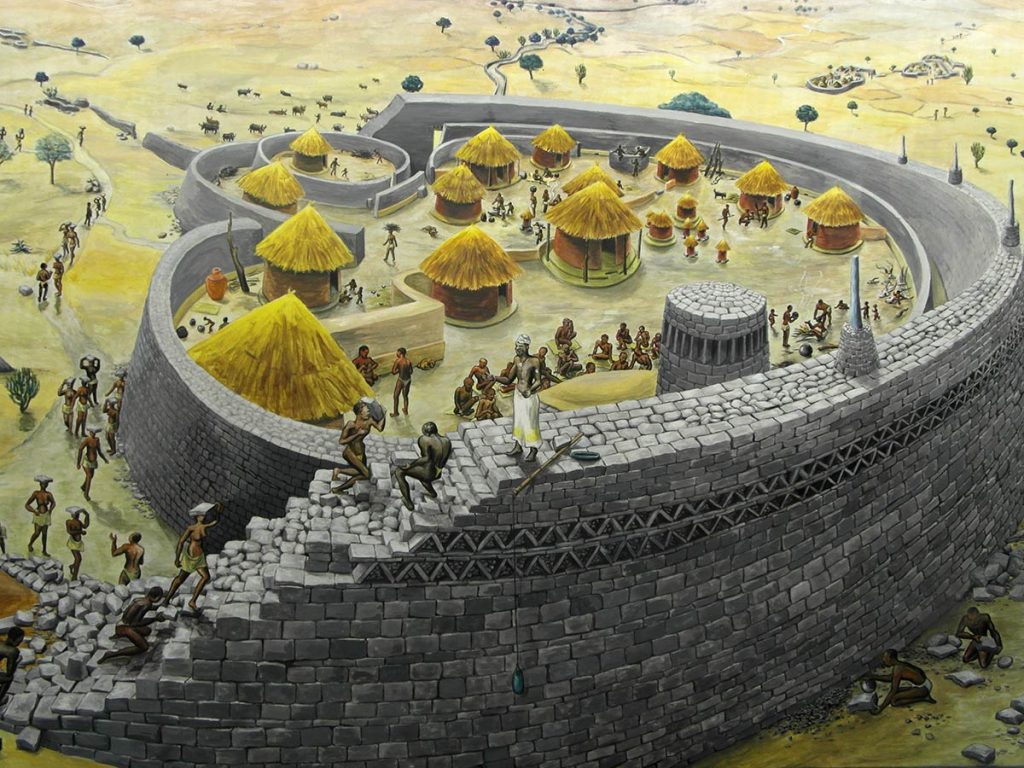
Great Zimbabwe is an ancient structure located in southeast Zimbabwe near Lake Mutirikwe and the town of Masvingo. It was used as the capital of the Kingdom of Zimbabwe during the Late Iron Age. There is no definite information about who built Great Zimbabwe and different hypotheses are put forward. According to local traditions; while the stone structures are said to have been built in the early part of Lemba, modern archaeological theory; that the structures were built by the Shona people. Greater Zimbabwe is on the UNESCO World Heritage List.
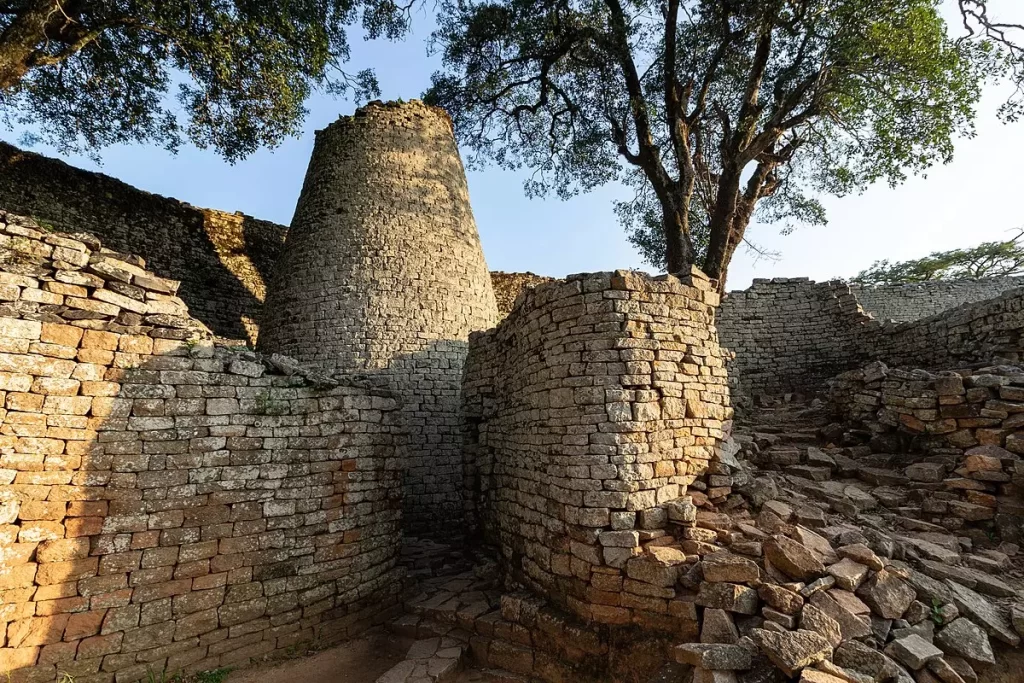
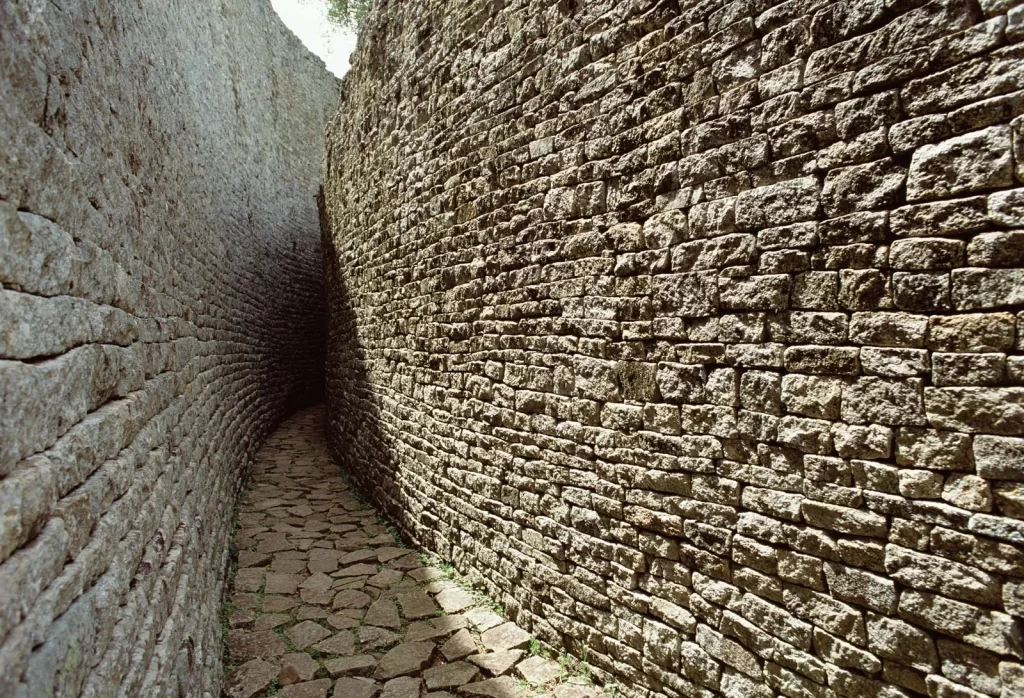
The monumental building was started to be built in the 11th century and its construction was completed in the 15th century. The stone city covers an area of 1,780 hectares, and its summit can accommodate 722 people. Great Zimbabwe is thought to have served as a royal palace for the local ruler and was a center of political power. One of the most important features of the stone structure is the features of its walls, which are more than five meters high. These walls were built without the use of mortar, with the stones perfectly fitting together. However, Great Zimbabwe has been abandoned and in ruins over time.
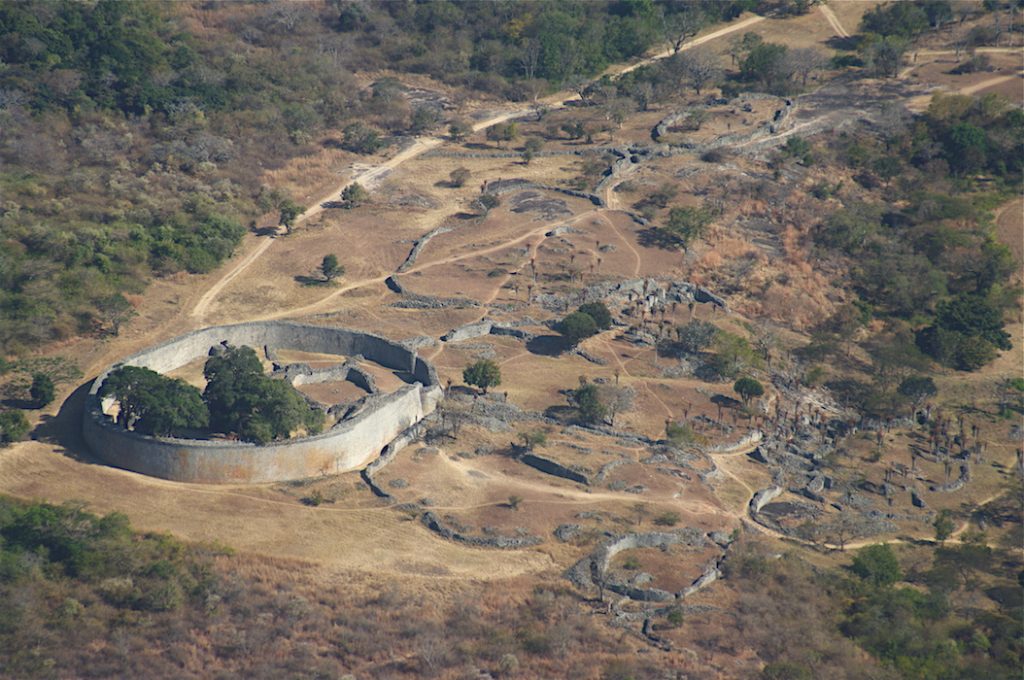
History of Zimbabwe Ruins
The earliest known written record of the ruins of Great Zimbabwe was made by Vicente Pegado, the Portuguese captain of the Sofala garrison, who recorded his name in 1531. Pegado noted that local people called the city “Symbaoe”. It is known that Portuguese traveler António Fernandes visited the region twice between 1513 and 1515 and reported it in detail. Fernandes explored what is now known as the Zimbabwe region, including the Shona kingdoms, and described in detail the centers made of stone without mortar. However, it is known that Fernandes does not make any particular reference to the ruins of Great Zimbabwe.
The first confirmed visits by Europeans to the ruins of Great Zimbabwe took place in the late 19th century, and field surveys were conducted in 1871. However, the studies have caused controversy in the archaeological world. Great Zimbabwe was later recognized as a national monument by the Zimbabwean government and has become a symbol of the modern independent state. The word “Zimbabwe” is a term used for the hundreds of small ruins found in the Zimbabwe Highveld region. Similar mortarless walls exist in over 200 places such as Bumbusi in Zimbabwe and Bumbusi in Mozambique, and Great Zimbabwe is one of the largest and most impressive.
Mysteries of Great Zimbabwe
Among the mysteries of Great Zimbabwe is how the structures were built. How the structures are held together without mortar is still not fully explained. In addition, it is stated in some sources that the technology used in the period when the buildings were built was far ahead of the technology known at that time in the African continent. Some theories suggest that ancient Egyptian, Phoenician or Persian technologies may have been used in the construction of the structures.
One of the mysteries about Great Zimbabwe has to do with Hill Fortress on the main ruins complex. Considered as a military structure, it is seen to be insufficient. While there are controlled entrances, there are some weak spots where attackers can easily penetrate the castle and the northwest side is almost vulnerable. In addition, the hilltop fortress lacks natural water resources, which makes it vulnerable to siege.

Another mystery has to do with the lack of tombs around the ruins. If Great Zimbabwe has a resident population, most of its dead are not buried there. This rare form of burial may mean that Great Zimbabwe was mostly intended for ritual use, and perhaps only a few nuns were permanently housed there.
Apart from that, it is not known exactly why Great Zimbabwe was abandoned. Some researchers argue that environmental factors, especially the drying up of water sources, caused the settlement to be abandoned. But other theories suggest that abandonment is based on political or social factors. As a result, the mysteries of Great Zimbabwe still have many unsolved questions. However, the architecture and construction of the structures allow us to learn more about the ancient civilizations of Africa.

Is Great Zimbabwe an Astronomical Observatory?
Studies by archaeologist-astronomer Richard Wade of the Nkwe Ridge Observatory in Johannesburg provide strong evidence that Great Zimbabwe may have been used as an astronomical observatory. This idea is based on the location of the stone monoliths in the eastern arc of the Great Enclosure in line with the rise of the Sun, Moon, and bright stars at astronomically significant times.
Wade states that the patterns of the monoliths can be a record of Venus’ alignments with Earth and can be used to predict eclipses of Venus’ celestial location. Wade also speculates that the reason a conical tower was built may be because it aligns with a supernova that exploded years ago and originated in the Southern Hemisphere. Trusting the supernova idea of the region’s oral legends, the Sena people of Zimbabwe say that their ancestors migrated from the north, following a bright star in the southern sky.