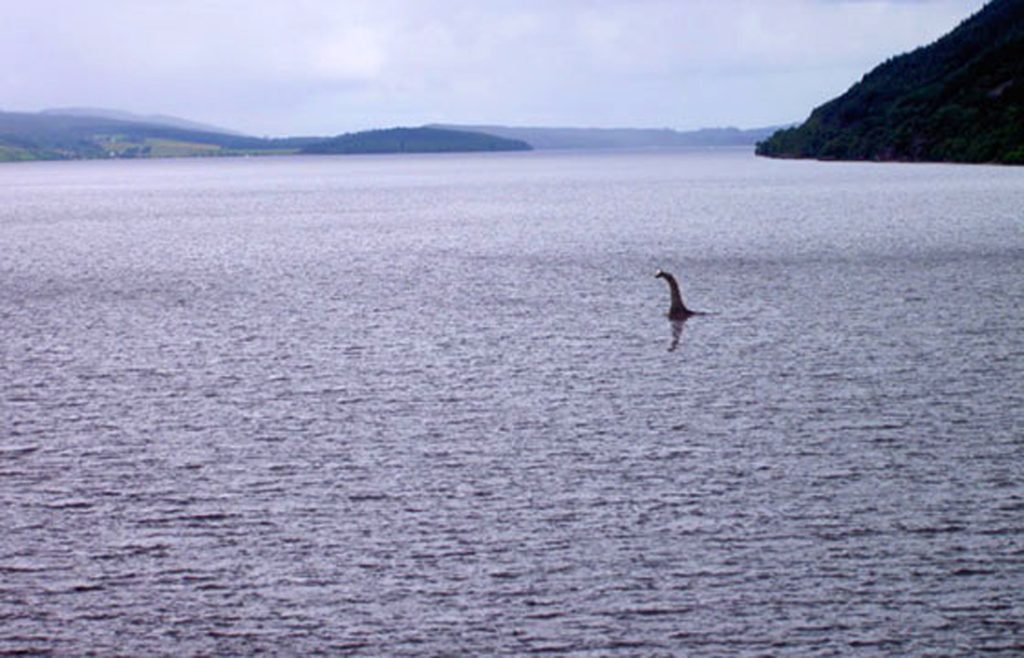
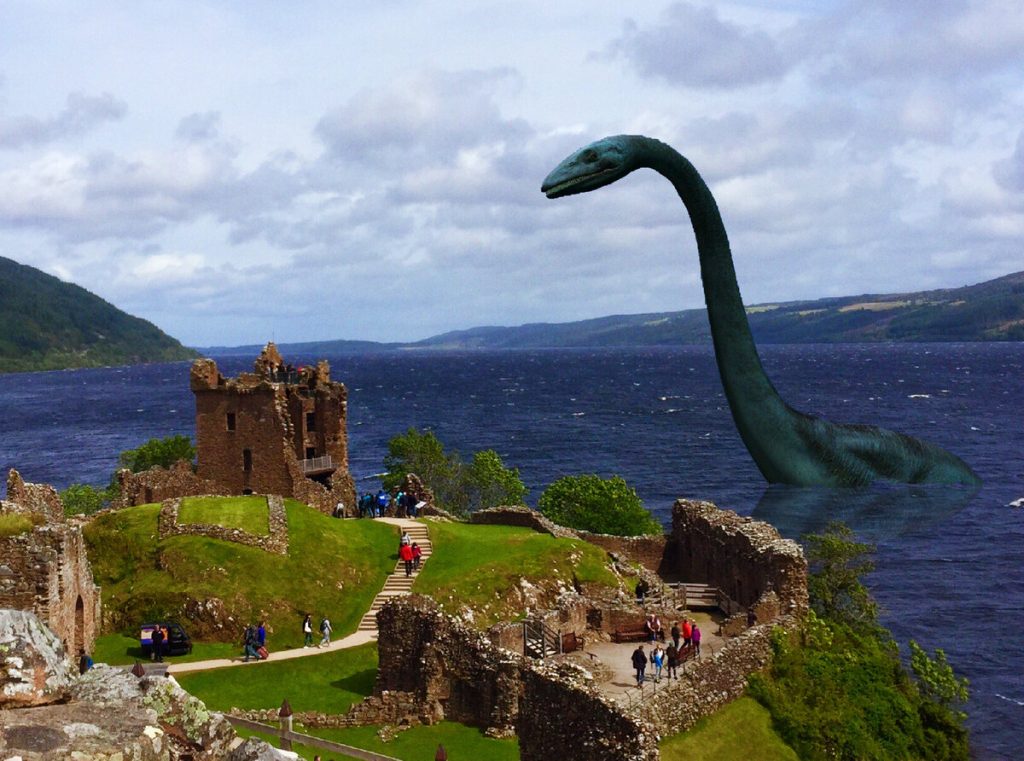
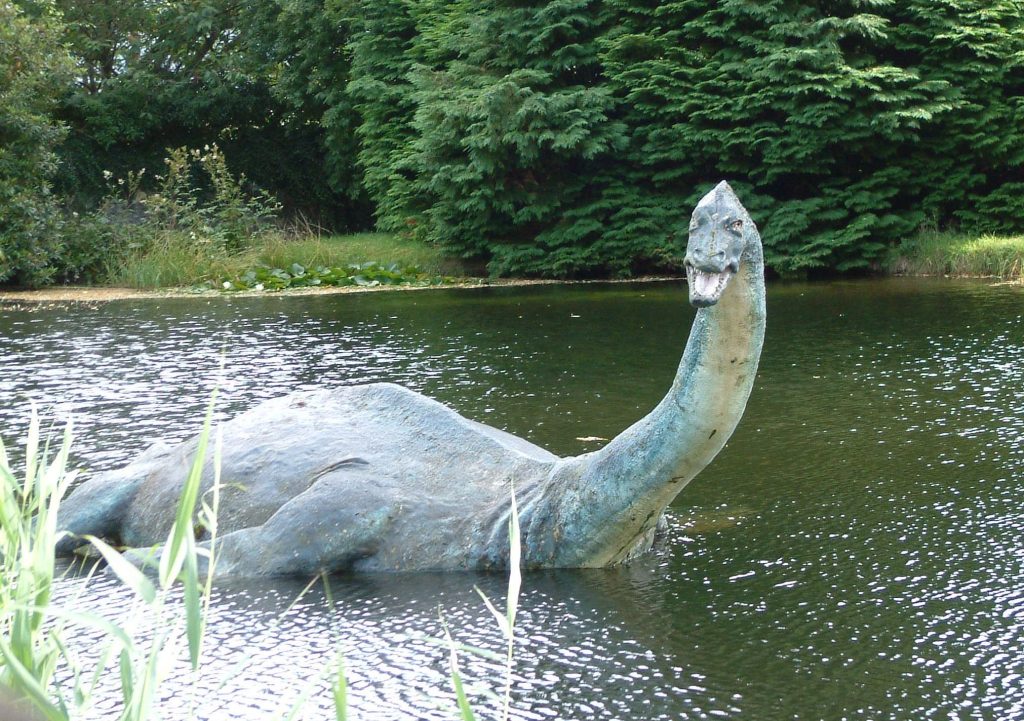
Loch Ness is a valley barrier lake located in the Highlands of Scotland. Besides its brown waters and beautiful landscapes, what makes the lake famous is the legend of the Loch Ness Monster. Despite many searches, no scientific evidence for the existence of the monster, also known as Nessie for short, has been found. Its believers claim that during the searches, the beast hid in caves deep in the lake and could not be seen because of the muddy waters.
Deep and wide, Loch Ness is 15.8 meters above sea level. The surface of the lake, which has 5 rivers, is 56.4 square kilometers. The longest range of the lake is 40 kilometers, and the deepest point is 230 meters. Loch Ness is the widest Scottish lake after Loch Lomond and the second deepest after Loch Morar. There is also an island called Cherry Island on it.
10 Interesting Facts About the Loch Ness Monster
It has been claimed that the Loch Ness Monster, which is thought to be a prehistoric creature, has been seen many times in Scotland’s Loch Ness Lake. Some information about the monster is as follows;
1- First Appearance of the Loch Ness Monster
The first narrative about the Loch Ness Monster dates back to about 1500 years ago. The monster is mentioned in the notes dated 565 AD of the Irish missionary St. Columba, who was responsible for spreading Christianity in Scotland. Accordingly, while visiting the king, Columba hears rumors about a monster that lives in Lake Loch Ness and eats people. He then records that he witnessed the beast eat a human and orders him to return to the lake. The terrified beast returns to the lake and will never harm anyone again.
2- The First Cases in the Modern Age
The first modern-day cases of the Loch Ness Monster occurred in 1933. On May 2, 1933, a local newspaper called the Inverness Courier ran a story about the Loch Ness Monster, with a couple claiming to have seen the monster. After the news broke, another couple claimed to have seen the monster on land.
The news also included the information that the monster is not a new legend and there have been stories of monsters in the region for centuries. After this news, the legend of the Loch Ness Monster spread all over the world and many people claimed to have seen the monster.
3- Loch Ness Monster Photo
The Loch Ness Monster photo had previously become the focus of controversy, as it was thought to be real. However, a later confession revealed that the photo was a fraud. In 1994, when Christian Spurling was on his deathbed, he confessed that the photo was fake. Spurling said she and her stepfather edited the photo and were joking. His stepfather was the one who came up with the idea for the photo, and Spurling made a little monster figure with curves. Although there are still debates about the authenticity of the photo, it is considered by many to be fake.
4- Contribution of the Loch Ness Monster to Tourism
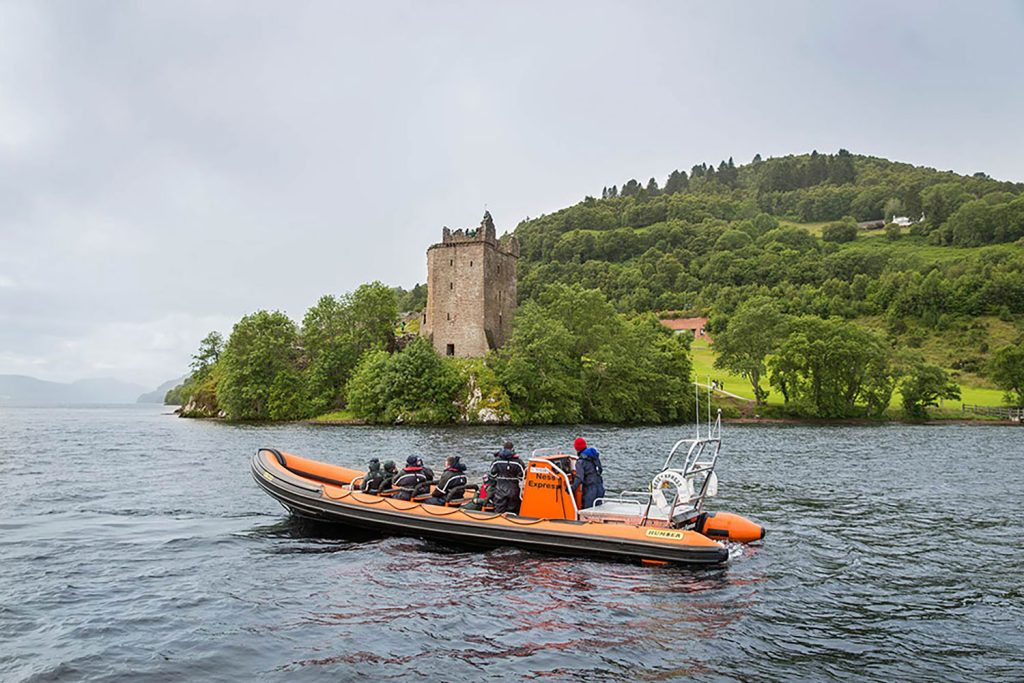
The contribution of the Loch Ness Monster to tourism is really great. Scotland organizes many tourism events around Loch Ness Lake, which is visited by around 1.5 million tourists every year. These activities include boat tours, monster hunting trips, museums and gift shops. Loch Ness Monster tourism also contributes to the economy of hotels, restaurants, cafes and other businesses in the area. Tourism businesses in the region earn a significant income from the sale of monster-related products and from the expenditures of tourists.
However, some critics question the sustainability of Loch Ness Monster tourism. Some find the impact of tourism on the lake ecosystem and the life of the beast worrisome. Currently, however, Loch Ness Monster tourism makes a significant contribution to the region’s economy and continues to attract tourists.
5- Studies on the Loch Ness Monster
The search for the Loch Ness Monster wasn’t limited to just sea radars. Image processing technologies and DNA analyzes were also used. A 2018 study analyzed DNA samples from the lake and found no evidence. This research brought a scientific approach to the Loch Ness Monster claims and provided information about the biological structure of the lake. As a result, the Loch Ness Monster claims have been debated for years and a lot of research has been done. Many of these studies did not provide any concrete evidence to support the monster’s reality. However, those who believe in the existence of the beast are still hopeful and research continues.
6- BBC Studies on the Beast
In 2009, the British news channel BBC conducted a study to search for the Loch Ness Monster. In this study, every point of the lake was scanned using satellite, navigation and comprehensive marine radars. However, at the end of the study, the BBC announced that there is no such thing as the Loch Ness Monster. The BBC mapped every spot of the lake using 600 sonar beams and found nothing out of the ordinary.
In the final stage of the study, an object was hidden under the water to show how easily people could be fooled, and then they quickly lifted the object above the water in front of a tourist convoy. When they asked the tourists, they confirmed that they had encountered a serpent-like creature. Research by the BBC has made it clear that the legend of the Loch Ness Monster has nothing to do with reality.
7- What Could the Loch Ness Monster Be?
There are many claims and speculations about the Loch Ness Monster. Some believe that there is an extinct sea creature living in the lake, while others think that the monster is a fabricated legend.
On the show “River Monsters” hosted by Jeremy Wade, it has been suggested that the Loch Ness Monster may be a Greenland shark. With small pectoral fins, the Greenland shark is a snake-like creature that can curl up and can reach a length of approximately 5.5 meters. The Greenland shark is known for eating whatever comes its way.
Steve Feltham, who entered the Guinness Book of Records as the person who has been searching for the Loch Ness Monster for the longest time, thinks that the monster may be a catfish. The catfish, Europe’s second largest freshwater fish, can reach 4 meters in length.
One of the most interesting claims made about the Loch Ness Monster is that the monster is an elephant. Paleontologist Neil Clark suggested that the Loch Ness Monster might also be an elephant, after seeing how elephants in India swim in the water. However, this claim is often funny and unconvincing.
8- Allegations About the Loch Ness Monster
Many of the claims made about the Loch Ness Monster do not reflect the truth. Although hundreds of people claim to have seen the monster, no evidence has yet been found. Also, some are making up fake stories that it’s real. For example, Italian journalist Frencesco Gasparini, while working for a British newspaper, came across the interesting story of fish seen in Loch Ness Lake in 1933. Gasparini carried the statements of a couple who saw the monster to the press to increase the mystery of the event. However, Gasparini admitted in 1959 that the monster story was fictional.
9- Biodiversity of Loch Ness Lake
New Zealand scientist and Professor Neil Gemmel took some samples and used DNA testing technique to measure biodiversity in Loch Ness Lake in 2023. In this way, by analyzing the DNA of the living species in the lake, he would be able to obtain evidence of the reality of the Loch Ness Monster. However, as a result of the analysis, no monster DNA was found. As a result of the researches, a previously undetected bacterial species was discovered only in the lake.
10. Worldwide Examples of the Loch Ness Monster
While the Loch Ness Monster is one of the most famous monster narratives worldwide, there are many similar examples. For example, monster sightings have been reported in Bear Lake in the US states of Utah and Idaho since 1868. This monster is called “Bear Lake Monster”.
Canada’s Lake Okanagan also has the legend of Ogopogo, who is considered the cousin of the Loch Ness Monster. According to the narratives, the Ogopogo is a tall beast that can curl like a snake.
There are also claims that a creature similar to the Loch Ness Monster has been seen in Canada’s Lake Manitoba. A photograph allegedly belonging to the aforementioned monster was published in 1962.
In addition, there is the legend of the Lake Van Monster, which is considered to be exactly the same as the Loch Ness Monster in Turkey. Although no monster was found in the studies carried out to find the Van Lake Monster, it was discovered that there was a 3,000-year-old castle at the bottom of the lake.