
The world’s largest iceberg has begun to move after more than 30 years, bringing a range of impacts. The iceberg named A23a, which broke away from Antarctica in 1986, turned into a giant ice island after running aground in the Weddell Sea. With an area of approximately 4,000 square kilometers, A23a is almost as large as the surface area of Istanbul.
According to the latest data, scientists found that A23a is moving again after 30 years. The movement of this giant ice mass brings with it various potential dangers. The thickness of the iceberg, which remained motionless for 30 years, reached up to 400 meters. Soviet Union‘s Druzhnaya research base was located on this large piece.
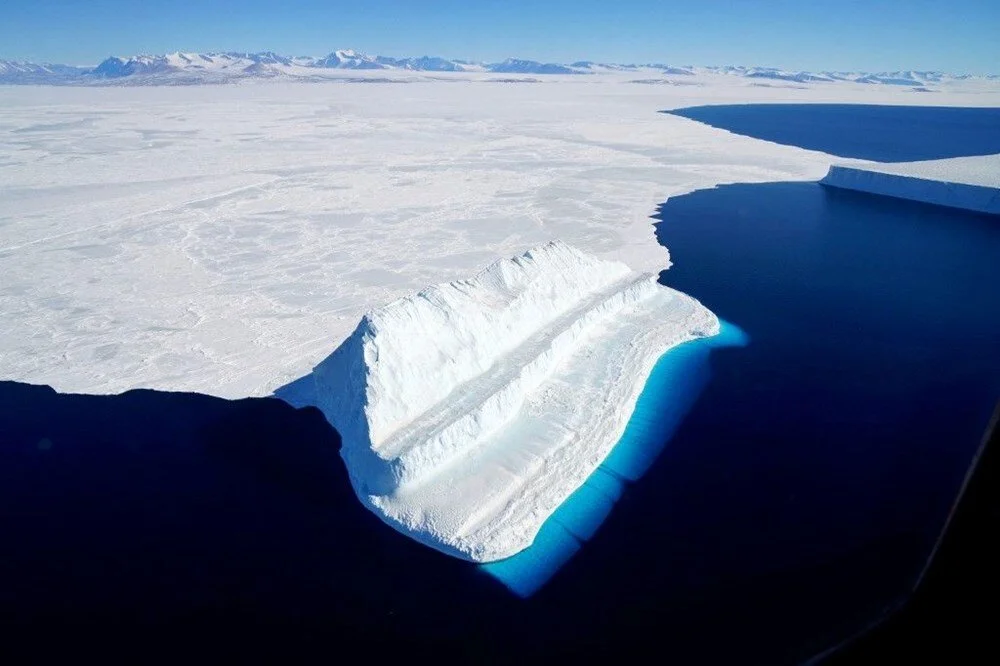
This iceberg, named A23a, rapidly collapsed after leaving the Antarctic coast in 1986. Weddell SeaIt drifted into a huge ice island. Last year move with sudden speed This glacier, which started to form, is now It is heading out of Antarctic waters.
Once part of the Filchner-Ronne Ice Shelf in Antarctica, A23a was home to a Soviet Union research station. Moscow due to risk of iceberg disappearing at the base called Druzhnaya 1 sent an expedition to remove the equipment. However, the iceberg did not move far because it was firmly lodged in the bottom mud of the Weddell Sea, which somewhat eased the Soviet Union’s concerns.

Reasons and Dangers of the Iceberg’s Movement
“British Antarctic Survey” located in Cambridge, England. Antarctic research center A member of Dr. Andrew Fleming stated that he was curious about the effect of the change in water temperature on the shelf on the A23a iceberg and asked his colleagues about it. However, the general opinion is that “that it is time to move” he stated.
Fleming, “It had been stable since 1986. However, it would eventually shrink in size (physically) and begin to move around, losing its attachment to its location. “I noticed his first move in 2020.” said. The movement of A23a has accelerated in recent months. The iceberg is being dragged by winds and currents and is currently heading towards the northern tip of the Antarctic Peninsula.

A23a, like other icebergs in the Weddell sector, probably got caught in the Antarctic Circulation Current and moved towards the South Atlantic.glacier corridorIt will follow a path known as “. It is known that this route is the same as the water currents and westerly winds experienced by the famous explorer Ernest Shackleton in 1916.
Shackleton lost his ship, the Endurance, when it collided with a glacier. He then tried to reach the island of South Georgia with his lifeboat. On this route, it was possible to observe large icebergs located offshore. All glaciers, regardless of their size, are melting and is doomed to disappear is known. Scientists will observe this process by closely following the progress of A23a.

If A23a stops in South Georgia, millions of people living on the island seal, penguin and other sea birds It may cause some problems for you. The iceberg’s sheer volume can change hunting routes for animals. However, it would be wrong to see glaciers only as threats. Awareness of its environmental importance is increasing. When these large glaciers melt, they reveal the mineral dust inside them as they are part of the glaciers scraping the rock bed of Antarctica. This dust ocean food chains It can serve as a food source for underlying organisms.
Dr. from Woods Hole Oceanographic Institution. Catherine Walker stated that glaciers are the source of life in many respects and form the basis of many biological activities. Reminding that he was born in the same year as A23a, Walker said, “I identify with it, like it’s always been there for me” said.


