Many of the idioms we use in daily life are based on true stories from history. The meanings of the idioms that are the subject of lived events and historical people and the stories of their emergence are quite surprising. The stories of some of these idioms are as follows.
Karaman’s Sheep Later Game
Meaning Used: It should not be deceived by appearances, what will come out of this business will become clear later.
Story: When the Ottoman Empire started to grow in Anatolia, it took many principalities under its command. However, the Karamanoğulları Principality made the Ottomans very busy. The Ottomans do not want to eliminate the Karamanoğulları Principality, they make an agreement after each defeat. The Karamanoğulları Principality does not keep its word after many agreements and breaks the agreement. The Ottoman Empire wants to make an agreement with the Karamanoğulları in one of the wars in a way that they will not break their promises again. He wants to make İbrahim Bey, one of the Karamanoğulları, take an oath. While taking an oath, İbrahim Bey thinks of something cunning and goes to swear by placing a pigeon on his bosom.
When they say to swear that you will keep your word again, İbrahim Bey puts his hand on the pigeon that he has kept in his chest; “If I go back on my word while this soul is in this body; Let my sword not cut, let my horse’s feet be broken, let my crops not grow, let my sheep be weaned, let my blood dry up.”
Since İbrahim Bey took a false oath, he still does not keep his word. When he is reminded of his oath, he tells the inside of the event. This historical event is learned by the famous Emir Timur one day. Timur; He uses this word by saying “Karaman’s sheep will come out later”.
Very expensive
Meaning Used: To be told that something is expensive.
Story: Suleiman The Magnificent, He goes hunting one day, taking his viziers with him. During the hunt, it suddenly started to rain, and when the sultan and his viziers realized that they would not be able to return, he took refuge in a nearby village house. Realizing that the hosts are important people, they welcome the sultan and his viziers nicely and warm them by lighting a fire. Suleiman the Magnificent to the landlord; He says that fire is worth a thousand gold.
The host fills the stomachs of the guests and prepares the place to sleep. The sultan and his men sleep well in their warm corner. In the morning, the sultan and his men prepare to go. The sultan asks the landlord how much is our debt. The owner of the house says your debt is a thousand gold. This money is not very valuable to the sultan, but he cannot help but ask why he wanted so much gold.
When asked why he wanted so much money, the landlord replied that all he wanted was money for the fire he lit. Homeowner; You said that fire costs a thousand gold, he says, soup and hot beds are our gift. The sultan and the viziers leave the village by giving a thousand gold coins, which is the cost of the fire lit at night.

Snowing on the Mountains He Trusts
Meaning Used: Not getting the help he expects from a trusted place.
Story: Napoleon in History and Adolf HitlerThere are expeditions organized by Moscow. On both occasions, the French and German armies are defeated. The main reason for these defeats is Russia’s famous winter and cold. In other words, the armies are defeated by the black winter by not being able to cross the snowy mountains. Napoleon marches to Russia with a large army, and 2 years later he loses almost all of his army. When he returned to France, he was criticized by saying, “Did it snow on the mountains you trust?”
Tooth Sharpening
Meaning Used: Seeking an opportunity to do harm to another.
Story: Turks know dental care since ancient times and attach importance to it. He brushes his teeth every morning, even in wars. In a war, Turkish soldiers go down to the side of the stream, wash their faces and start brushing their teeth. Some of the Chinese soldiers secretly watch the Turkish soldiers and their actions. But they cannot understand what they are doing, and they think that they are preparing for war. They relay the situation to their commanders and friends. Turks know their teeth by the stream, they say we are smoke, let’s escape from here immediately. The Chinese soldiers flee from their fears by leaving their place. Turkish soldiers also gain victory thanks to their cleaning.
The oil of the compote has been cut off
Meaning Used: It is to be in a situation where there is nothing to say, something to say or something to do.
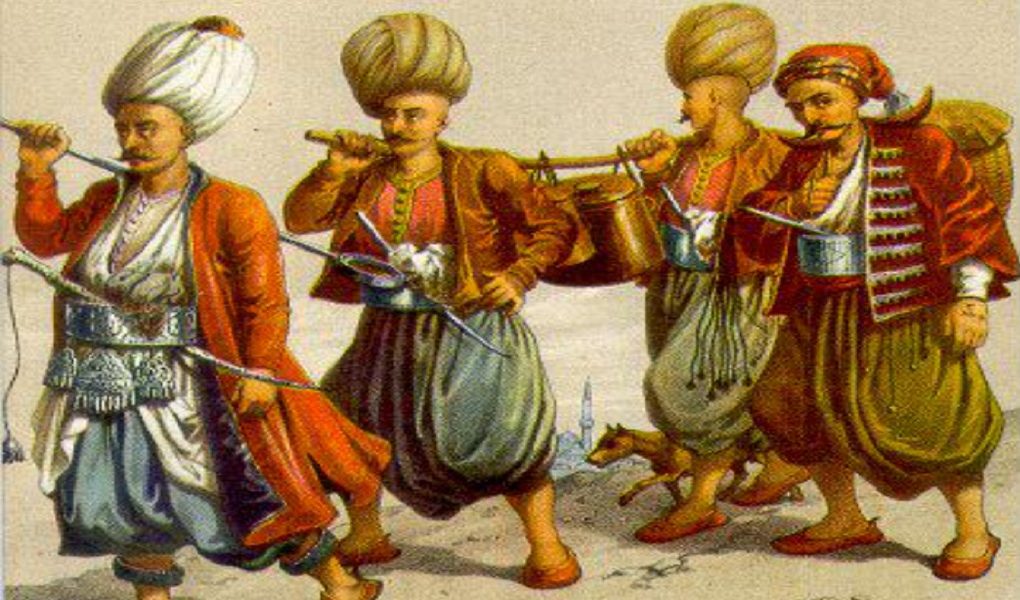
Story: The compote given to the Janissaries is prepared in oiled and cooked cauldrons. Therefore, an oil layer forms on the compote. Thus, the janissaries thought that oil was added to the compote. The new officer, who takes care of the catering, wants compotes to be cooked in separate and clean containers to prevent this situation. Thus, the oils on the compote are invisible. The Janissaries react to this situation and someone who wants to cause turmoil makes a speech.
The person giving the speech; your rulers even cut off the fat from your food. While they used to put oil in your compote, now they don’t. If you don’t believe it, look at the compote in front of you. Their goal is to weaken you, perhaps to starve you. He says will you submit to this. The Janissaries all shouted in unison that no, of course, no such a thing would happen. All the Janissaries rebelled because the compote oil was cut off.

Pumpkin Flavor
Meaning Used: To tire, to tire, is to begin to feel unpleasant.
Story: Students studying in a madrasah built by Fatih Sultan Mehmet in Istanbul were given a pumpkin dish for 40 consecutive days when the pumpkin season came. But on Fridays the food would change a bit. The students studying in the madrasah used the expression “it tasted like pumpkin” to describe that something was starting to get boring.
Remove Boiler
Meaning Used: To revolt is to revolt collectively.
Story: In the last period of the Ottoman Empire, frequent uprisings started in the janissary corps. The uprising janissaries made it their custom to take them with them in cooking cauldrons on their way to Sultanahmet Square in Istanbul. In time, the name of the janissary uprisings became “removing the cauldron”.
Shoe Checkers
Meaning Used: It is the loss of value and reputation that was previously owned.
Story: In the past, there was an artisan organization called the Guild in Anatolia. Guilds worked to keep the quality of manufactured goods high, to train workers, and to trade properly. The officer in charge of the guild would control the tradesmen. If non-compliance was encountered, either the shop was closed or the shop owner was warned, depending on his crime.
If the shoes were found to be rigged, poor quality shoes were thrown on the roof of the shop and left to rot there. The word dam means a covered place. The shoes of the shop that did poor quality work were thrown on the roof, meaning that the more shoes accumulated on that shop, the worse it was doing. For this reason, the point of throwing the shoe at the checkers comes from those periods.
Launching the Sails
Meaning Used: It is giving up resistance and accepting what the other person says.
Story: Fatih Sultan Mehmet, who wanted to take Istanbul, had the Rumeli Fortress built. Across the street is Anadolu Hisarı, built by his grandfather Yıldırım Beyazıt. With these two fortresses, the passage of ships in the strait was taken under control. The commander of the Rumeli Fortress is Firuza Agha. According to the rule, every ship, big or small, passing through the Bosphorus will lower their sails and stop at Rumeli Fortress. He will lower his load and pay some pass tax. Thus, the Bosphorus was put under strict control.
One day, a Genoese ship wants to run away without following this rule. A stop signal is given from the fort, but the captain ignores this signal. Warning fire is opened, the captain still does not care. This time, the ship, hit by a real cannonball, lies on its side. The sails, which are not lowered by the captain of the ship, which is gradually sinking into the waters, go down to the sea by themselves. Firuza Agha, who is deeply annoyed by the behavior of the Genoese ship, calls out to a janissary soldier. What about the ship that ignores us? The soldier, who was also to monitor the situation at sea, calls out to his commander, “My brother lowered the sails”.

Selling Face Vinegar
Meaning Used: Never smiling is always sulking.
Story: In ancient times, there were two honeysuckers next to each other. One of them never smiles and his eyebrows are always frowning. The other honey is smiling, cute and sweet-tongued. Even though he sells better and cheaper honey, no one visits the shop of the unsmiling honey. Everyone goes to the smiling honey shop and buys the honey from him. The sullen honey cannot understand why his neighbor is constantly selling honey and he is unable to sell it.
Finally, to satisfy his curiosity, he asks an old man whom everyone knows as intelligent knowledge. The owner of the shop asks why no one stops by, although he sells cheaper, why his neighbor sells more. The old man looks at the face of the sullen man and says, “Dude, you sell honey, but your face sells vinegar.”


