Rising amidst the misty mountains of Tibet, Mount Kailash is renowned not only for its natural beauty but also for the profound mysteries it holds. Throughout history, this mountain has been the setting for numerous legends and enigmatic events. Even Adolf Hitler’s pursuit of this mountain is just one part of its mysteries.
Another incredible claim circulating about Mount Kailash is that it’s a gateway to the underworld. Some people who have attempted to climb the mountain say they aged as if two weeks had passed in just 24 hours, that time seemed to pass differently. Furthermore, no one has ever managed to reach the summit of Kailash.
Kailash’s deep secrets are shrouded in numerous legends, ranging from an extraterrestrial advanced human race to the Gog and Magog tribes that will emerge near the end of time. But is Mount Kailash truly a place full of secrets? Are traces of legendary tribes like Gog and Magog hidden here?

Mount Kailash, considered sacred in many religions.
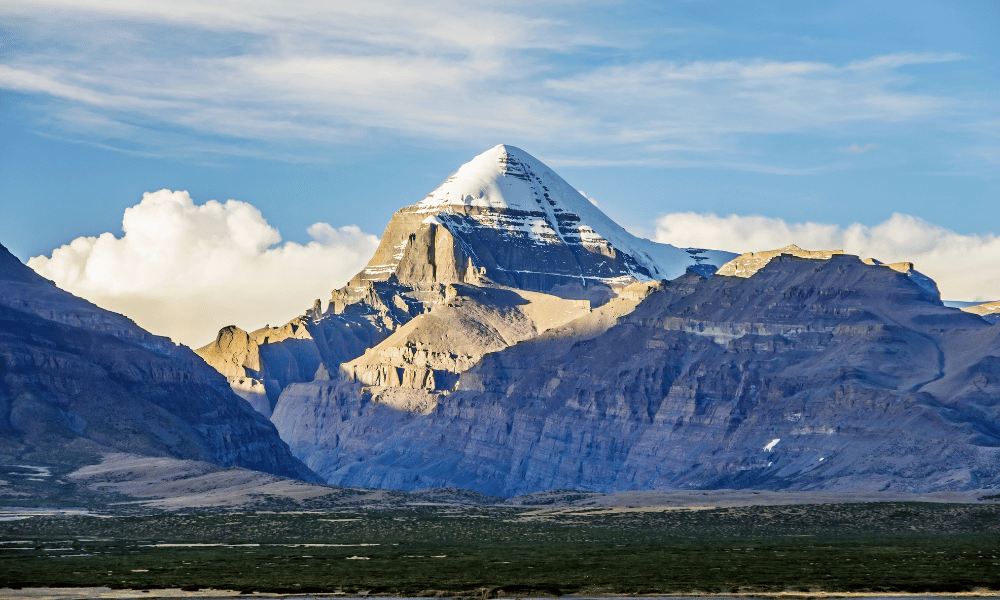
Mount Kailash is known as one of the world’s most mystical and sacred mountains . Rising in the Transhimalaya region of Ngari Prefecture in China’s Tibet Autonomous Region, on the western part of the Tibetan Plateau, it is situated near the border triangle between India, Nepal, and China. Its summit, reaching 6,638 meters, is located near the source of the region’s major rivers: the Indus, Sutlej, Brahmaputra, and Karnali.
Kailash is considered sacred to many faiths, including Hinduism, Buddhism, Jainism, and Bon religion . For centuries, thousands of pilgrims have made pilgrimages to the mountain, undertaking treks around Mount Kailash and reaching Lake Manasarovar. However, the mountain is more than just a religious center; it is shrouded in legends and mysteries.
No one has ever successfully climbed Mount Kailash, as the Chinese government has banned climbing it due to its religious significance. The mountain is considered not only a physical obstacle but also a spiritual and mystical test.
Climbing Mount Kailash, Time Bending, and Aging
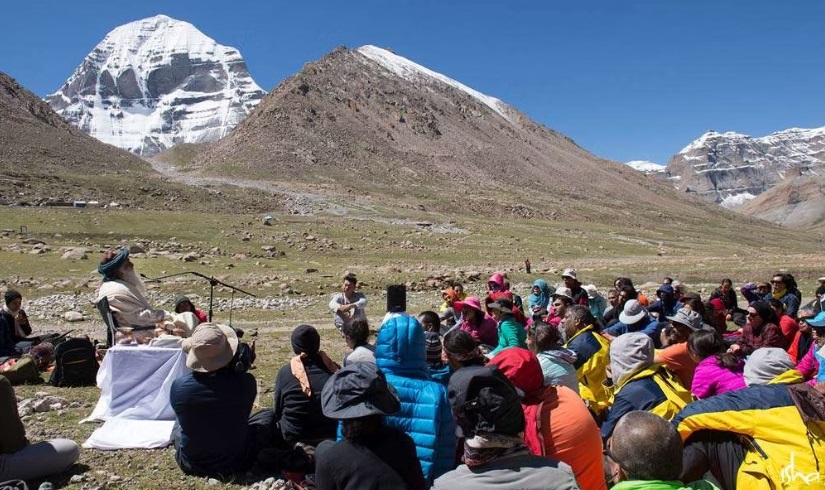
Those who attempt to climb Mount Kailash have reported feeling as if they have aged suddenly in 24 hours, experiencing a different flow of time. Nature enthusiasts and climbers say the mountain creates a kind of energy field, and time flows differently there. The feeling of aging about two weeks in 24 hours is a rather interesting characteristic of the mountain. This strange aging effect is associated with the energy of Mount Kailash. According to legends, time is believed to bend and flow differently around the mountain.
Attempts to climb Mount Kailash have often ended tragically. Many climbers have viewed this sacred mountain as a challenge, and all have failed, with many losing their lives. Among the most prominent figures were British climbers Hugh and Wilson, who seemed to have discovered an easy route to the summit, but heavy snowfall and unexpected events thwarted their plans.
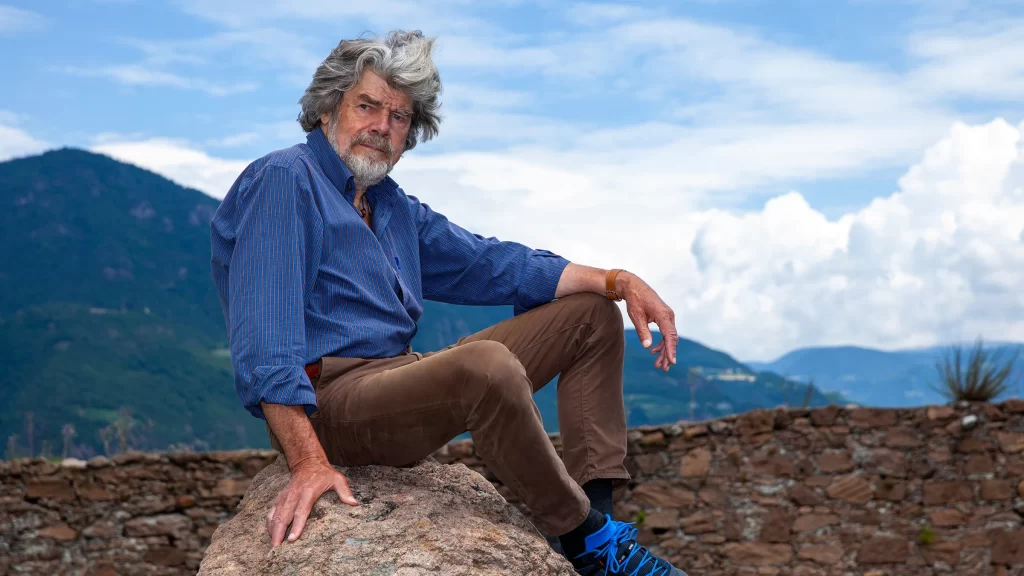
World-renowned mountaineer Reinhold Messner had already set a record by climbing 14 peaks over 26,000 feet above sea level. However, when he was offered the opportunity to climb Kailash, he refused, knowing it was impossible. Following this refusal, the Chinese government banned climbing Kailash, reinforcing the notion that it was not something ordinary people could do.
After their previous attempts to climb the mountain proved unsuccessful, four scientists decided to climb Kailash. However, they abandoned their plans following a warning from a Tibetan Lama. Surprisingly, all of these scientists died within two years.
The most interesting and frightening case is the one experienced by mountaineers from Siberia. These young climbers, while ascending Mount Kailash, suddenly realized they had aged at a certain point and were forced to turn back. Within a year, they had aged and died. This event has been recorded as terrifying evidence suggesting that time flows differently on Mount Kailash and that it holds a secret related to time travel.
A Russian mountaineer, approaching the summit, describes feeling a sense of “invincibility” and a feeling of not belonging, prompting him to turn back. These accounts paint a picture consistent with ancient texts found on Tibetan tablets that explain why mortals cannot reach the summit of Mount Kailash.

Mount Kailash and the Mysterious Distances: Facts and Claims
One of the striking claims regarding Mount Kailash is that this sacred peak is 6,666 kilometers away from Stonehenge . Stonehenge, a prehistoric megalithic structure located on Salisbury Plain in England, continues to attract the attention of archaeologists and those interested in mystical phenomena as one of the world’s most mysterious stone structures. In addition to this claim, it is also suggested that Mount Kailash is 6,666 kilometers from the North Pole and twice that distance to the South Pole, at 13,332 kilometers.
However, precise measurements offered by modern technology reveal that these distances are slightly different. In reality, the distance between Mount Kailash and Stonehenge is approximately 6917 kilometers. The distance to the North Pole is approximately 6553 kilometers, and the distance to the South Pole is approximately 13,346 kilometers. Although these measurements do not exactly match the claimed mystical distances, the difference is quite small and still shows a remarkable correlation.
The mountain’s height is another interesting detail. While its current height is known as 6638 meters, it is said to have been recorded as 6666 meters in earlier measurements. This further highlights why Mount Kailash holds such a fascinating place in the world, both physically and symbolically.
For more information on this topic , click here : “Stonehenge: The Massive Stones That Science Cannot Explain” !
The Swastika, the Symbol of the Nazis, and the Quest for Agartha
In the 1930s, the Nazi Party , which seized power in Germany , focused on the mystical lands of the East in an attempt to unravel the secrets of ancient civilizations and seize the power of a lost civilization. At the heart of this extraordinary quest was Heinrich Himmler , one of the leaders of the Nazi Party . Himmler was known for his interest in occultism and was particularly obsessed with finding the origins of the Aryan race.
On a cold winter day, a Nazi expedition led by Himmler set out toward the peaks of the Himalayas and the monasteries of Tibet. Their aim was not merely a physical exploration, but also to reach the gateway to what was legendary as Agartha —an advanced civilization said to be hidden underground. Himmler and his team believed that Tibet was not only about geographical beauty, but also about ancient wisdom and secret teachings.
This quest was an attempt by the Nazis to add a mystical dimension to their plans for world domination. According to legends, the inhabitants of Agartha possessed advanced technology and knowledge that could alter the course of human history. If they could access this knowledge, they could turn the tide of war and history in their favor.
For more information on this topic , click here: “The Mysterious Underground World of Agartha and Its Secrets” !

Another reason the expedition team focused on Mount Kailash was the geological formations on its surface that resembled a swastika . This symbol, also known as the swastika , is now known as a Nazi symbol, but it actually has a history spanning thousands of years. Considered sacred in Hinduism, Buddhism, and Jainism, the swastika was a symbol that carried positive meanings in the rituals of many ancient civilizations. These natural formations on Mount Kailash may have further increased the importance of the mountain for Himmler and his team.
Swastika, binlerce yıl boyunca farklı medeniyetlerde pozitif anlamlar taşıyan kutsal bir sembolken, tarih boyunca farklı ideolojiler tarafından çeşitli anlamlarla yüklendi. Özellikle teozofist Madam Blavatsky gibi spiritüel araştırmacılar, bu sembolün eski uygarlıkların bilgisini ve ruhsal öğretilerini temsil ettiğine inanıyordu. Blavatsky’ye göre Swastika, yeraltında saklı bir medeniyet olan Agarta gibi efsanevi krallıklarla bağlantılıydı. Ona göre bu medeniyetler, insanlığın unuttuğu ya da terk ettiği kadim bilgeliği ve gelişmiş teknolojileri barındırıyordu.

Agarta, okültistlerin gözünde yalnızca bir efsane değil, insanlık tarihinin kayıp bir halkasıydı. Bu mistik yeraltı krallığı, spiritüel aydınlanma ve üstün bilgiye sahip bir medeniyet olarak tasvir ediliyordu. Ancak bu kadim sembol, Nazi Almanyası’nda tamamen farklı bir anlam kazandı.
1920’lerin sonunda ve 1930’larda Adolf Hitler ve Nazi Partisi, Swastika’yı Aryan ırkının antik kökenlerini ve saflığını simgeleyen bir sembol olarak benimseyerek kendi ideolojilerinin bir parçası haline getirdi. Hitler, Swastika’nın Aryan ırkının üstünlüğünü ve antik bir geçmişe bağlılığını temsil ettiğine inanıyordu. Bu nedenle, Gamalı Haç’ı parti sembolü yaparak, Nazi ideolojisinin ırkçı ve militarist mesajını dünya çapında tanıtan bir araç haline getirdi.
Nazilerin bu sembolü benimsemesi, Swastika’nın kadim ve olumlu anlamlarından koparılmasına yol açtı. Bu durum, tarihin ironik bir cilvesi olarak, bir zamanlar bilgelik ve aydınlanmayı temsil eden bu sembolün, Nazi rejimiyle özdeşleşerek negatif bir imaj kazanmasına neden oldu. Bugün, Swastika‘nın kökenleri ve anlamları, onun farklı dönemlerde üstlendiği rolü anlamak için önemli bir araştırma konusu olmaya devam ediyor.
Konu ile ilgili ” Nazilerin Acımasız Diktatörü Adolf Hitler” isimli makale için TIKLAYINIZ!

Kailash Dağı ve Yecüc Mecüc Efsanesi
Kailash Dağı, sadece doğası ve konumuyla değil, aynı zamanda birçok dini ve mitolojik inanışla da dikkat çekiyor. Bu inanışlardan biri, İslam geleneğinde bahsi geçen Yecüc ve Mecüc (Gog ve Magog) kavimlerinin, kıyamet öncesi ortaya çıkacağı yerle ilişkilendiriliyor. Kur’an-ı Kerim’de Zülkarneyn’in büyük yolculuklarından birinde, Yecüc ve Mecüc isimli kaos yaratan vahşi topluluklarla karşılaştığından ve bu toplulukları engellemek için iki dağ arasına güçlü bir set inşa ettiğinden bahsedilir.
Bu setin, Yecüc ve Mecüc’ün yeryüzüne yayılmasını ve insanlık üzerinde yıkıcı bir etki yaratmasını önlemek için yapıldığı anlatılır. Ancak inanışa göre, kıyamet zamanı yaklaştığında bu set yıkılacak ve Yecüc ve Mecüc kavimleri yeryüzüne çıkarak büyük bir yıkım gerçekleştirecektir.
Kailash Dağı, Himalayaların gizemli zirvelerinden biri olarak bu efsaneyle bağdaştırılan yerlerden biridir. Bazı teoriler, Zülkarneyn’in setinin, Kailash Dağı veya bu bölgedeki başka bir yer olabileceğini öne sürer. Tıpkı Yecüc ve Mecüc’ün karşılaşıldığı efsanevi yer gibi, Kailash Dağı da iki dağın arasında yükselen görkemli bir zirvedir ve mistik hikayeleriyle bu inanışları beslemeye devam etmektedir.
Konu ile ilgili ” Zülkarneyn Aleyhisselam’ın Yeraltına Hapsettiği Yecüc ve Mecüc” isimli makale için TIKLAYINIZ!

Kailash Dağı’nın Gizemli Gölleri
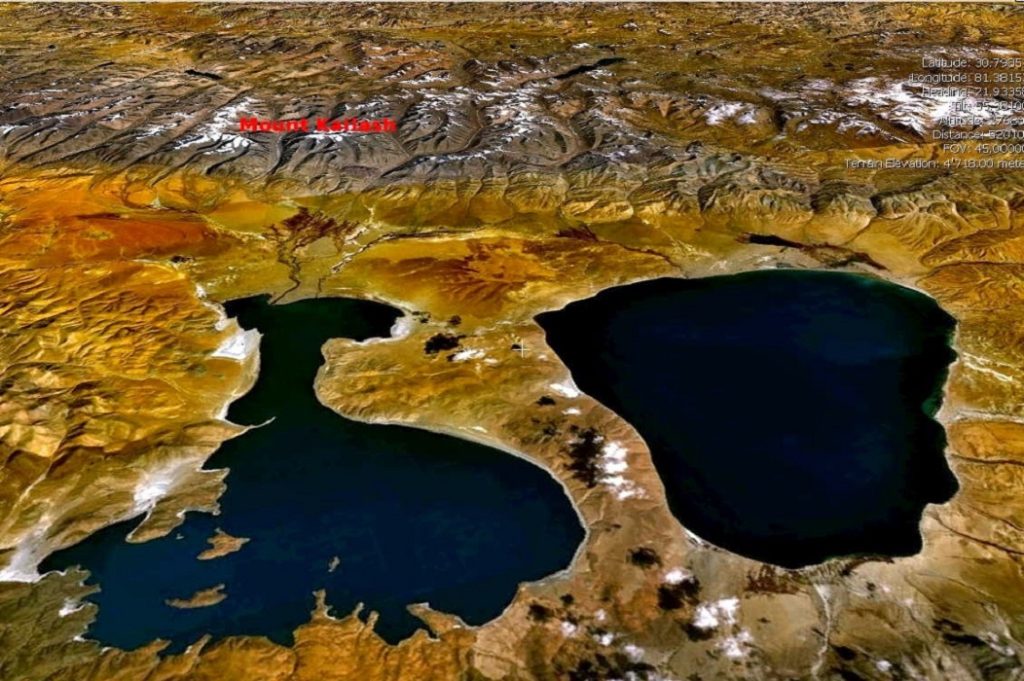
Sanskritçede “parlak kristal” anlamına gelen Kailash Dağı, mistik atmosferiyle dikkat çekerken, hemen yanı başında yer alan iki gizemli göl de ilginç hikayeleriyle bu atmosferi tamamlıyor. Manasarovar Gölü ve Rakshastal Gölü, birbirlerine oldukça yakın mesafede bulunmalarına rağmen, fiziksel ve manevi özellikleri açısından büyük farklılıklar gösteriyor.
Manasarovar Gölü, genellikle sakin ve durgun yapısıyla bilinir ve ruhani saflık, huzur ve aydınlanma sembolü olarak kabul edilir. Rakshastal Gölü ise dalgalı ve rüzgarlı yapısıyla olumsuz ve karanlık enerjilerle ilişkilendirilir.
Kailash Dağı’nın zirvesinde bulunan kar örtüsü ise yıl boyunca erimeden varlığını sürdürür. Yerel inanışlara göre, bir gün bu kar erirse, altında saklanan sırlar gün yüzüne çıkacak.
Kailash Dağı’nın gizemleri sadece bununla sınırlı değil. Bazı teorilere göre, Nuh Tufanı öncesinde dünyanın kutup noktası bu dağdaydı ve tufandan sonra dünyanın eksenindeki değişimle kutuplar yer değiştirdi. Bir diğer ilginç iddia ise Kailash’ın piramidal yapısıyla ilgili. Bazı araştırmacılar, dağın tepesinin insan yapımı bir piramit olabileceğini ve eğer bu doğruysa, Kailash’ın dünyanın en büyük piramidi olacağını öne sürüyorlar.
Konu ile ilgili ” Manasarovar ve Rakshastal Gölü: Tibet’in Kutsal Kabul Edilen Gizemli Suları” isimli makale için TIKLAYINIZ!
Kailash Dağı: Dinlere İlham Veren Mistik Zirve
Kailash Dağı, yüzyıllar boyunca insanların hem manevi dünyalarına hem de efsanelerine ilham kaynağı olmuş, mistik bir zirve olarak kabul edilmiştir. İnsanların burada yaşadığı deneyimler, gördükleri ya da inandıkları olaylar, Hinduizm ve Budizm gibi büyük dinlerin sembollerine dahi şekil vermiştir.
Hinduizm’de, Kailash, Tanrı Şiva’nın evi olarak kabul edilir. Şiva’nın meditasyon yaptığı, dans ettiği ve tüm evreni yönettiği yer olarak görülür. Bu inanç, dağa derin bir manevi önem yüklemiş ve onu kutsal bir hac noktası haline getirmiştir.
Budizm’de ise Kailash, “Cennetin Merkezi” olarak anılır. Dağ, evrenin merkezini temsil eden bir mandala olarak tasvir edilir ve Budistlerin ruhsal aydınlanma arayışlarında önemli bir simgedir.
Kailash’a yüklenen bu dini ve manevi anlamlar, insanların burada yaşadığı ya da hayal ettiği tuhaf olaylarla daha da güçlenmiştir. Efsanelere göre, dağın zirvesinde yaşayan kutsal varlıkların varlığına dair anlatılar, onu sıradan bir dağdan çok daha fazlası haline getirmiştir.
Gerçekte Kailash Dağı’nda neler yaşandığını veya yaşanmadığını bilemesek de, onun manevi ve efsanevi yönü, geçmişten günümüze kadar sayısız insanın hayal gücünü harekete geçirmiştir. Belki de bu nedenle, Kailash sadece bir dağ değil, aynı zamanda ruhani bir yolculuğun simgesi olarak görülmektedir.
Her ne kadar bu iddialar bilimsel çevreler tarafından kesin olarak kabul görmese de, Kailash Dağı’nın büyüsü ve esrarengiz yapısı, onu dünya çapında bir merak konusu yapmaya devam ediyor.

WhatsApp grubumuza katılmak için TIKLAYINIZ!