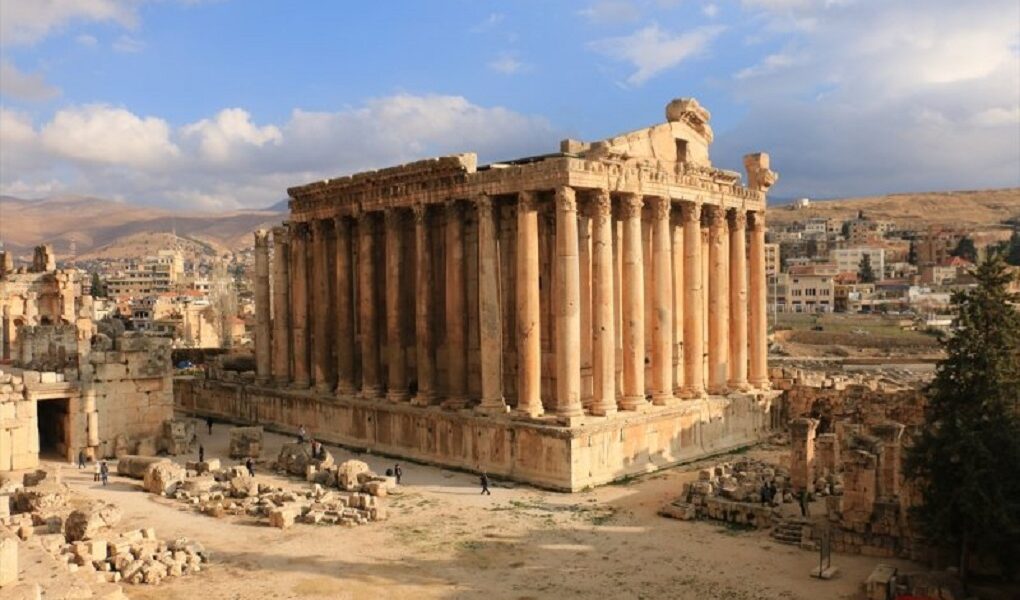
Baalbek Ancient City; It is located in the Beka valley in eastern Lebanon. The city is considered by experts to be the most magnificent temple city in the world. The city, which has hosted many civilizations, has many mysteries with its 5,000-year history. It is described as the largest, oldest and most mysterious temple city in the world. The city was first accepted as a holy place by the Phoenicians, then the Greeks, and then the Romans, and important works were built.

The city, which is one of the most important religious centers of antiquity after Rome, is located on the trade route from east to west. Located 86 kilometers east of Lebanon’s capital, Beirut, the city has changed hands many times due to wars. Every civilization added something to the city, which came under the rule of Byzantines, Seljuks, Ayyubids, Crusaders, Mongols, Mamluks and Ottomans. The ancient city was taken under protection by UNESCO in 1984.

History of Baalbek Ancient City
It is thought that the ancient city was founded between 7 thousand and 12 thousand BC. The Phoenicians named the city “Baalbek” in the name of their most powerful god, “Baal”. The Greeks, on the other hand, gave the name “Heliopolis”, that is, “the sun city”. The city, which is generally known as Baalbek, has been used as the center of many religions with its temples dedicated to different gods. According to the records of the city, which came under Ottoman rule in the 1500s, many works were destroyed, especially the Jupiter temple, which was the largest temple.

In the 1900s, during the Ottoman administration, the researches carried out by the Germans revealed a large part of the city under the ground. After the First World War, the excavations carried out by the French in the region continued. During the Israel-Lebanon war in 2006, the city was bombed and many artifacts were damaged. There are many large and small temples built for different religions in different periods in the ancient city. The most well-known of these lands are Jupiter, Bacchus and Venus.

The Unexplained Mysteries of the Ancient City of Baalbek
The Temple of Jupiter in the ancient city is one of the mysterious ancient structures. At the base of the pillars of the temple, there are huge boulders weighing 800 tons placed horizontally. The rocks around it are over 350 tons. In the quarry near the temple, there is another unused rock weighing 1000 tons. The Hajjar al-Hibla (Pregnant Woman) rock in the city was carved by hand.

It is among the subjects that cannot be explained how the rocks weighing tons of weight were used in this city, which was built thousands of years before the Roman period. These rocks are the largest cut and worked rocks in human history. Today’s science is insufficient to explain how it was possible to process and transport such huge stones in ancient times. There are some theories about the transportation of huge rocks in the city. One of them is technology that is thought to be brought to earth by extraterrestrials. But there is no data to support the theory.

At the base of the Jupiter temple are 27 rocks, each weighing hundreds of tons. At the same time, in 2014, the German Archaeological Institute found the largest hand-carved rock in the world. The rock is 19.6 meters long, 6 meters wide, 5.5 meters high and weighs 1,650 tons. It is not known why the huge rock was not completed and left where it was. It is not known exactly how the temples were built, but Sumerians is thought to be associated with Only six of the 84 huge columns, 22 meters high, of the Jupiter temple, located in the very center of the city, have survived. It has been determined that these huge rocks, which are considered to be the tallest columns in the world, were brought from Egypt.

The Bacchus temple, which has survived from the ancient period until today, is known as the Roman temple. The temple, which continues to be an inspiration for modern architects, is 18 meters long. Known as the gigantic structure of antiquity, the temple has 46 columns. Almost all of the temples and artifacts built before the Romans were destroyed. At the same time, there are labyrinths under the ancient city, some of which are used as museums.

According to researchers, after the ancient city lost its importance, tens of large stone blocks and huge columns in the city were taken to many different parts of the world. It is known that stone blocks and columns brought from Baalbek were used in the foundation of Hagia Sophia Mosque in Istanbul.


