Babylonian Empire, which has an important place in history; It is one of the civilizations established around the city of Babylon in Mesopotamia. The center of Babylon was located on the town of El Hilla in present-day Iraq. This empire arose from a Semitic community and was founded in 1894 BC. The Babylonian Empire, which existed under the Akkadians in the early days, grew and developed during the reign of Emperor Hammurabi and its capital was Babylon.
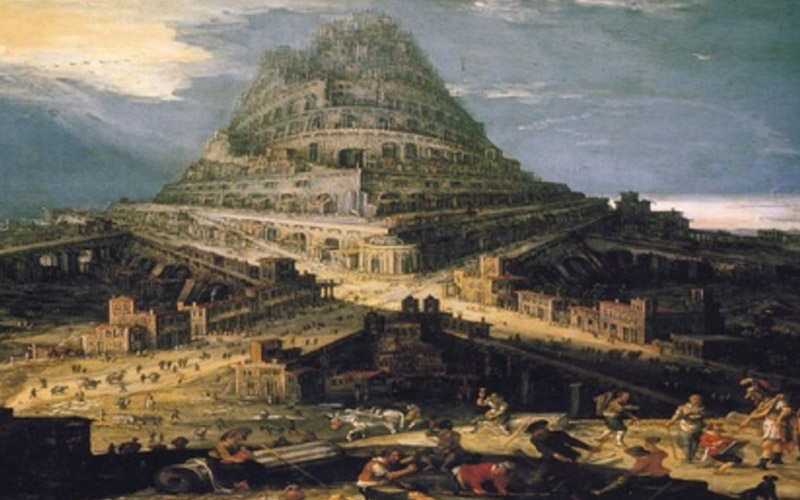
Babylon is known as the city of walled mud-brick temples and towers. It is internationally known for its hanging gardens, the Tower of Babel and the Ishtar Gate. Excavations at the Babylonian archaeological site began in the early 1800s and artifacts were sent abroad, including parts of the Ishtar Gate. UNESCO’s World Heritage Committee has registered Babylon, the giant Mesopotamian metropolis in Iraq, as a World Heritage Site.

Although Akkadian is the most widely used language in the region, Sumerian was used as the language of religion. Aramaic, on the other hand, became the main language of the region in the following years. Babylon was initially included in the Akkadian Empire as a weak city, but quickly grew and strengthened under the leadership of the Amori ruler Hammurabi, making it one of the most powerful empires in the region. After this period, Southern Mesopotamia was called Babylon and the holy city of the state became Nippur.
The state, which weakened during the reign of Hammurabi’s son, remained under the rule of Assyria, Kassite and Elam for a long time. The city was destroyed and rebuilt by the Assyrians. The Neo-Babylonian Empire, which reigned between 609-539 BC, gained its independence from the Assyrians under the leadership of Chaldean Nebupolassar. With the collapse of this state, Babylon remained under the rule of Achaemenid, Seleucid, Parthian, Roman and Sassanid.

Religion in the Babylonian Empire
The people of Babylon worshiped more than one god, and many mythological stories were told about these gods. Many of these myths originated in Sumer. An animal is presented to King Shamash on the Old Babylonian cylinder seal. Gilgamesh, the hero of the Sumerian Epic, takes place in a story about the creation of the universe and humans. According to legend, Gilgamesh embarks on a grueling journey to find the herb of immortality and encounters many difficulties. While waiting in his boat, a snake coming from the bottom of the water steals the grass he finally finds. This story contains expressions similar to the Noah Flood legend in the following centuries.
The chief god of Babylon is Marduk. According to Babylonian legends, Marduk fought the dragon Tiamat and defeated her. Marduk was considered the creator of earth, sky, and humanity, and his representative on earth was kings. Apart from Marduk, gods such as earth, water, sky, sun and moon were also worshiped. The Assyrians also worshiped largely the same gods as the Sumerians and Babylonians. Their greatest god, however, was Assyria, after whom the capital of the empire was named. The chief goddess of both the Babylonians and Assyrians was Ishtar. Ishtar was a goddess very similar to Aphrodite, the Ancient Greek goddess of love.

Writing and Science in the Babylonian Empire
Sumerian script is one of the oldest known writing systems and was used by the Sumerians. Clay tablets were preserved by firing after writing on them. Among the thousands of tablets found in archaeological excavations, some are 5000 years old. The first typefaces consisted of pictures and eventually evolved into cuneiform used by the Babylonians and Assyrians. In this text format, square symbols are used to indicate concepts. The inscriptions on the tablets were related to religion, mathematics, laws, science and other subjects.
The Babylonian Empire is a civilization famous for its work in science, mathematics, astronomy and astrology throughout history. At that time, they played an important role in determining units such as hours, minutes and seconds, and the base 60 number system used until today was also developed by the Babylonians. In addition, the Babylonians were also pioneers in the field of astrology. The concept of the 12 zodiac signs, which is still used today, was first used by the Babylonians. They discovered that solar and lunar eclipses occur regularly.

Codes of Hammurabi They have also done important studies in the field of law, such as the law, and these laws are considered to be the first written rules of law in history. The studies of the Babylonian Empire set an example for later civilizations in terms of social, cultural and scientific aspects. Therefore, the Babylon region has become a popular destination for tourists and excursions are organized by many tour companies. Many artifacts in the region are studied to better understand the Babylonian understanding of civilization.

Architecture of the Babylonian Empire
Babylon is a place where the use of adobe is more common due to the abundance of clay and the lack of stones. The Babylonian, Sumerian, and Assyrian temples were built as massive structures of raw brick, supported by buttresses and transported through a sewer system. Even a canal found at Ur was made of lead. The use of brick led to the early development of pilasters and columns, frescoes and enamel tiles.
The walls are painted in bright colors and sometimes zinc or gold plated as well as tiles. Painted terracotta cones for torches were also embedded in the plaster. In Babylon, it is seen that three-dimensional figures were more commonly used instead of reliefs. Among the earliest examples of this are the Gudea Sculptures, which, although unrealistic, do not seem cumbersome. The scarcity of the stone has made every pebble precious and has led to a high perfection in the art of gem cutting.

The hanging gardens of Babylon
The Hanging Gardens of Babylon is one of the Seven Wonders of the World and was built by the Babylonian king Nebuchadnezzar in the 7th century BC. This multi-level garden is located in the middle of the barren Mesopotamian desert and is filled with trees, running water and exotic plants. The geographer Strabo stated that the gardens consist of cubic pillars rising one above the other, these pillars are hollow inside and filled with soil so that large plants and trees can grow.
Domes, columns and terraces are made of baked brick and asphalt. In order to irrigate the upper levels of the gardens, the water is brought up by chain pumps from the Euphrates River and this water is poured down from the terraces by irrigating the gardens.
Rumor has it that Nebuchadnezzar had this building built for his homesick wife, Semiramis. Semiramis is the daughter of the Medes king, and the flat and hot environment of Mesopotamia pushed her into depression. In order to end his wife’s longing, the king built a lush garden with artificial mountains and waters. For this reason, it is sometimes referred to as the Hanging Gardens of Semiramis. For a detailed article on the Hanging Gardens of Babylon CLICK HERE.