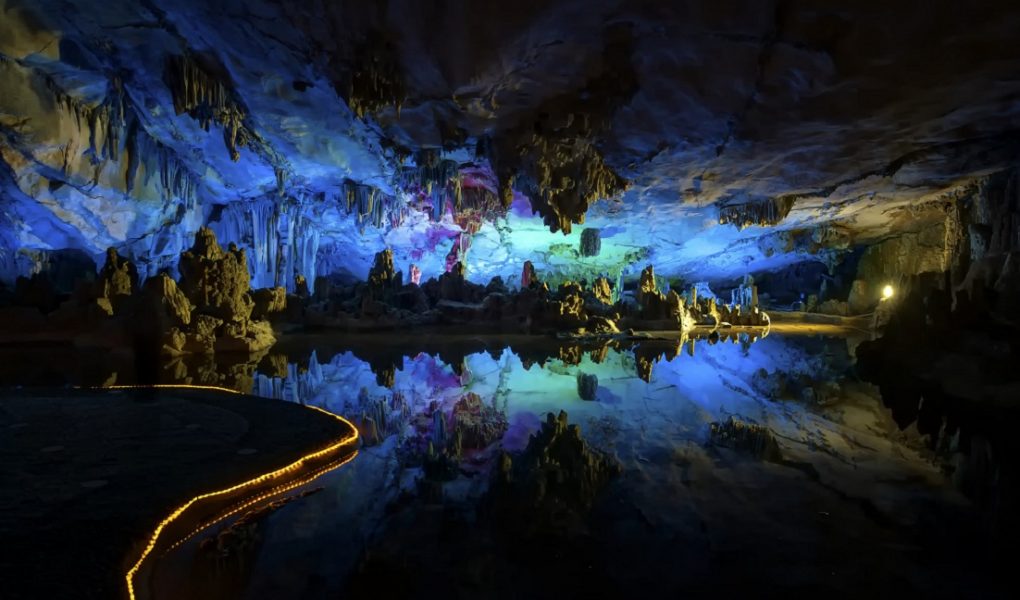
Reed Flute Cave (Reed Flute Cave) is located 6 kilometers from the city center of Guilin in northwest China. The cave, which is thought to be 180 million years old, was discovered in 1940. II. During World War II, Japanese troops found it while searching for illegal refugees. Proving once again the mystery of the underground, the cave is among the most impressive caves in the world.

Equipped with rainbow lights, the cave consists of dazzling huge natural formations. In the cave that creates a dreamlike image; moist stalagmites take on an eye-catching beauty thanks to the bright lights. The underground lake, rivers flowing through the cave, stalactites, stalagmites and stone columns make the cave more dynamic and lively.

The distinctive formations found within the cave and found nowhere else in the world have names that match their appearance. Some of these formations are likened to mythological creatures or modern structures such as the Statue of Liberty. The cave, which was opened to visitors in 1962, is flooded by visitors from many parts of the world.

The cave with a length of 250 meters; It contains nearly 70 inscriptions from the Tang Dynasty, which lived in AD 792, reminiscent of today’s graffiti. The cave takes its name from the red reeds found at the entrance and also used in flute making.

The constantly dripping water, which creates the shapes in the cave, contains calcium ions. The water dripping from above crystallizes the stalactites hanging on the top of the cave, and slowly growing stalagmites and columns form where it falls. These formations continue to grow over time.

The widest part of the cave is 93 meters wide and 18 meters high. There are remarkable stalactites called the Crystal Palace Lamp. It paints the cave with a magical color, much like the Dragon King’s Crystal Palace described in Chinese legends. It takes place in structures that are likened to shapes such as snowmen, pine trees and given these names. The part formed by dense columns is stone forest takes its name.

There are ancient calligraphies from different periods of China in the cave. There are a total of 77 inscriptions, of which 5 belong to the Tang Dynasty, 11 to the Song Dynasty, 1 to the Yuan Dynasty and 4 to the Ming Dynasty. The oldest inscription in the cave is from the 6th year of Zhenyuan in the Tang Dynasty (790, AD). There are many poetry and travelogue epitaphs written by scholars, monks and tourists.

Some inscriptions are evidence that monks visited the cave. It reflects the spread of Buddhism in the city of Guilin. Today, it has become useful material for studying how Buddhism spread in the Tang Dynasty. Researchers from all over the country state that Reed Flute Cave is a tourist attraction with a long history.