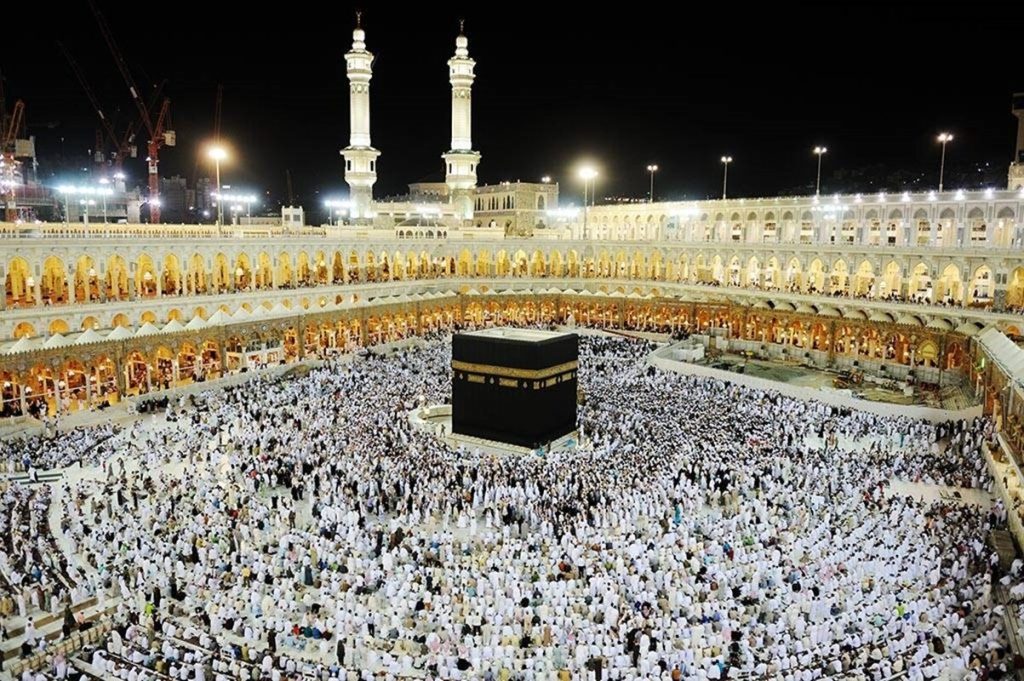
The Kaaba, located in the Masjid al-Haram in Saudi Arabia, is a building where Hajj is performed and is considered sacred for all Muslims. Hajj is one of the five pillars of Islam and is performed by circumambulating the Kaaba and entering ihram. The prayer, which is obligatory for Muslims, is performed by turning towards the Kaaba, and the Qibla is where the Kaaba is located. The Kaaba is mentioned in many suras in the Qur’an such as Baccarat and Al-i Imran. One of the reasons why the Kaaba is holy is because it was the first place of worship built in the world. It is also used for repentance and prayer and is described as a “bayt” in the Quran.
Kaaba, Hz. Ibrahim and his son Hz. It was made by Ismail by the order of Allah. The Kaaba is visited on Eid-al-Adha and eve and circumambulated 7 times during Umrah. Hz. Before Muhammad (saas) declared his prophethood, there were about 350 idols inside the Kaaba. Those who came from outside Mecca would prostrate before the idols and ask for their help. After the Battle of Uhud, the Muslims gained strength and Hz. They united under the leadership of Muhammad (saas). On January 11, 630, Mecca was conquered and our Prophet (saas) first destroyed the idols inside the Kaaba. Thus, the Kaaba again became the holy and place of worship for Muslims.
Mecca is seen as Umm al-Qura (mother of cities) in Islamic historical sources. The reason for this title is St. It is a city where the Prophet Muhammad (pbuh) was born and Islam emerged, and it was also founded in very ancient times. The conquest of Mecca is important as the birthplace of the religion of Islam. Beytullah, that is, the Kaaba, which is described as the house of Allah, is Hz. It is stated in the verses that it has been a sacred temple since Adam’s ‘alaihis-salâm’ and that pilgrimage is obligatory for those who can afford it;
“There is no doubt that the first house (shrine) established for people as a source of blessings and guidance for the worlds is in Mecca (Kaaba).
”There are signs to take a lesson from there; at the same time, St. Ibrahim’s office (it is there). Whoever enters there will be a safe person in the shadow of God. It is Allah’s right (obligatory) over people to make pilgrimage to “Baytullah” (for the sake of Allah) for those who can afford it. And those who disbelieve should know that Allah is independent of all the worlds.” (Âl-i İmrân, 96-97)
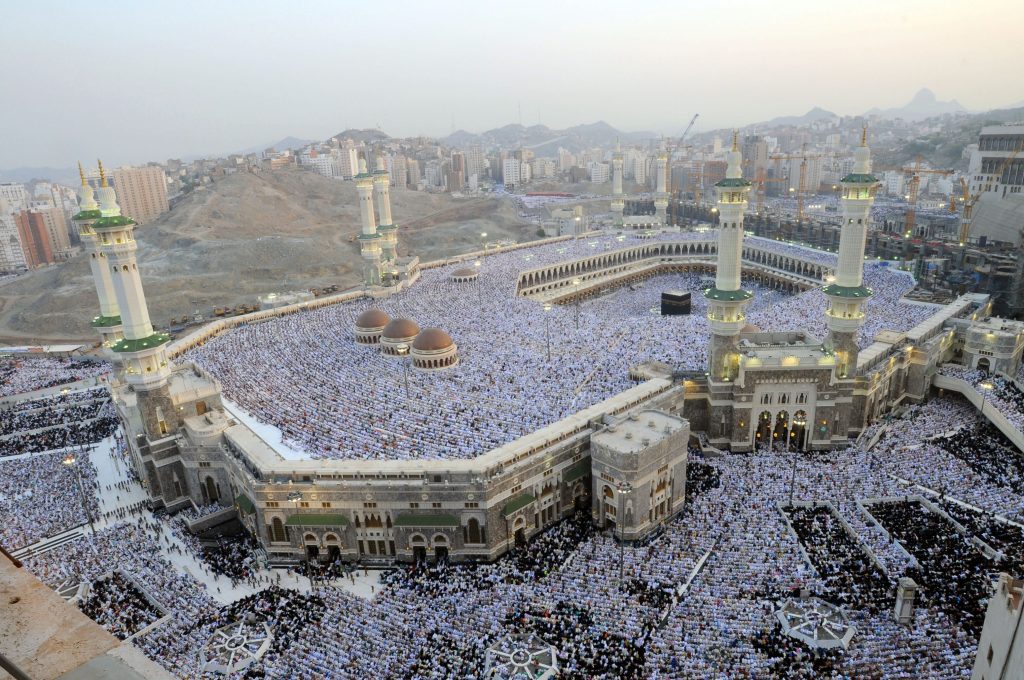
The Construction and History of the Kaaba
According to rumors about the construction of the Kaaba, Hz. Adam and Hz. When Eve is expelled from heaven, they meet at Arafat on earth and walk west together. They come to the place where the Kaaba is located. In the meantime, Adam wants to worship his Lord as a thanks for this meeting and prays that the pillar of light, which he worshiped while in Paradise, will be given to him again by circumambulating around him. That column of light manifests itself there and Hz. Adam worships Allah by circumambulating around him.
This column of light, Hz. It disappeared during the time of Şît ‘alaihis-salâm’ and a black stone remained in its place. Instead, Hazrat Shit built a stone building with four corners and placed the black stone in one corner of the building. Today this black stone is known as Hacer-i Esved. Hz. In Noah’s flood, this building remained hidden under the sand for a long time. Hz. By the order of Allah, Ibrahim goes to the place where the Kaaba is located, his son Hz. He settled there with Ismail and his mother. Hz. Together with Ismail, he digs the place where the Kaaba is located by the order of Allah and Hz. He finds the foundations of the building made by Şît. The Kaaba, which exists today, is built on these foundations.
The Kaaba has been repaired or rebuilt about 11 times. The first repair was done by angels, the second by Adam, the third by Şit, the fourth by Hz. It was made by Ibrahim (alaihis-salâm). The fifth repair was done by Amalika tribe, the sixth by the Jurhumids, the seventh by Qusay, the eighth by Quraysh, the ninth by Abdullah bin Zübeyr, the tenth by Hajjâc-ı Zalim, and the eleventh by the Ottoman Sultan IV. It was built by Murad Han.
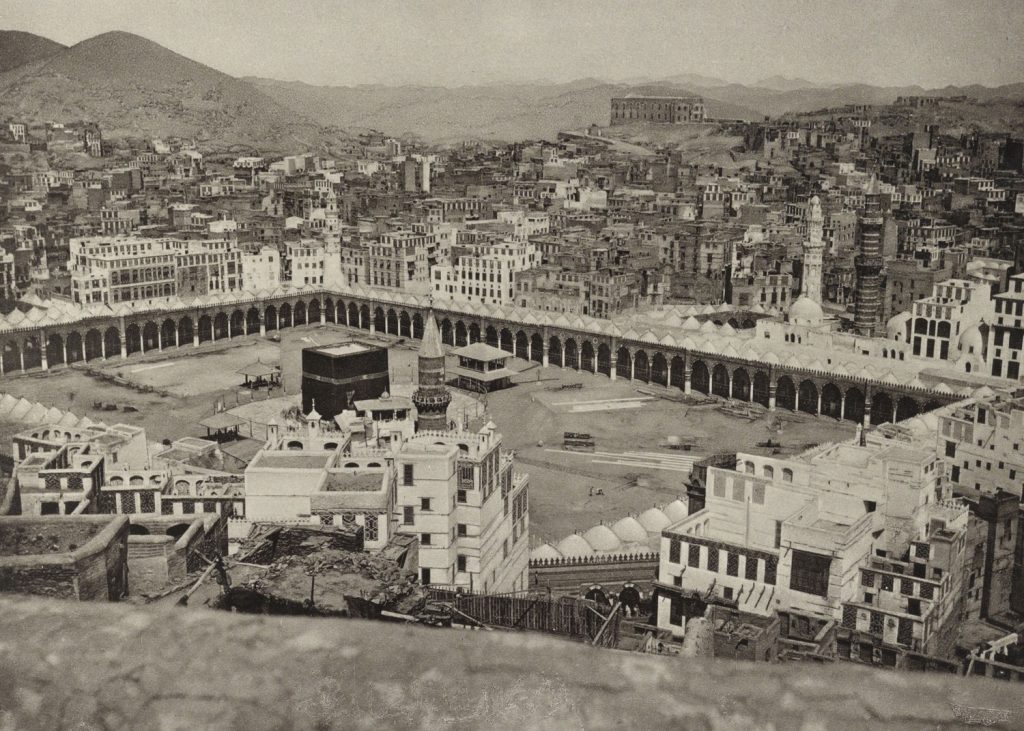
Sections and Features of the Kaaba
The Kaaba was built on foundations about 1.5 meters wide. Basalt stones obtained from the vicinity of Mecca were used and there are 1614 stones in the building. The important sections in the Kaaba are as follows;
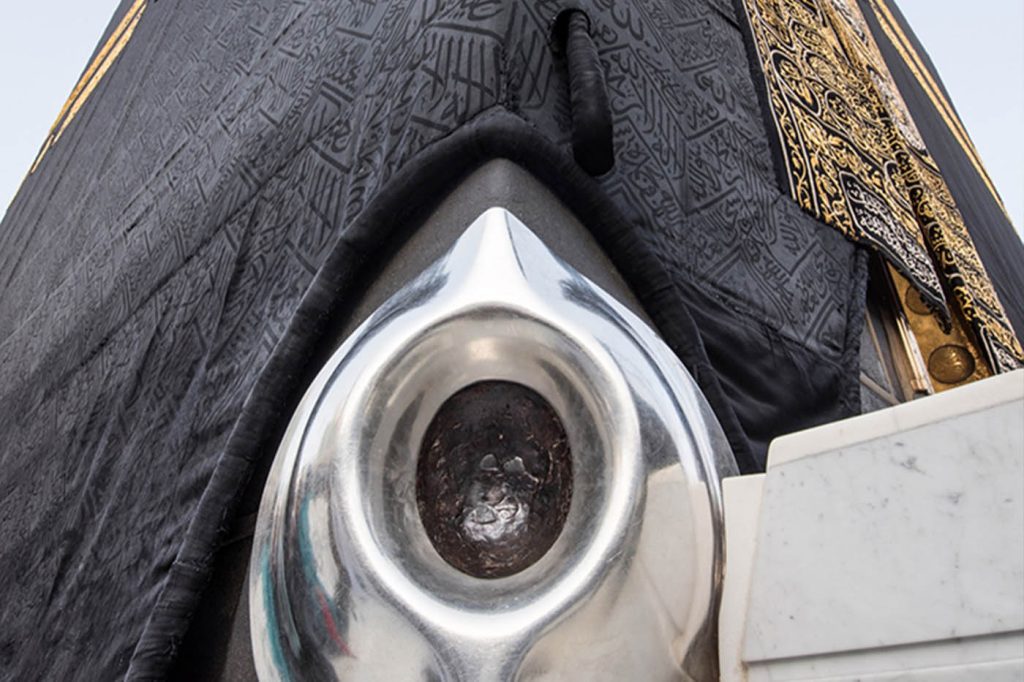
Hacer-i Esved
In the eastern corner of the Kaaba, at a height of 1.1 meters from the ground, there is “Hacer-i Esved” in a silver enclosure. This stone marks the beginning and the end of circumambulation. According to the legend, Hz. This stone, which was placed in a corner of the Kaaba by Abraham as a sign for the beginning of circumambulation, came from heaven. Hacer-i Esved means “black stone”. But the stone, which was whiter when it came out of heaven at the beginning, darkened over time due to the sins of people.
According to the legend; Our Prophet (saas) entered the Masjid al-Haram and reached the pillar of Hajar-i Eswad and invaded it. Meanwhile, her eyes filled with tears. He kissed Hacer-i Esved, put his hands on it, and rubbed it on his face. “My God! By believing in you, confirming your book, following the sunnah of your prophets (I start).” He started circumambulating from the corner of Hacer-i Esved. (Heysemi, III, 240)
Hacer-i Esved is greeted and kissed respectfully by those who come to the Kaaba. This stone is a blessed place to pledge allegiance to Allah and to promise to serve and obey Him. To greet is also to promise to withdraw from sensual inclinations and demonic inclinations. In addition, Hacer-i Esved is a means to determine the beginning and end of circumambulation. Almost every stone of the Kaaba has changed until today, but Hacer-i Esved has survived until today. This stone was kissed and touched by our Prophet (saas) and many blessed people. For this reason, the lofty state of Hacer-i Esved created a completely different effect and love in the hearts of Muslims.
The Corners and Names of the Kaaba
The eastern corner of the Kaaba is called Rükn-i Hacer-i Esved or Rükn-i Şarkî, the northern corner is called Rükn-i Irâkî, the western corner is called Rükn-i Şâmi and the southern corner is called Rükn-i Yemani.
Altinoluk
The trough (Mîzab-ı Kaaba) where the rain waters falling on the Kaaba flows is known as the “Golden Groove”.
Hatim and Hijr-i Ismail
The place opposite the northwest wall of the Kaaba (between Rukn-i Irâkî and Rukn-i Shami) is known as the area surrounded by a semicircular wall 1.32 meters high and 1.55 meters thick. The first 3 meters of this area from the Kaaba is called “Hatim”. This part was included in the Kaaba building, which was built by Hazrat Ibrahim. When the Kaaba was repaired by the Quraysh, this part was left out because the material was insufficient. The remaining 5.46 meters is called Hijr-i Kaaba, Hijr-i Ismail or Memoir. Hz. Abraham, St. Hacer made a canopy of erak tree for our mother and her son İsmail. Hz. It is rumored that Hacer and her son İsmail were buried in the Hijr region. It has been deemed obligatory to perform the tawaf outside of Hijr.
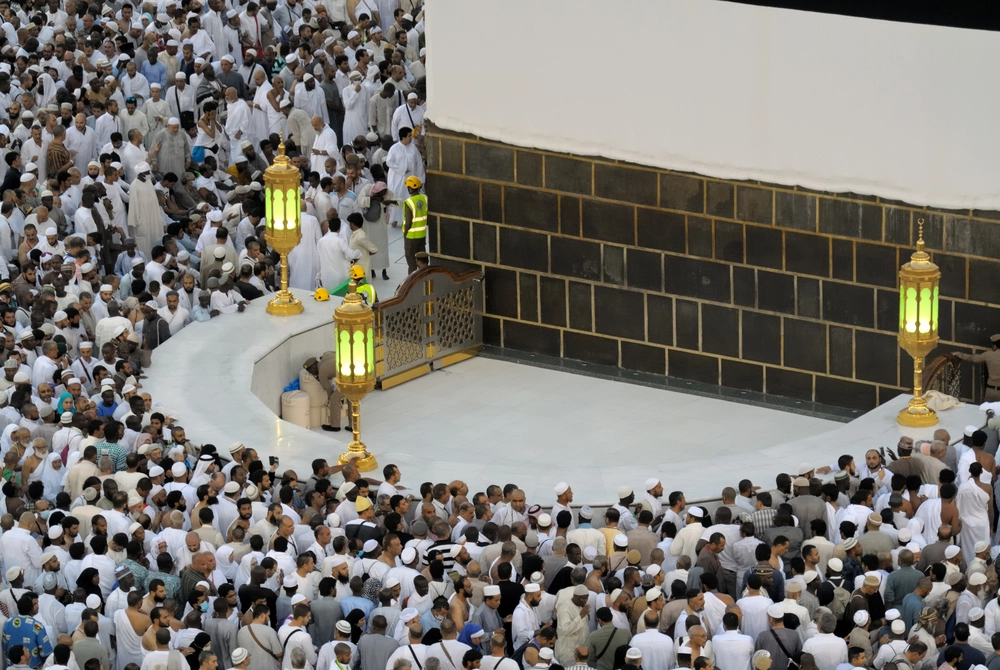
Kaaba Gate and Multazem
The door of the Kaaba is located at a height of 2.25 meters from the ground in the northeast of the building. The area between this gate and Hacer-i Esved is called “Mültezem”. The Prophet stood in Multazem, put his face, arms and palms on the wall of the Kaaba, and prayed by spreading his arms and hands. In a hadith; “The distance between Hacer-i Esved and Maqam-i İbrahim is Mültezem. Patients who pray here find healing. he ordered. If you go to this area and pray, you will find healing from diseases.
Height of Kaaba
The height of the Kaaba is 14 meters. The length of the Mültezem side is 12.84 meters, the length of the Hatîm side is 11.28 meters, the distance between Hatim and Rukn-i Yemani is 12.11 meters, and the distance between Rukn-i Yemani and Hacer-i Esved is 11.52 meters.
Inside the Kaaba
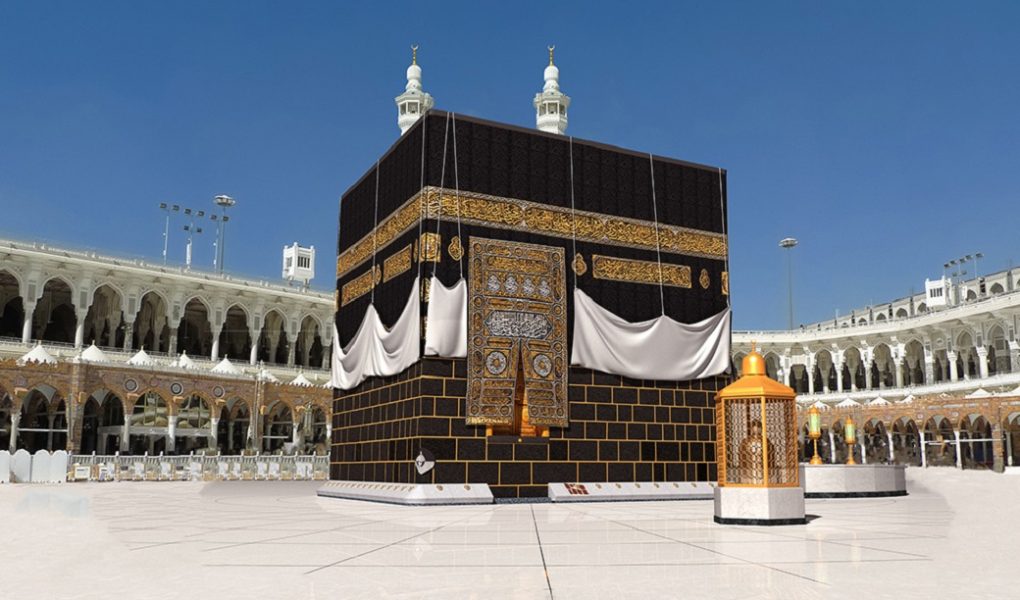
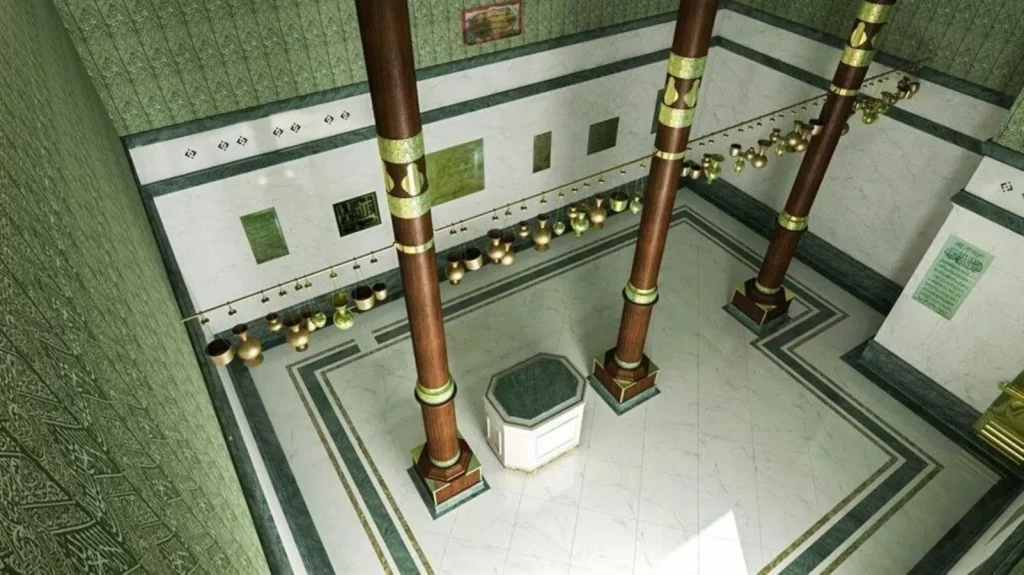
Inside the Kaaba, there are three pillars holding the ceiling. These pillars are lined up from the south wall in the middle towards Hatim. When you enter through the door, there is a staircase to the ceiling on the right. At the entrance of the stairs, there is a door called the “Door of Repentance”. The inner walls and ceiling of the Kaaba are covered with a green cloth made of silk.
Shazirvan
An area made of marble adjacent to the floor of the walls of the Kaaba is called “Shazirvan”. This area is located right next to the other three walls, except for the wall between Rukni Iraki and Rukni Shami. There are brass rings on the Şazirvan to connect the cover of the Kaaba from below. The cover of the Kaaba is attached to these rings.
Cover of the Kaaba
The first cover of the Kaaba. It is reported that it was covered by Ismail. In the history of Islam, the covering of the Kaaba was made by a great ruler, caliph or governor of Mecca. The cover of the Kaaba consists of two parts, inner and outer. In the period when the Ottomans seized the caliphate in 1517, its inner cover was woven in Egypt and its outer cover was woven in Istanbul. Sultan III. During the reign of Ahmed, both inner and outer cover fabrics began to be woven in Istanbul. The cover, which was sent lastly by the Ottoman state in 1916, could not be sent due to the Sheriff Hussein movement. Today, it is made in a private factory located in Mecca.
Maqam of Ibrahim
Maqam-i Ibrahim, during the construction of the Kaaba Hz. It is known as a stone used by the Prophet Abraham. This stone, during the construction of the Kaaba Hz. It was used by İbrahim and climbed on top of the building to control its height. In addition, stones were carried by Ismail ‘alaihis-salam and Gabriel ‘alaihis-salam’ and Hz. It is known as the place where the walls of the bayt were erected by Ibrahim ‘alaihis-salâm’. On the authority of Ibrahim, Hz. The marble stone with the footprint of Abraham served as an elevator during the construction of the Kaaba.
The following is stated in the verse:
“Once upon a time, Abraham, together with Ishmael, was raising the foundations of Baytullah, (they were saying:) “Our Lord! Accept this from us; Surely, You are the Hearing, the Knowing.” (al-Baqara, 127)
Safa and Marwa Hills
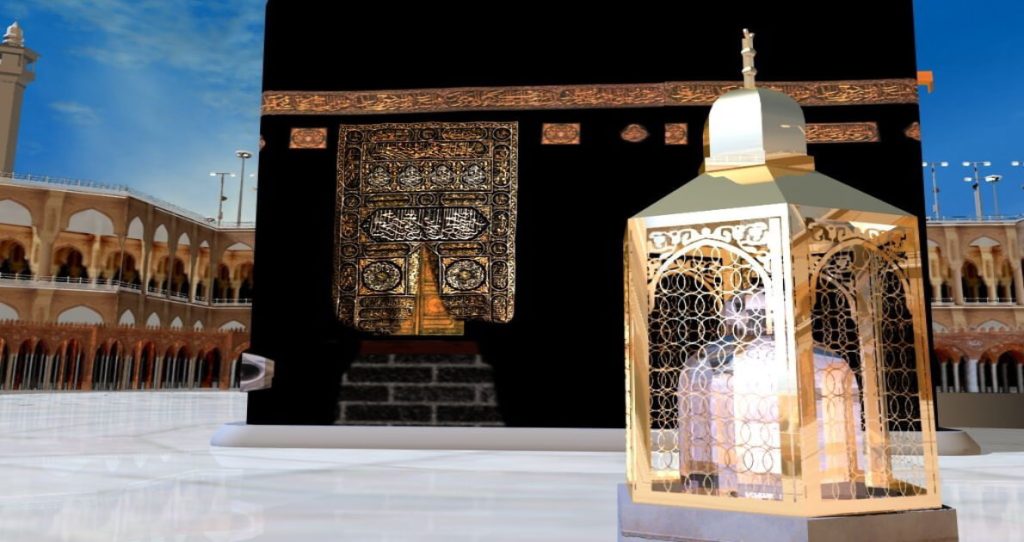
Safa and Marwa Hills, at the point where today’s Zamzam Well is located, Hz. Ismail’s mother, Hz. These are the two blessed hills that Hacer goes back and forth to find water in a hurry and excitement. These hills are used to perform sa’y, which is a part of Hajj. Sa’y is done by going back and forth between Safâ and Marwa Hills. This commute aims to take refuge in Allah in helplessness and awe.
Allah Almighty expresses the importance of these two hills as follows: “Surely, Safa and Marwa are among the signs of Allah.” (al-Baqara, 158)
Zamzam Water and Well
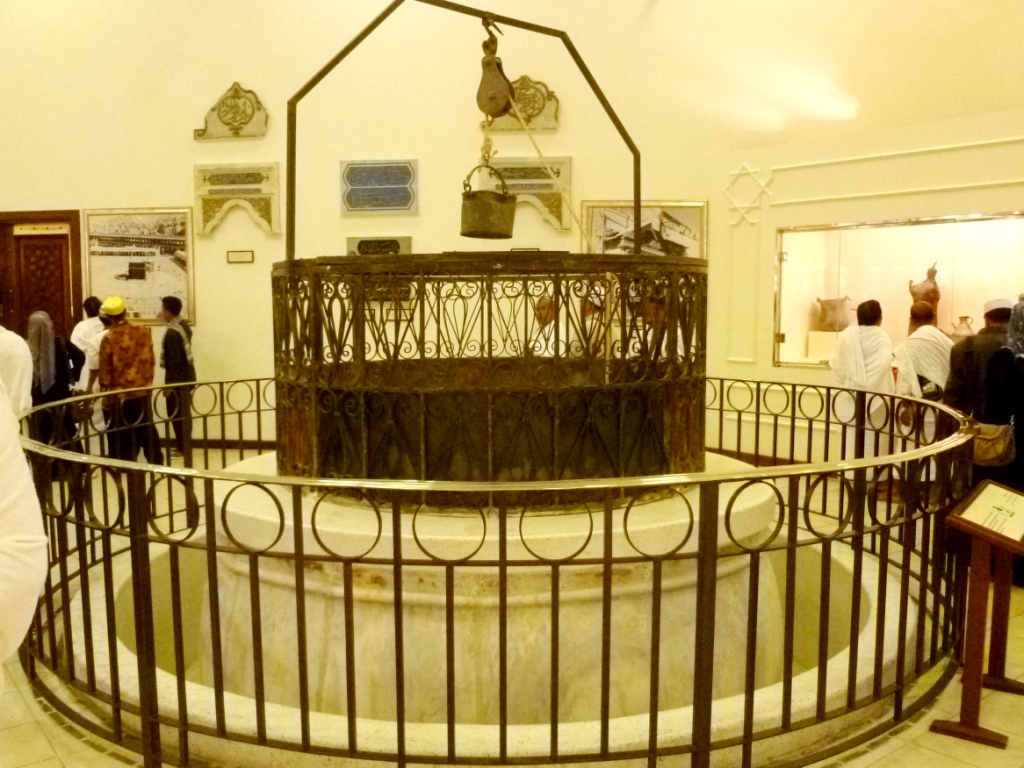
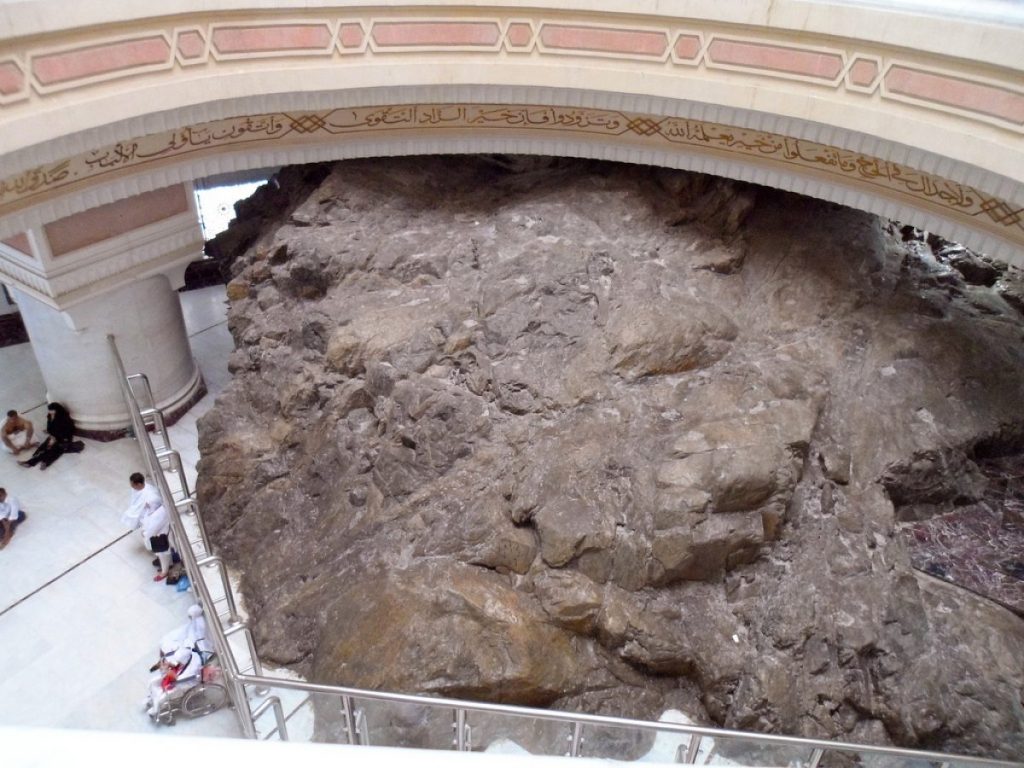
Zamzam, the Prophet of Allah. Hagar and her son Hz. It is the name of the blessed water bestowed on Ismail. Hz. With the revelation he received from Allah, İbrahim leaves his wife Hacer and his son İsmail, who is still breastfeeding, to the present place of Zamzam. Since the Kaaba has not yet been built and the city of Mecca has not been established, there is no one living there. Hz. When Ismail’s mother, Hacer, ran out of water and was in a difficult situation, she ran between Safa and Merve hills in the hope of finding water, she returned with the fear that something would happen to her baby, and thus went back and forth seven times. Allah Almighty removed his helplessness and distress by removing Zamzam.
Zamzam water is not only consumed during the pilgrimage, but is also used for many purposes such as cleaning, making wudu, curing diseases, obtaining sustenance and praying. Zamzam water has an important place especially during the pilgrimage and carries a special meaning. About Zamzam, our Prophet (saas); “Zamzam is beneficial for whatever purpose it is drunk” (Ibn Majah, Menasik, 78) is reported to have said. Its healing properties are described in various narrations. After migrating to Madinah, Hz. It is also reported that the Prophet brought Zamzam water from Mecca.