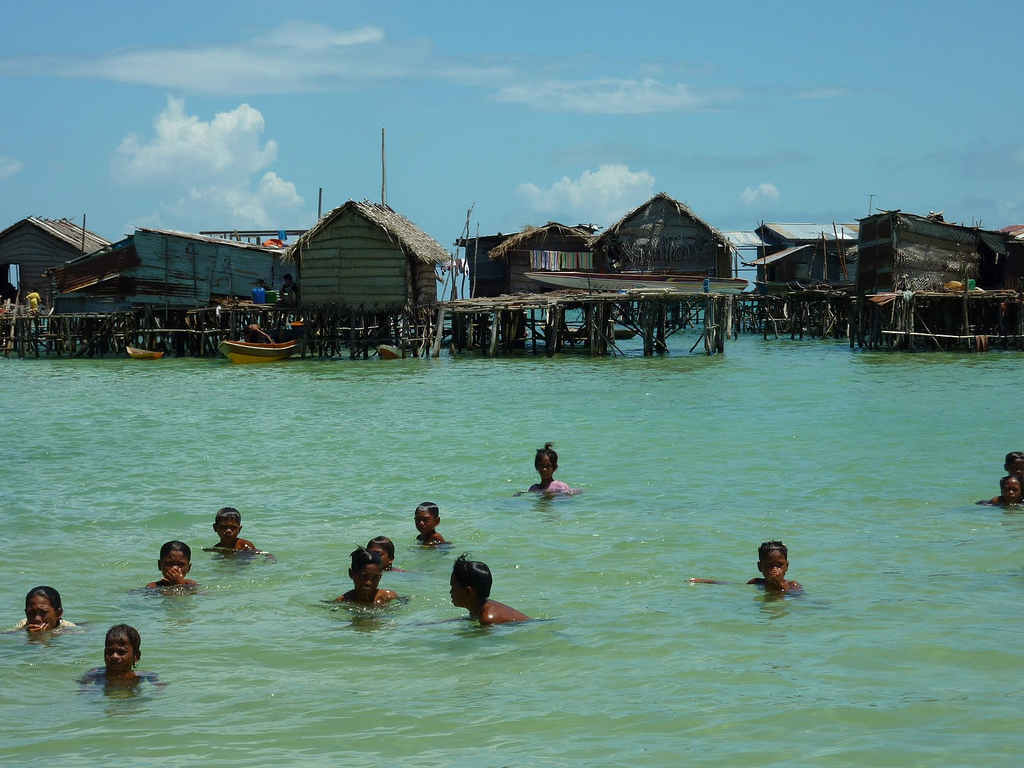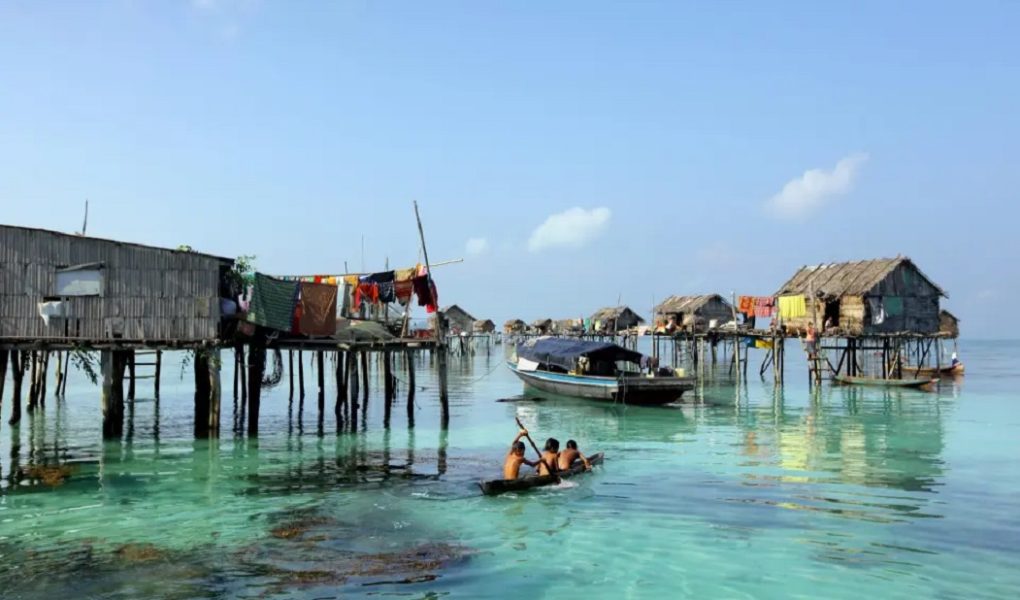
Bajau tribe; They are a nomadic people living at sea in the Philippines, Malaysia, Brunei, and Sarawak. Bajau have powerful abilities that can stay underwater more than normal humans. For this reason, an adult Bajau can spend half the day in the water, excluding sleep time. This aquatic tribe, unlike normal humans, has undergone genetic adaptation and has become more suitable for living in water. A Bajau member can stay underwater for up to 13 minutes at a depth of 60 meters. The tribe settled in the Sulu Archipelago region, but due to disagreements they also migrated to Malaysia. The Bajau tribe on the Malaysian island of Borneo are also known as the “Sea Gypsies” because of their sea life. However, they are not nomadic like gypsies.
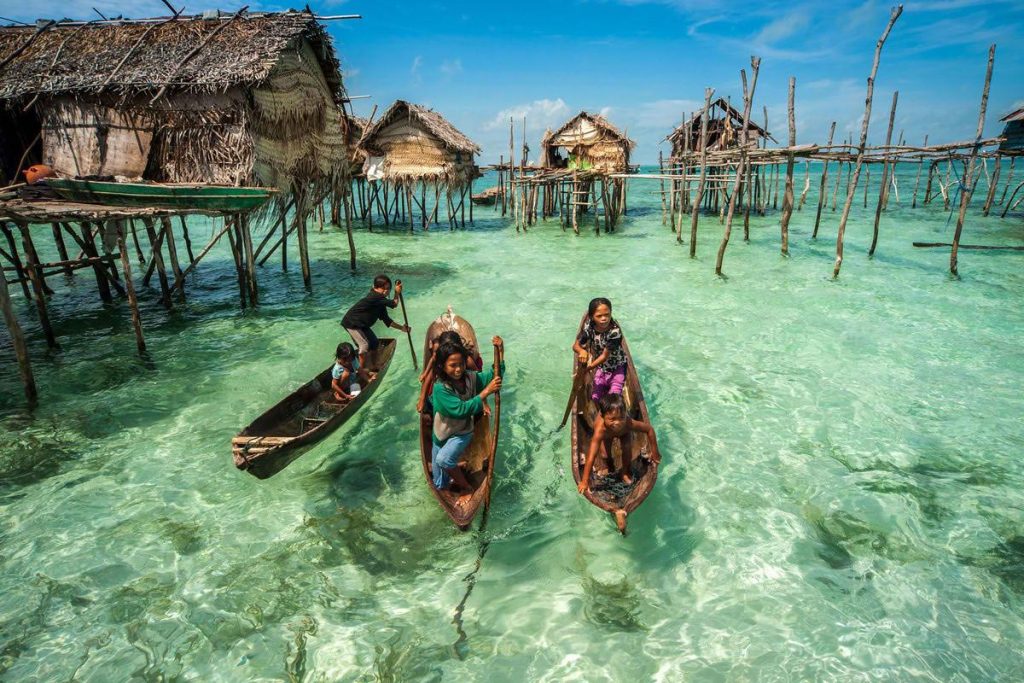
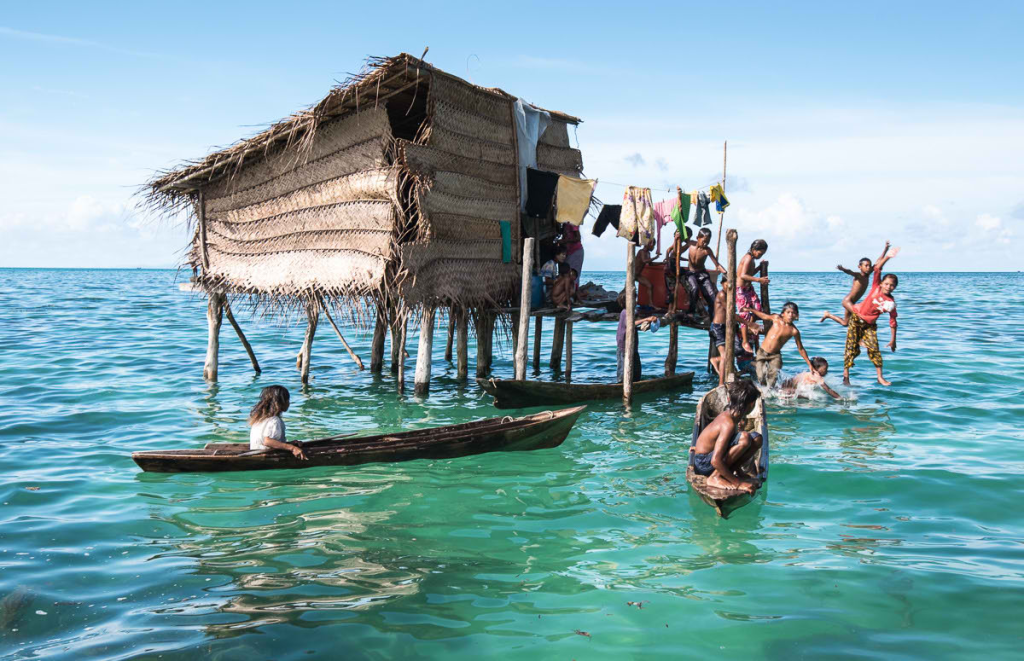
The houses they live in are floating houses and their livelihood is from fishing. Bajau shop in boats and live in the water. The tribe lives in barracks and thin boats called “lepa-lepa”. They spend their entire lives in these barracks and boats. They learn to dive and hunt at a very young age due to their livelihood by fishing. However, not all tribesmen dive regularly. Especially women who are interested in houseboats only go into the water for bathing and other necessary occasions. But even women can stay underwater for more than 5 minutes. This ability can be explained by the fact that they have developed physiological adaptations to stay in the water longer. At the same time, thanks to the time they have spent in the water over the years, it is also effective that they have developed the skills of breathing control while diving, walking underwater and staying in the water for a long time.
Interesting Features of the Bajau Tribe
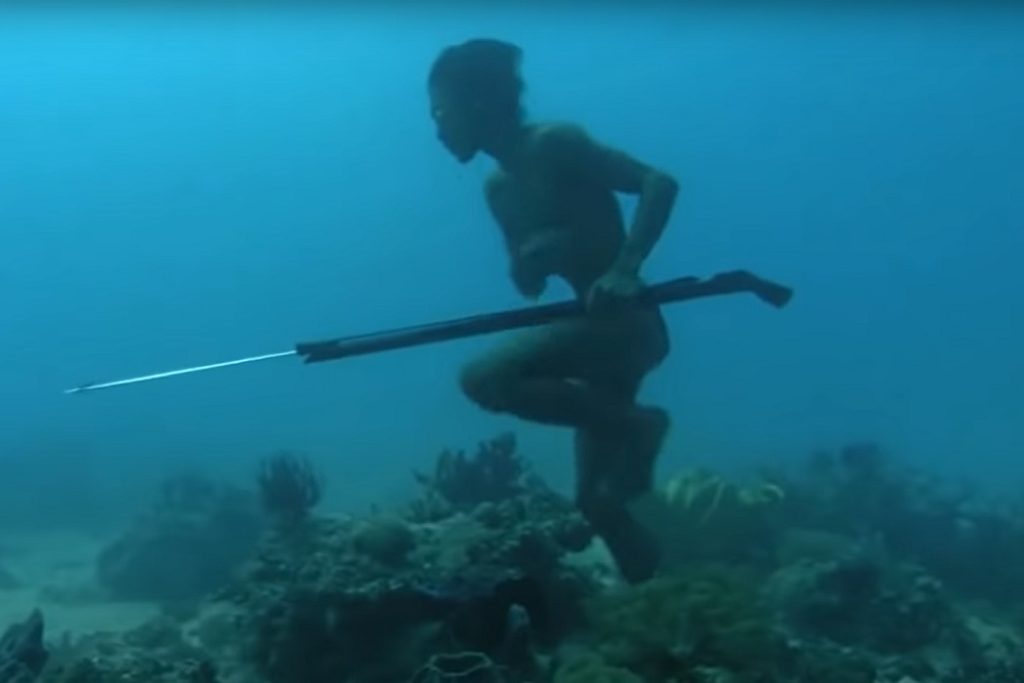
Bajau spend most of their days in the water, and the sea has completely become a part of their lifestyle. The tribe, which has maintained the same lifestyle for centuries, spends most of its time following the tides and making calculations. The fishing tribe catches enough to fill their stomachs. They usually hunt with spearguns instead of using fishing lines and nets. They are so comfortable underwater that they look like they are breathing above water. They can go for meters with their glasses carved from wood and placed in front of them. They do not swim at the bottom of the water, they move on foot. The buoyancy of the water seems not to apply to them.
Sulbin, a tribal member known for a documentary produced by the BBC; “I feel comfortable at home underwater,” he says. This style of living is not unique to Sulbin, but every member of the tribe has the same characteristics. The concept of time is unimportant to them. They don’t even know how old they are. They don’t have literacy skills either, but they live happily ever after. Even under primitive conditions, they live as if they had found Heaven on earth. Their only connection to civilization is to go to the city miles away for the engines of their small boats and get gas. Even though their life is like this, they have nothing to worry about the future.
The Bajau tribe did not meet and do not know most of the diseases. Build their homes on coral reefs and feed on the fish they catch, Bajau amazes observers with their anomalous life. The tribe, without nationalities or lands, lives in their own makeshift houses and rafts. Families come ashore just to shop and bury their dead. Families of 5-10 people live in the barracks, there is no electricity. Each family has at least 4 children. Children learn to swim and use boats at a very young age, and when they reach the age of eight, they start fishing.
Genetic Adaptation of Bajaus to Water
In normal life, a reflex appears in the body when suddenly jumping into cold water or taking a cold shower. In this reflex, the heart rate drops suddenly, the veins in the arms and legs narrow, and oxygen-rich blood continues to flow to the brain. The management of this reflex takes place in the spleen. It has been observed by researchers that the Bajau have a 50 percent larger spleen than the average tribesman who lives on land. Even in the members who have never dived, the situation is the same, suggesting that the diving adaptation is genetic.

The researchers analyzed the DNA samples of the Bajau and it was determined that the Bajau had a different variant. This gene is thought to be responsible for the secretion of thyroid hormone, which is necessary for the growth of the spleen. These studies show that Bajaus are genetically adapted to naturally respond to their high oxygen demand. This is also an important discovery in terms of understanding the body’s responses of the Bajaus to anaerobic deprivation. Especially in Bajau, heart, lung and circulatory problems, which are normally seen in the absence of oxygen, are not seen. The tribe, which has been living on water for centuries, has adapted by becoming suitable for living in water.