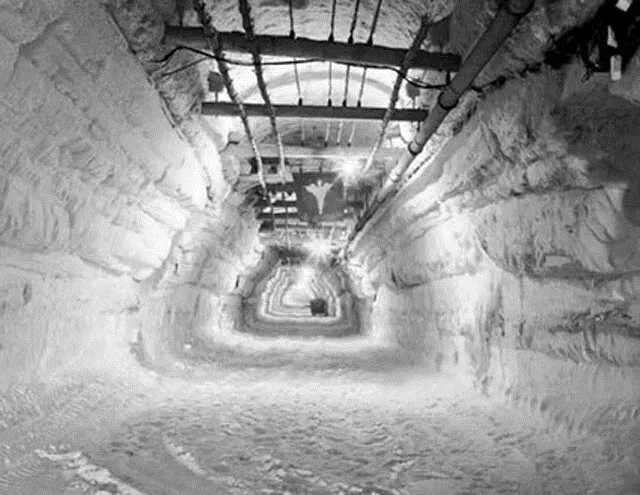
Camp Century; It is a secret ice city built under the Greenland glacier and operated from 1959 to 1967. When it was built, the USA promoted this city as a military outpost and scientific research base. However, the main purpose of the city; It is used as a preparation camp for the “Iceworm Project”, designed to create an extensive nuclear missile launch network. This fact was revealed by documents that were declassified in 1996. Necessary permits were not obtained from the Danish government and the missiles were never used. However, after the city was abandoned, hazardous waste remained under ice and poses an environmental threat due to climate change.
In 1959, the US military began searching for a site to establish a subglacial military base in Greenland. Engineers found their desired location about 240 kilometers east of the US military base in Thule and soon began construction of the subglacial system. Using special ice grinders, an eight-metre tunnel and chambers were created underground. The subglacial town was completed in 1960 with the name “Camp Century”. The city was presented to the public by the US military as “a symbol of man’s relentless struggle to conquer nature.” However, the maintenance of the camp became difficult over time and it was closed in 1963.
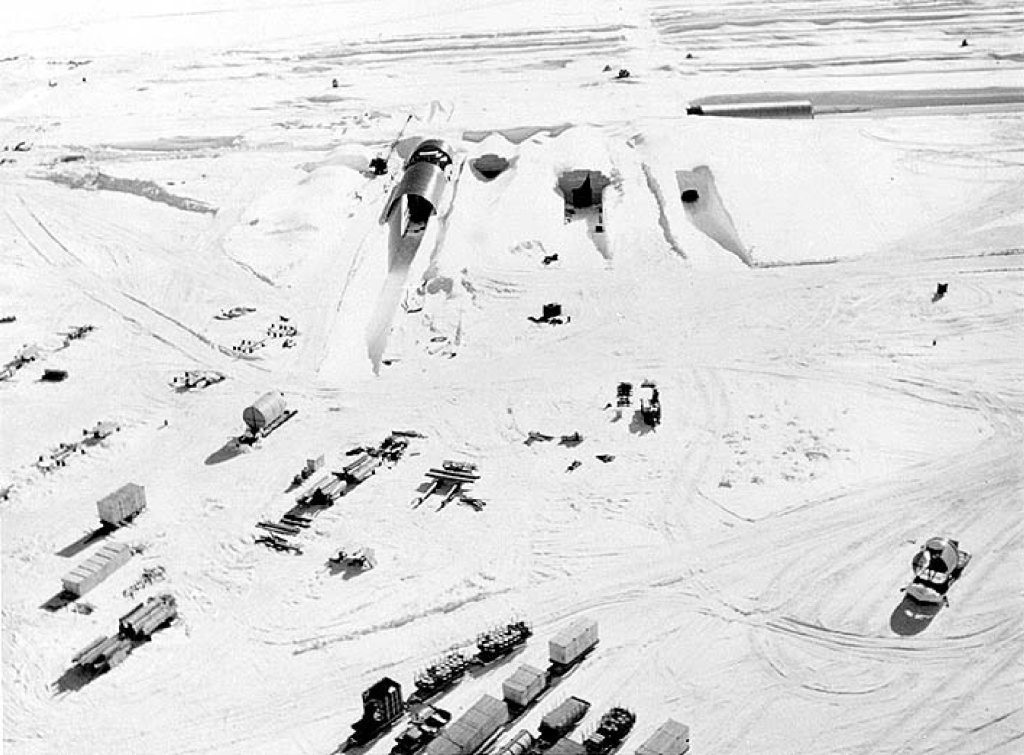
The USA announced the project, called Camp Century, to the audience with a documentary. However, it was not disclosed that the city was the first step in a secret project, the Iceworm project. In fact, the project included an area of approximately 135,000 km², where approximately 11,000 soldiers could be deployed. It was also planned to store 600 ballistic missiles that could hit enemies during the Cold War. The camp, which has 21 tunnels with a total length of 3.0 km, was powered by a nuclear reactor. However, Project Iceworm was canceled as it became clear that the ice sheet was not as robust as expected and the missile basic concept could not be applied. The reactor was removed and Camp Century was later abandoned.
The Construction and Features of Camp Century
The area favored as a strategic location was approximately 240 kilometers from the US Air Force Base in Thule, Denmark. Therefore, the engineers had to transport equipment weighing 6 thousand tons there. Wagons pulled by extra-wide crawler tractors; It carried building materials, prefabricated houses, wood and food. It took almost seventy hours to transport these materials. Construction of Camp Century began on June 14, 1959, and Swiss industrial snow blowers were used in its construction. With the help of these bellows, trenches deeper than eight meters could be dug. These ditches were covered with a kind of steel coating, then covered with snow, which when frozen formed a solid roof.

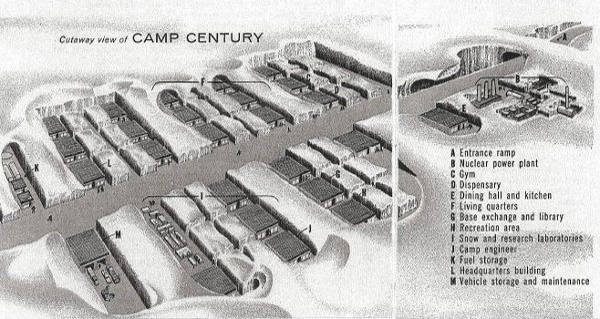
Living quarters, a research laboratory, a bookstore, a recreation room, a cold room where they store food for months, and a small chapel (temple) that is converted into a cinema in the evenings were built in the city. Everything was powered by a portable mini nuclear power plant imported from New York and assembled on site. The water source came directly from the arctic hill, about 36 meters deep. Finally, in October 1960, the construction of Camp Century was completed. Built with prefabricated houses with hot water and electricity, the city under the ice was home to some 200 soldiers. As a result, the Americans had an advanced stronghold in a strategic position against an enemy such as the Soviet Union.
However, the maintenance of the area quickly became complex and troublesome. To prevent the area from collapsing, the soldiers had to remove 40 tons of snow from the base each week and clear 120 tons of the surface every month. As a result, Project Iceworm was getting more and more troublesome. The Americans finally shut down the nuclear power plant in 1963, and Camp Century was abandoned four years later.
Remaining Dangers of Camp Century
Decommissioned in 1967, Camp Century’s infrastructure and waste were abandoned on the assumption that they would be buried forever by continuous snowfall. However, a 2016 study revealed that nuclear waste, diesel fuel, PCB and untreated sewage from the camp could be released into the environment in harmful quantities if melting ice due to changing weather conditions occurs in the near future. These studies also predicted that in the surface mass balance of melting ice, the transition from net deposition to net erosion could occur within the next 75 years, and buried wastes could be displaced within 88 years.
The Denmark and Greenland Geological Survey maintains a climate monitoring presence at Camp Century with the Camp Century Climate Monitoring Program since 2017. This monitoring presence includes measurement of climate variables, snow and ice temperatures, and ice penetrating radar surveys of underground debris and pollutant area.

According to data from 2016, the waste from the “Camp Century” camp was buried at a depth of about 36 meters. However, there are differences between climate models. A Norwegian climate model predicts that increased snowfall can prevent increased melting and therefore the likelihood of waste being buried deeper, while a Canadian model predicts solid waste will melt to a depth of 67 meters in 2090.
Under these scenarios, highly diluted pollutants in melt water could eventually be released onto the shore 250 km away. However, since the rate of melting is so slow, it is thought to happen in the 22nd century or later. An assessment in 2021 shows that meltwater will never reach the bottom and only penetrate to a depth of 1.1 metres. This indicates that before the year 2100, the waste is unlikely to move. This assessment uses climate models adjusted with actual weather measurements. However, there is no certainty about the rate of melting, as there may be differences between current assessments of climate change at Camp Century.