
Most airlines do not prefer to fly over the Pacific Ocean. Although there are some exceptions, there are several obvious and interesting geographical reasons for this decision. Many commercial airlines operating between East Asia and the Americas do not use this route due to the potential dangers and difficulties of crossing the Pacific Ocean.
Overland Routes Are Preferred Because They Save Distance
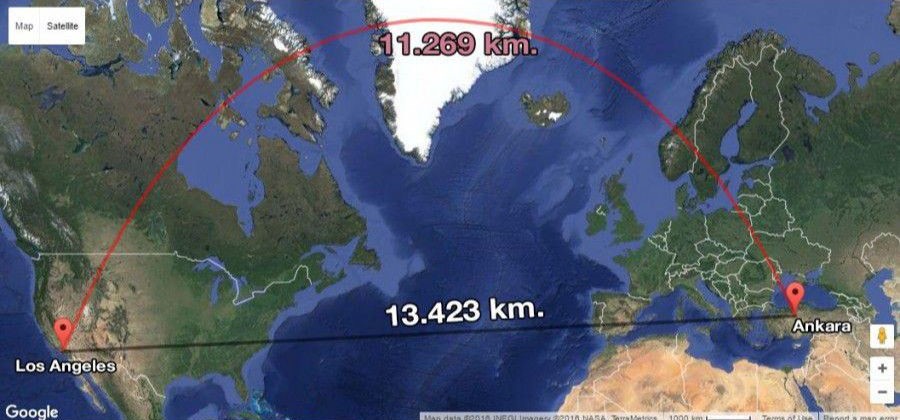
Airlines prefer to use “curve” routes that go over land rather than ocean. This curved routes, generally cover shorter distances than straight routes over the ocean. For example, a plane from the United States to Japan follows a curved route via Canada and Alaska, making for a shorter and more economical flight.
Looking at the map, the Earth appears flat and a direct line can be considered the shortest route. However, given the spherical structure of the Earth, curved paths create the shortest distance between two points.
Lower Cost, More Affordable Ticket Prices
curved routes, Significantly reduces flight costs. This offers consumers the opportunity to purchase tickets at more affordable prices. Not flying over the Pacific Ocean saves airlines both fuel and time. Therefore, it is a very logical choice from an economic perspective for airlines operating between East Asia and the Americas not to use the Pacific Ocean.
Avoiding Storms and Turbulent Weather
Airlines prefer to minimize the time their flights spend over bodies of water. Because the probability of storms occurring over the sea and ocean is higher than on land. The weather over the Pacific Ocean is often turbulent, and some areas may experience intense thunderstorms. This increases the risk for the safety of aircraft.

Avoiding the Jet Stream
Jet stream refers to strong wind currents that occur at the troposphere level. Due to the rotation of the Earth, these currents generally blow from West to East. Flying against the jet stream can subject the aircraft to dangerous turbulence and potential damage. However, flying in the same direction as the jet stream can save time and fuel.
Emergency Landing Difficult
Pacific Ocean When flying over large bodies of water, there is no safe area for an emergency landing. It is almost impossible to rescue a plane that crashed into the Pacific Ocean, even if the plane had surviving passengers in the event of an emergency. On such large bodies of water, the chances of rescue teams responding are extremely limited.
In conclusion, the main reasons why planes do not cross the Pacific Ocean include distance, cost, weather conditions and safety factors. This decision provides a safer and more economical option for both airlines and passengers.

To join our WhatsApp group CLICK!


