
Bagan is an ancient city full of temples located in Myanmar’s Mandalay District. Myanmar is the country with the largest number of Buddhist temples in the Far East. The temple city, which was founded in the 2nd century, contains more than 2 thousand temples. The tile color of the temples, which fascinates those who see it, creates a different atmosphere. Especially the red color of the tiles near the sunset creates sights worth seeing. This ancient city is one of the most important tourist areas of Myanmar. The area with temples spread over an area of 104 kilometers has been added to the UNESCO World Heritage List.

Marco Polo speaks of Bagan as “a gilded city living with the sound of ringing bells and rustling monk’s robes”. The city was the capital of the Pagan Kingdom, which was the source of the formation of Myanmar at the time. Today, there are Buddhist temples from the 11th and 12th centuries in the area, which is considered an archaeological site. Thousands of temples spread across the Bagan plain form one of the richest archaeological sites in Asia. The ancient city hosted more than 13 thousand temples in its time. However, many of them were destroyed as a result of attacks over time.

History of Bagan Ancient City
Founded in the 2nd century AD, the ancient city was fortified by King Pyinbya in 849 AD. The Pagan Kingdom ruled in this region, which was the capital of the kingdom, for more than 250 years. These religious structures, which spread over an area of approximately 104 square kilometers, include more than 10 thousand temples, 3 thousand monasteries and stupas. There are also many Buddha statues in the area. The ancient city was the political, economic and cultural center of the Pagan Empire from 1044 to 1287.

Bagan region was used as a center for religious studies at first. However, with the growth of the kingdom, its splendor also grew and it became a center where education was given in many fields. Studies have been carried out in many fields such as grammar, psychology, measurement techniques, phonetics, astrology, chemistry, medicine and legal sciences. The city has attracted many monks and Buddhist students in its time. For this reason, different geographies from India to Sri Lanka and also Khmer Empire‘There were people who came and settled in the region.

The general culture of the Bagan region is religiously dominant. The region has been a coexistence of Theravada Buddhism, Mahayana Buddhism, Tantric Buddhism, and various Hindu, Shaivism and Vaishnavism schools. From the 11th century onwards, with royal support, Theravada Buddhism took precedence and flourished during the pagan period.
The Pagan Empire collapsed due to Mongol invasions between 1277 and 1301 and fell apart in 1287. While a population of 50 thousand to 200,000 people lived in Bagan at the time, this number gradually decreased and turned into a small town. In 1297, the city ceased to be the capital, as a new kingdom, the Myinsaing Kingdom, was established on the central plains.

Damage and Repair of Temples
In the intervening time, temples, pagodas and monasteries have been destroyed by natural disasters. The region has been exposed to more than 400 earthquakes, especially in the 20th century. In an earthquake in 1975, temples were severely damaged and some became irreparable. Restoration work was carried out on the surviving temples in the 1990s. The works have been exposed to criticism and resistance of art historians. The criticisms were that the restoration did not take into account the original architecture and damaged it. As such, the city’s designation by a UNESCO World Heritage Site was delayed until 2019, 24 years after its initial nomination by the military government. In August 2016, another major earthquake destroyed nearly 400 temples, including Myauk Guni and Sulamani. The Myanmar Government has started to rebuild some of these temples with the help of UNESCO experts.
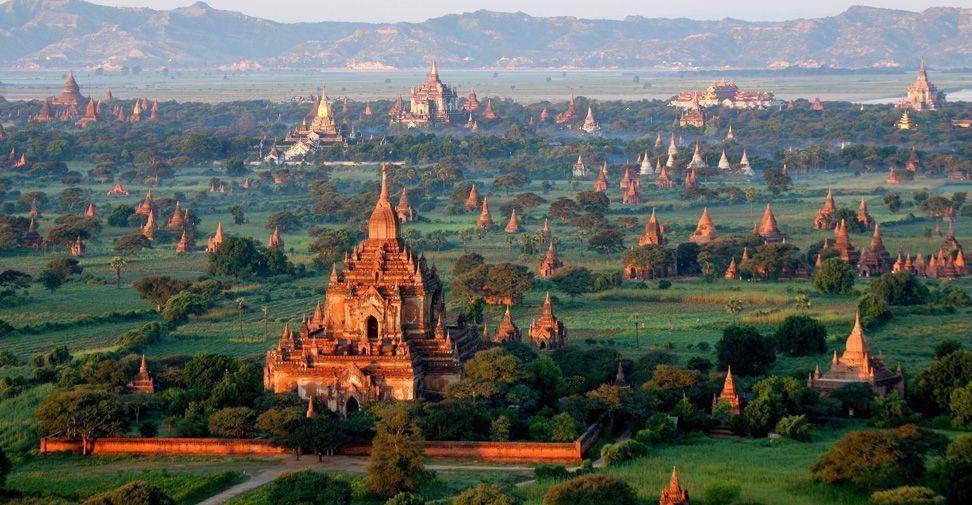
Many of the temples in the region were built with different characteristics and at different times. These temples, each more magnificent than the other, contain many stories within themselves. For example; The largest of the Bagan temples, the Dhammayangyi Temple was built during the reign of King Narathu (1167-1170). It is thought that Narathu, who ascended the throne after killing his father and brother, built this temple out of guilt and atonement for his sins.


